Shelf-Edge Displays for Retail: Brightness, Refresh and Total Cost of Ownership
Shelf-edge displays for retail: brightness under LED ceiling glare, bezel budget, heat in enclosed shelves, damage from carts and cost per metre of run.
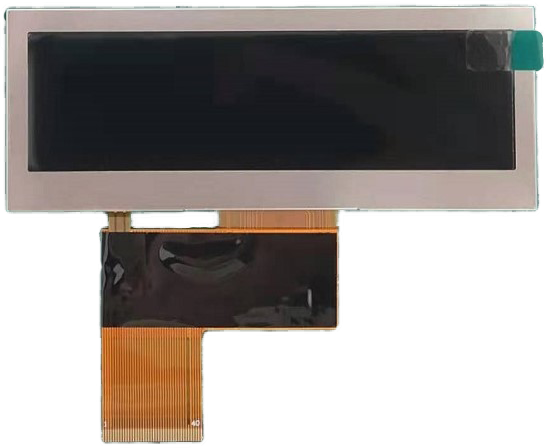
Shelf-edge displays are bought by the metre and judged by how little attention they need. The engineering decisions that matter are not resolution or colour depth but whether the price stays readable under ceiling glare, whether the units survive trolleys and restocking, whether the heat inside an enclosed shelf shortens their life, and whether a failed unit costs a price change or a fixture repair.
Part of the Bar-Type & Stretched Displays guide — 14 articles on aspect ratios, interfaces and multi-bar networks.
What shelf-edge screens must show and for whom
One number, one unit, unambiguous at arm’s length.
The primary shopper-facing function is price, unit price and occasionally a promotion marker; the secondary function is staff-facing information during restocking. That means the layout needs very large numerals occupying most of the height, high contrast, and a visual treatment that reads correctly under a shop’s mixed lighting. Content that requires reading – descriptions, ingredient lists – belongs on a label or a nearby screen, not on a 30 mm strip.
The staff-facing view is a different requirement and can be equally valuable: a strip that shows planogram position or stock status reduces restocking time. Where both views exist, the design must make the state obvious so that a shopper never sees a staff screen.
Brightness, contrast and LED ceiling glare
Reflections matter more than peak brightness.
Supermarket ceilings are fitted with linear LED luminaires that produce strong, directional reflections from anything glossy. On a shelf strip the reflection band can cover a large part of the visible height, so anti-glare treatment and, where the design allows, optical bonding do more for readability than added luminance. The specification should be based on the ambient illuminance measured at the shelf face and a contrast requirement at the installed angle, rather than a nits figure chosen from a catalogue.
Where lighting is being replaced at the same time as the displays are installed, the display specification and the lighting specification should be decided together. A change from fluorescent to LED luminaires can transform the reflection pattern on a shelf. CDTech’s notes on bar display brightness and contrast describe the measurement approach for this geometry.
Bezel width and the space you are willing to give up
Bezels cost selling space, and shoppers notice gaps.
A shelf strip replaces a paper label, so the display’s height has to fit the label channel and the bezel has to be minimal or hidden behind the channel’s lip. Where strips are installed end to end, the cumulative gap between units becomes visually obvious, so the mechanical design must allow units to sit close without crushing the glass. This is a mechanical tolerance problem first and an optical one second.
Where the fixture has a standard label channel, the strip assembly should be designed to that channel’s dimensions and retention method rather than requiring a bespoke rail. Retrofit compatibility determines how quickly a store can be converted.
Power over one cable vs local power
Wiring dominates installation cost.
Running mains power to every shelf is expensive and often unacceptable, which is why shelf strips are usually powered over a single low-voltage rail along the fixture, or by battery where power is impossible. The design consequences are a low-voltage input with a tolerant range, low power consumption per unit, and inrush control so that switching a whole shelf does not trip the supply. A display that needs a separate power brick per unit is a non-starter in most stores.
Power consumption per metre is therefore a specification number, not a footnote. It determines cable gauge, supply size and how many units a single feed can support. CDTech’s notes on FPC and cable design are relevant where the supply rail and the display cable share a route.
Heat in an enclosed shelf
A shelf is a mostly enclosed volume with merchandise inside it.
Shelf strips sit under a shelf, where heat from the display and from the lighting above accumulates with little airflow. Chilled and frozen cabinets are different again: the display operates in a cold environment with condensation risk. Thermal design therefore has to be verified in the fixture, not on a bench, and the brightness setting may need to be lower than the maximum available to protect the backlight.
The lifetime calculation follows from the measured temperature: lumen maintenance at the actual brightness and the actual internal temperature is the number that predicts replacement intervals.
Daisy-chaining, content updates and network architecture
The content pipeline decides the hardware.
Shelf strips are usually addressed individually for content but cabled collectively for power. The practical architecture is a low-voltage rail along the fixture plus a data bus or a wireless link to each unit, with a store-level controller that pushes price changes and confirms that they were displayed. The specification should state the maximum time for a price change to reach and display on every unit, because that number drives the network design and determines whether the system is acceptable to the operations team.
Failure behaviour matters as much as update speed: when a unit loses its connection, it should keep displaying the last known price rather than blanking, because a blank strip forces a manual price check.
Durability with shopping carts and restocking
Shelf strips are hit, not handled.
Trolleys, baskets, stock cages and case knives all make contact with the shelf edge. The display’s front should be protected by the fixture’s lip where possible, and where it is exposed, the cover glass thickness and bonding determine what survives. Impact damage usually appears as a cracked or chipped edge rather than a shattered face, so the edge treatment of the glass matters as much as its thickness.
The related damage mode is pulling: staff sometimes remove a strip by the cable or the front surface. Strain relief and a connector that releases before the cable or the bond is damaged turn a repair into a reconnection.
Cleaning and dust in a supermarket environment
Shelf strips collect dust and get wiped occasionally.
Cleaning is infrequent compared with a hospital, but the agents used are harsher – general-purpose surface cleaners, and sometimes glass cleaner with ammonia. The materials at risk are the printed border and the coating, and the practical protection is a sealed front with minimal print. Where a strip is mounted in a chilled cabinet, condensation and cleaning combine, so a bonded front is preferable to an open assembly.
Specify the cleaning agents that will actually be used, and check compatibility rather than assuming that a sealed front is enough. ASTM D1003 is the usual reference for haze measurement if coating wear needs to be quantified.
Cost per metre and replacement economics
The number the board sees is cost per metre of installed shelf.
| Element | Driver | How to reduce it |
|---|---|---|
| Display unit cost | Panel format, brightness, bonding, bezel | Use a native format; avoid unnecessary touch and brightness |
| Power infrastructure | Consumption per metre, supply sizing, cabling | Lower brightness in shaded fixtures; efficient drivers |
| Installation | Retrofit compatibility with existing channels | Design to the standard label channel, not a new rail |
| Content integration | Update pipeline and confirmation | Use existing price-management feed rather than a new system |
| Replacement rate | Lifetime at the measured internal temperature | Derate brightness; protect edges; stock spares per store |
Retail technology practice and store-format economics are tracked by organisations such as the EHI Retail Institute, and enclosure and display construction conventions come from bodies such as NEMA.
Pilot design: how to test a shelf wall before rollout
Pilot the lighting, not only the displays.
- Choose a store whose lighting matches the majority of the estate.
- Install a complete shelf run, including the power rail and content pipeline.
- Measure readability at the shopper’s standing position, at the worst time of day.
- Log internal temperatures and any failed units over a full seasonal cycle where possible.
- Time a price change from the central system to every unit in the run.
- Test cleaning and restocking damage in normal operation rather than in a controlled trial.
A pilot that runs for a full summer and a full winter answers the two questions that determine the rollout: does it stay readable, and how many units fail. Both answers change the cost per metre far more than a unit price negotiation.
FAQ
How bright should a shelf-edge display be?
Bright enough to hold contrast against the measured ambient light at the shelf face with anti-glare treatment fitted. Because ceiling luminaires produce strong reflections on a thin strip, surface treatment and bonding usually matter more than an extra few hundred nits, and lower brightness extends backlight life.
What is the cost of digital shelf displays per store?
It is better expressed as cost per metre of installed shelf, covering the display, the power rail, installation, content integration and the expected replacement rate. The unit price is usually a minority of the total, and the replacement rate depends on the internal temperature inside the shelf.
Do shelf-edge displays need touch?
Rarely for shopper-facing use, where a large price with high contrast is the requirement. Touch may be justified for staff functions such as stock confirmation or planogram checks, but it adds cost, a wear surface and cleaning considerations, so it should be justified by a workflow rather than added by default.
What happens to the price display when a unit loses its network connection?
It should retain and display the last confirmed price rather than blanking, because a blank strip forces staff to verify prices manually. Specify the connection-loss behaviour explicitly, along with the maximum time for a price change to propagate to every unit in the store.
Next step
Send the shelf channel dimensions, lighting conditions, run length and update requirements to CDTech; the reply will propose the bar format, brightness, bonding and power arrangement for a pilot run.
Contact sales@cdtech-lcd.com or use the contact page; bar-type formats are listed under bar-type LCD displays.
Related articles
 Synchronising a Network of Bar Displays: Timing, Drift and Content AlignmentBar-Type & Stretched Displays
 Cut-Glass vs Native Bar Displays: Which One Survives a Real DeploymentBar-Type & Stretched Displays2.9 Inch 320×120 Bar TFT: Specs, Interfaces, and Use CasesBar-Type & Stretched Displays
 Custom Bar Display Design: Cutout, FPC, and Bonding ChecklistBar-Type & Stretched Displays