How to Manage LCD End-of-Life in Vehicle Programs Without Redesigning the Module
Differentiation page: publish the linked new page before the foundation rewrite of the old page. | Meta description: LCD end-of-life in vehicle programmes: reading PCNs, interchangeability levels, last-time-buy maths, interface migration and aged-stock requalification.
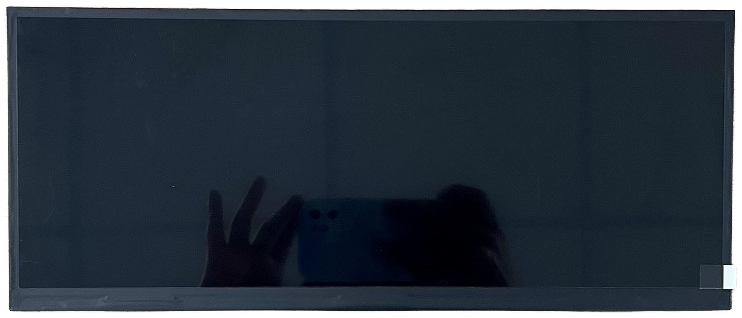
Vehicle platforms run for ten to fifteen years; display panels are commonly discontinued far sooner. The gap between the two is a programme risk that arrives as a product change notification, usually in the middle of a model year. Treating it as a procurement event produces a redesign; treating it as an engineering programme produces a documented interchange path instead.
Part of the Vehicle LCD Displays guide — 23 articles on specifying, replacing and qualifying automotive TFT modules.
Why automotive programmes outlive the panels they were designed around
Panel generations turn over faster than vehicle platforms.
A panel family typically has a production window set by the panel maker’s own roadmap, and that window is built around consumer and industrial demand rather than around a single vehicle programme. Interface standards move as well – LVDS generations, eDP revisions, higher resolution classes – so a module being phased out often cannot be replaced by the current equivalent part without a change in the electrical interface.
The practical consequence is that EOL planning belongs in the original design review, not in a crisis meeting six years later. Two decisions made at design time reduce the eventual cost: keeping the panel and interface as close to a widely used standard class as the design permits, and requiring a documented change notification obligation in the supply agreement. The International Automotive Task Force framework is the reference most programmes cite when they write that obligation into a quality agreement.
Reading a PCN: what suppliers must tell you and when
A PCN should name the change, the reason, the date and the last order date.
A product change notification that says a part is discontinued without a last order date, a last ship date and a reason is not actionable. The minimum useful content is the affected part numbers, the change category (form, fit, function or none), the reason, the last order date with a lead-time allowance, the last ship date, and any recommended replacement with its differences stated. Where the change affects a safety or regulatory characteristic, the notification must also trigger a customer-side revalidation, not just a stock decision.
Ask for PCNs by part number and by platform, not by product family, and require acknowledgement. Suppliers using electronic component distribution channels are used to this discipline because component distributors such as Mouser publish lifecycle and last-time-buy information as a matter of course. The same information is what a display supplier should be willing to provide.
Interchangeability levels: drop-in, form-fit-function and re-qualified
Most replacements are none of the three, in the strict sense.
A true drop-in replacement has identical mechanical envelope, connector position, pin-out, interface, timing, power and optical behaviour – the customer changes nothing. A form-fit-function replacement matches mechanically and functionally but needs firmware or timing adjustment. A re-qualified replacement needs the customer to repeat validation, which means test time and, in a regulated context, a new submission. Marketing language collapses all three into “compatible”, which is why the first task after a PCN is to classify the proposed replacement against the drawing.
Build a small comparison table for every candidate: outline dimensions and mounting hole positions, connector type and location, interface and lane count, timing and EDID parameters, backlight current and brightness, colour and uniformity, and operating temperature. The classification falls out of the table, and the table is also the evidence a customer-side change board will ask for.
Building a last-time-buy business case with real numbers
Compare storage cost against redesign cost, not against unit price.
A last-time-buy decision needs four numbers: remaining production volume for the platform including service demand, the unit price delta of the buy, the storage and handling cost over the years the stock must survive, and the cost of the alternative – redesign, requalification and the downtime it implies. The last figure is usually the one that decides the case, and it is the one most often estimated as zero.
Storage is not free and not unlimited. Lithium-free display modules are relatively benign, but polarizers, adhesives and any electrolytic capacitors on a controller board age, so a stockpile built for seven years needs a shelf-life and re-qualification plan. Keep the arithmetic visible so the decision is documented; a future audit will ask why the buy was sized the way it was.
Second-source qualification without dual tooling
Second sources pay for themselves only if they are maintained.
A second source that is qualified once and never built becomes unusable within a year, because processes, materials and firmware move on. The workable approach is to qualify the second source with a small annual build that exercises the tooling and the process, and to keep the golden samples and settings aligned across both sources. That is cheaper than a full parallel qualification and far cheaper than discovering at EOL that the alternative has drifted.
Where dual tooling is genuinely required – custom FPC, custom cover glass – the buyer usually pays for it once and should then own the right to place it with either supplier. CDTech’s material on second-source qualification for display modules sets out the evidence set a second source needs to provide.
Interface migration: LVDS generation changes and timing differences
Interface differences, not size, usually force the redesign.
The classic migration problem is a panel that has moved from a single LVDS link to dual LVDS, or from LVDS to eDP, while the mechanical envelope stayed similar. The host must then change its output configuration, timing parameters, or both. Where the new module carries its own timing controller with a standard input, the change can be absorbed with configuration rather than board rework; where it does not, the host PCB becomes part of the redesign.
The technical comparison between the two interface families is covered in eDP versus LVDS for automotive displays and in the broader LVDS versus MIPI DSI comparison. Read them before writing the replacement requirement, because the cheapest path is often to change the host output rather than to find a matching panel.
Mechanical adaptation with brackets, FPC and bezel kits
Adapters are legitimate when they are validated as part of the assembly.
Where a replacement panel differs by a few millimetres, a bracket, spacer or FPC adapter can restore the mechanical interface. The risk is that adapters change load paths, thermal contact and cable routing, so the assembly must be revalidated for vibration and thermal cycling as a unit. Adapters that solve the drawing but ignore the load path create field failures that the original design never had.
Document the adapter as part of the bill of materials with its own part number and change control. If it is a one-off workshop item, it will be replicated differently at every service depot, and the vehicle fleet will end up with assemblies that are no longer the approved design.

Storage, shelf life and re-qualification of aged stock
Aged stock needs a test, not an assumption.
Displays stored for years can show polarizer edge lift, adhesive creep, connector oxidation and, in humid conditions, corrosion on the FPC. A re-qualification on stored stock should sample across pallets and storage positions and repeat the optical, functional and adhesion checks that matter, not just a power-on test. Where stock is held in a non-climate-controlled warehouse, add a humidity record to the storage plan.
Practical storage rules: keep modules in the original packaging with the desiccant intact, avoid stacking pressure on the front surface, keep temperature stable and within the storage range in the drawing, and rotate stock so the oldest units are consumed first under a first-in-first-out discipline. Standards for handling and packaging of electronic assemblies are published by IPC, and the component-level handling and moisture-sensitivity rules familiar from semiconductors are maintained by JEDEC.
Service and aftermarket strategy beyond the 15-year horizon
Plan the service tail at the same time as the production tail.
Spare-part demand continues long after vehicle production ends, and it is often the reason a programme needs a replacement design at all. Two strategies work: hold a service stock sized from actuarial failure rates rather than from a fixed percentage, and pre-qualify a replacement module for the service channel even if production uses the original. The second is cheaper when it is done years in advance.
Cross-referencing is the practical tool for the service channel. CDTech maintains a display cross-reference and replacement guide for exactly this purpose, mapping existing modules to current equivalents with the differences stated.
A practical EOL decision tree for programme managers
Work through four questions in order and the decision usually makes itself.
- Is a compliant replacement already qualified for this platform? If yes, update the bill of materials and the PCN record.
- Is a form-fit-function equivalent available with firmware-level changes only? If yes, budget the validation and the customer notification.
- Is the remaining volume large enough to justify a last-time buy that covers production plus service? If yes, size it with the four-number business case and write the storage plan.
- If none of the above, treat it as a design change: brief the replacement as a new module, include the host interface in scope, and plan validation from the start.
Whichever branch applies, notify the customer-facing change process at the same time as the internal decision. The cost of an EOL event is dominated by how late it is discovered, not by the price of the replacement part.
FAQ
What is an LCD replacement in a vehicle programme?
It is a module that satisfies the original requirement after the original panel is discontinued. Only a small share of replacements are true drop-ins; most require firmware, timing or mechanical adaptation, and some require full customer-side revalidation. Classifying the replacement correctly is the first decision, because it determines the whole plan.
How long does an automotive LCD module typically stay available?
Availability is set by the panel maker’s roadmap rather than by the vehicle programme, and it varies widely between sizes and resolutions. The reliable approach is contractual: require notification of discontinuation with a last order date that allows a last-time buy to be sized and placed before the window closes.
How large should a last-time buy be?
Size it against remaining production volume plus service demand, then check the storage plan can protect the stock for that period. Compare the total cost against the cost of a redesign including validation and downtime, not against the unit price difference. Document the arithmetic, because the decision will be audited later.
Can stored display stock be used after several years?
Yes, with evidence. Re-qualify a sample from across the storage positions and pallets, checking optical performance, adhesion and functional behaviour rather than power-on alone. Storage conditions, packaging and humidity history determine whether the stock is still comparable to new production.
Next step
If a panel on your platform has reached end of life, send the original specification and the discontinuation notice to CDTech; the response will identify the closest current equivalent and state the differences in interface, mechanics and optics.
Write to sales@cdtech-lcd.com or use the contact page. Current automotive module options are listed under vehicle LCD displays.
Related articles
Automotive Wide-Temperature Displays: Designing for -40 C to +85 C OperationVehicle & Automotive Displays Headrest and Rear-Seat Entertainment Displays: Choosing Between LCD, OLED and ProjectionVehicle & Automotive Displays
 PCAP Touch Screens for Vehicles: EMI, Gloves, Water and Everything Else That Breaks ThemVehicle & Automotive DisplaysHow to Qualify an Automotive LCD Display Supplier for an IATF 16949 ProgramVehicle & Automotive Displays