Second-Source Qualification for Display Modules
Second-sourcing a display looks straightforward until the first units reach production. Two panels with the same specification can differ in colour, in connector position, in the way the backlight behaves at low temperature, and…
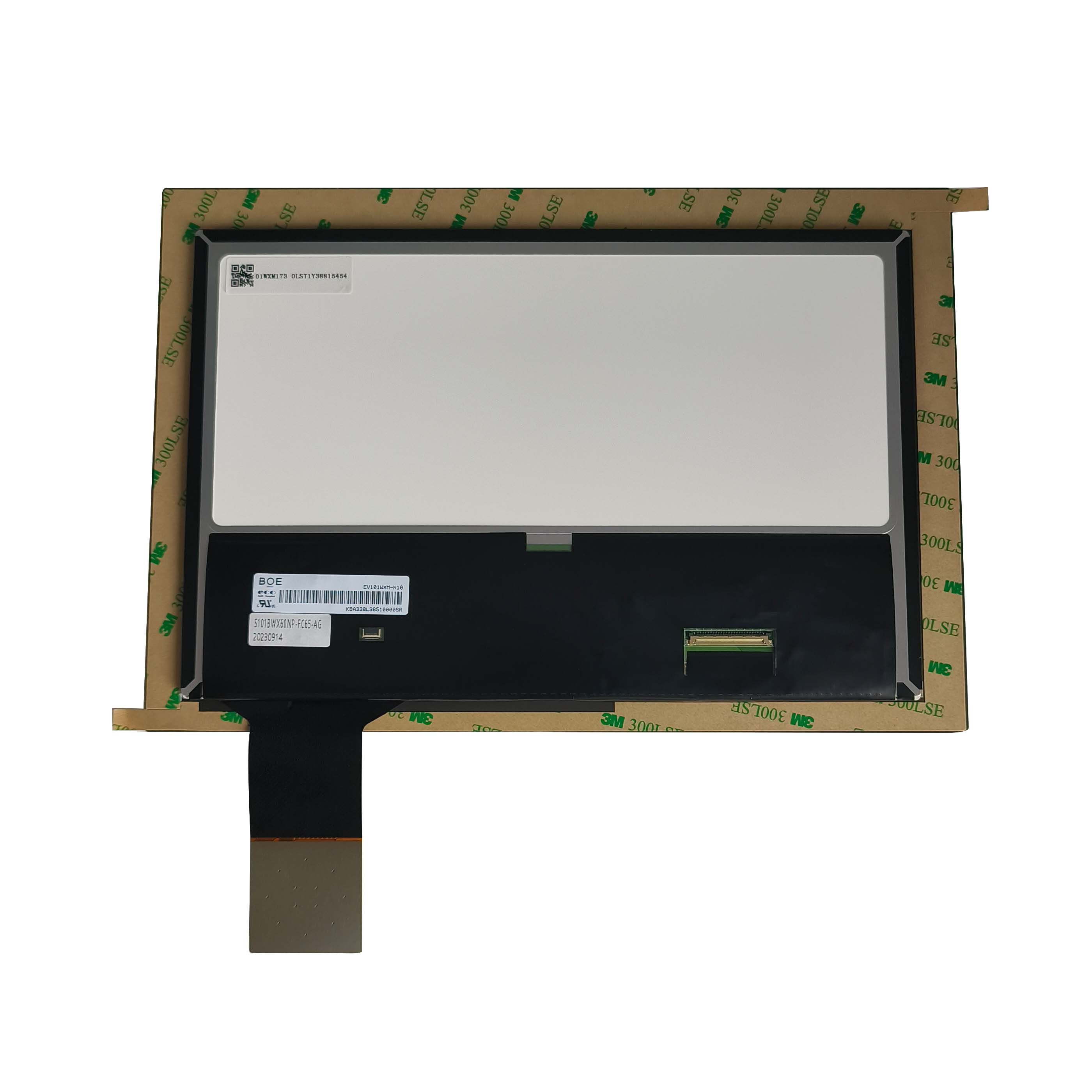
Second-sourcing a display looks straightforward until the first units reach production. Two panels with the same specification can differ in colour, in connector position, in the way the backlight behaves at low temperature, and in what the firmware has to do to drive them.
The projects that succeed treat qualification as an engineering programme with a defined scope, not as a purchasing exercise with a sample attached.
Why second-source projects fail
There is a fifth pattern worth naming: the second source is qualified against a product that then changes. A firmware update, a new enclosure or a revised interface can invalidate a qualification that was correct when it was performed. Coupling the qualification record to the product configuration keeps it meaningful.
There is a fifth pattern worth naming: the second source is qualified against a product that then changes. A firmware update, a new enclosure or a revised interface can invalidate a qualification that was correct when it was performed. Coupling the qualification record to the product configuration keeps it meaningful.
Second sourcing is one answer to supply risk; securing a long-term supply chain covers the others. Four failure patterns cover most cases. The second source is qualified on specification values rather than on behaviour. The qualification happens on samples that are not representative of production. The engineering team is not involved until the first production batch. Or the two sources are maintained unevenly, so the second-source process drifts until it no longer produces interchangeable parts.
Each is avoidable with a written scope and a pilot run.
Parameters that must match
Interfaces deserve a careful reading because the same interface name can hide differences. Two panels advertised as LVDS may differ in lane count, in colour mapping or in the timing parameters they accept. Where the host is configurable, those differences are manageable; where it is not, they are disqualifying. Establish which parameters the host can adapt before deciding what must match.
Interfaces deserve a careful reading because the same interface name can hide differences. Two panels advertised as LVDS may differ in lane count, in colour mapping or in the timing parameters they accept. Where the host is configurable, those differences are manageable; where it is not, they are disqualifying. Establish which parameters the host can adapt before deciding what must match.
Some parameters are non-negotiable because a difference breaks the product rather than degrading it. The mechanical interface – outline dimensions, fixing positions, connector type and position, front-glass thickness – must match closely enough that the module drops into the same enclosure.
The electrical interface must match in type, lane or channel configuration, and timing. And the panel must operate across the product’s full temperature range, including the behaviour at the cold end, where two panels with the same stated range can differ noticeably in response time.
Parameters that may legitimately differ
Other parameters can differ without changing the product’s function: the backlight driver topology, the exact LED bin, the controller used inside the module, and the supplier’s internal test method, provided the acceptance criteria are equivalent.
This distinction matters commercially. Demanding identical internals removes most of the benefit of second-sourcing; demanding identical behaviour keeps it while allowing the suppliers to differ.
Samples and batches needed
Ask where the samples came from, in writing. A sample from a pilot line, a sample from a golden unit and a sample pulled from a production carton can differ measurably in optics and in mechanical tolerance. For a second-source qualification the meaningful sample is the one from the process that will actually produce your parts, and the qualification record should name that process.
Samples prove nothing on their own. A workable programme uses samples for function and fit, then a small pilot batch for behaviour: at least one production-representative lot for optical comparison, and enough units to run the temperature and lifetime checks.
Ask explicitly whether the samples came from a pilot line or from mass production. A second source that performs well on pilot-line parts and differently on production parts costs more than no second source at all.
Mechanical and electrical interchangeability
Interchangeability should be tested by building the product, not by comparing drawings. Assemble a complete unit with the second source, run it through the same production test as the primary, and record every adjustment the assembler had to make.
If the unit needs a different bracket, a longer cable or a firmware change, it is not interchangeable – it is a variant, and that needs to be documented before production, not discovered on the line.
Optical matching across units
Where the two sources are used in different products, matching requirements can be relaxed but not deleted. A customer who buys two products from the same range and sees a different colour cast may not know why, but will notice. Recording the measured difference and accepting it deliberately is different from not measuring it at all.
Where the two sources are used in different products, matching requirements can be relaxed but not deleted. A customer who buys two products from the same range and sees a different colour cast may not know why, but will notice. Recording the measured difference and accepting it deliberately is different from not measuring it at all.
Optical differences are the most common reason a customer notices the second source. Brightness, colour temperature, uniformity and viewing behaviour can all differ within each supplier’s allowed range, and the two ranges may not overlap.
Where units from both sources appear in the same installation or on the same production line, define a matching requirement in measurable terms: a maximum difference in brightness and chromaticity between sources, measured under the same conditions. Where the two sources are used in separate products or separate sites, the requirement can be relaxed.
Qualification test scope
| Parameter | Requirement | If it differs |
|---|---|---|
| Mechanical outline and fixings | Must match | Not interchangeable – redesign |
| Connector type and position | Must match, or a defined adaptor applies | Cable or bracket change |
| Interface and timing | Must match or be supported by the host | Firmware change |
| Temperature range | Must cover the product requirement including the cold end | Additional qualification or rejection |
| Optical performance | Within the defined matching window | Matching rule and possibly site split |
| Internal construction | May differ | No action if behaviour matches |
A reasonable scope covers function, optics, environment and lifetime reference.
| Area | What to run |
|---|---|
| Function and interface | Full production test, plus the timing and initialisation checks used in development |
| Mechanical | Assembly into the production enclosure, including connector access |
| Optical | Brightness, uniformity, colour and viewing behaviour on the same instrument |
| Environmental | Temperature extremes with functional checks at each end |
| Touch (if applicable) | Accuracy and glove operation with the production controller settings |
| Reference | A documented comparison against the primary source, kept as a record |
Documentation and traceability
Lot marking is the practical enabler of everything above. If units cannot be traced to a source and a production period, a field investigation cannot tell whether a failure pattern belongs to one supplier, one lot or the design. Even a simple date-and-source code on the label changes what is possible after a failure.
The second source needs its own specification document, its own approved sample, and its own change-notification arrangement. Sharing the primary’s documentation is what allows the two to drift apart, because a change agreed with one supplier is not communicated to the other.
Record which units in the field came from which source. Without that, a field investigation cannot tell whether a failure pattern belongs to one supplier or to the design.
Pilot run before switching
Run a pilot production batch – enough units for a real shift, not a laboratory quantity – with the second source, and keep the primary source producing in parallel. Compare yield, test failures and any adjustments the line had to make.
Acceptance at that point follows the same logic as AQL inspection: a defined rule, applied to a defined sample. The pilot is where interchangeability is actually proven, and it is far cheaper than discovering the difference during a switch forced by supply problems.
Maintaining two sources over time
Give the second source a permanent share of production rather than an emergency role. A supplier that builds the part every month keeps the tooling, the fixtures and the process knowledge current; one that builds it once every two years will need to re-learn everything at the moment you need it most.
Give the second source a permanent share of production rather than an emergency role. A supplier that builds the part every month keeps the tooling, the fixtures and the process knowledge current; one that builds it once every two years will need to re-learn everything at the moment you need it most.
Second sources decay unless they are used. Allocate a portion of production to the second source on a regular basis, review both suppliers’ change notifications together, and re-qualify when either changes a material, a process or a factory.
A second source that has not been built for two years is a hypothesis, not a plan. For the lifecycle side of the same problem, see the article on display obsolescence management.
Frequently asked questions
How many samples are needed to qualify a second source?
Enough to cover function, optics and environment, plus one production-representative batch. Samples alone cannot demonstrate production behaviour.
Do both sources need identical specifications?
They need identical behaviour where the product depends on it, and equivalent acceptance criteria everywhere else. Requiring identical internals usually defeats the purpose.
Can we switch permanently to the second source?
Only after a pilot run and a documented comparison. Many programmes run both permanently in a fixed proportion, which keeps both qualified.