Display Specification Terminology: The Terms Buyers Most Often Confuse
Most specification disputes come from a term that both sides read differently. The number is not wrong; the definition is. This glossary pairs each commonly confused term with the specification line where it usually…
Most specification disputes come from a term that both sides read differently. The number is not wrong; the definition is. This glossary pairs each commonly confused term with the specification line where it usually appears and the decision it actually affects.
It is written for buyers and project engineers rather than for panel designers, so it favours the question to ask over the theory behind the term.
Resolution and pixel terminology
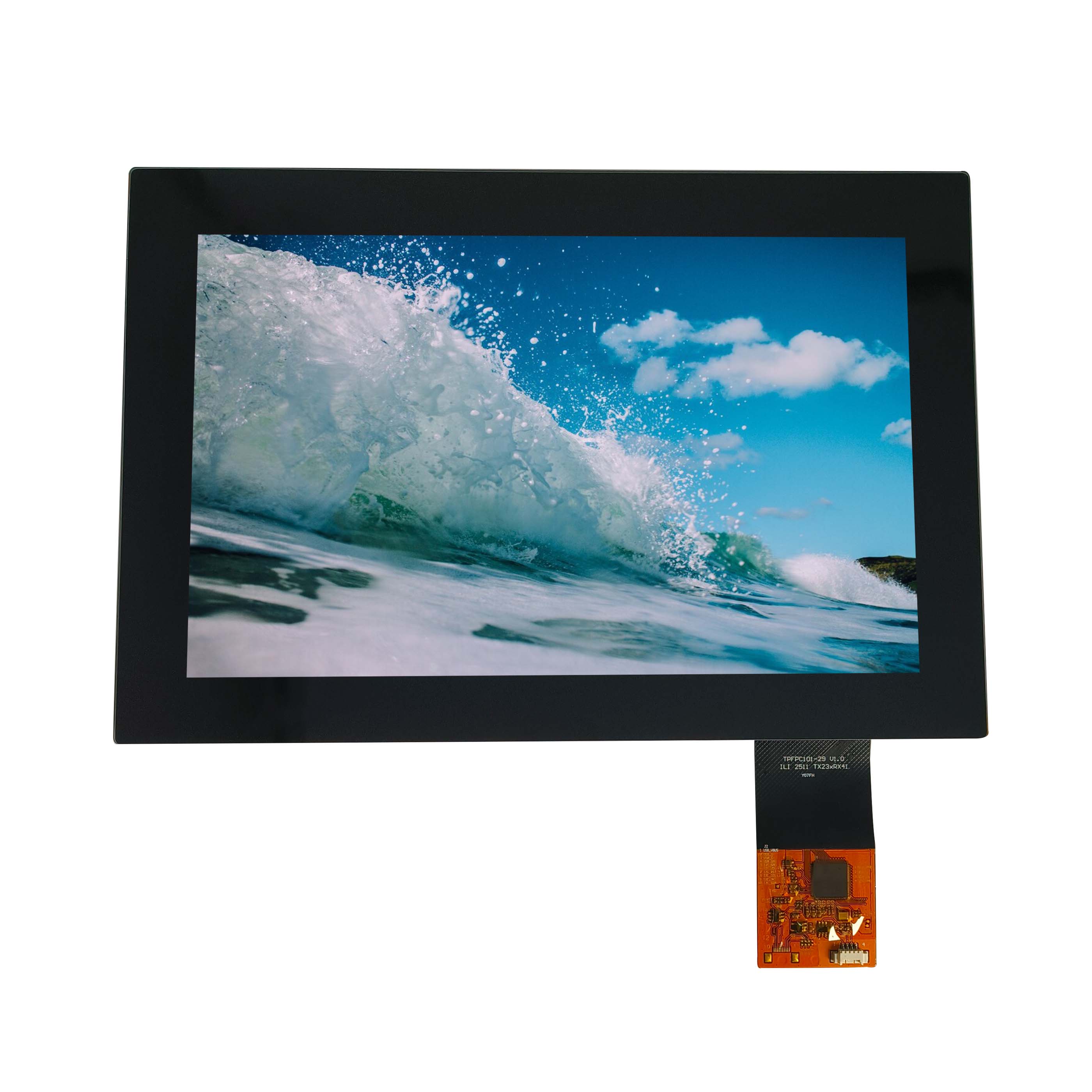
Four further terms appear on the same specification line. Aspect ratio is the width-to-height relationship and determines how content fits. Active area is the part of the panel that displays an image. Bezel is the border around it, which determines the cutout rather than the image. Dot pitch is the distance between pixel centres. Confusing the active area with the outer dimensions is a common cause of enclosure errors.
Four further terms appear on the same specification line. Aspect ratio is the width-to-height relationship and determines how content fits. Active area is the part of the panel that displays an image. Bezel is the border around it, which determines the cutout rather than the image. Dot pitch is the distance between pixel centres. Confusing the active area with the outer dimensions is a common cause of enclosure errors.
Four further terms appear on the same specification line. Aspect ratio is the width-to-height relationship and determines how content fits. Active area is the part of the panel that displays an image. Bezel is the border around it, which determines the cutout rather than the image. Dot pitch is the distance between pixel centres. Confusing the active area with the outer dimensions is a common cause of enclosure errors.
Four further terms appear on the same specification line. Aspect ratio is the width-to-height relationship and determines how content fits. Active area is the part of the panel that displays an image. Bezel is the border around it, which determines the cutout rather than the image. Dot pitch is the distance between pixel centres. Confusing the active area with the outer dimensions is a common cause of enclosure errors.
Resolution is the number of addressable pixels, expressed as horizontal by vertical. It says nothing about size, so it must always be paired with the physical diagonal to mean anything about sharpness.
Class names such as WXGA, WUXGA, FHD and QHD are shorthand for common pixel counts. They are not precise: WXGA is usually 1280×800 but sometimes 1280×720. Always specify the pixel count rather than the class name.
Where a standard size does not fit the design, the options are set out in custom LCD panel sizes. Pixel density, expressed in pixels per inch, is what determines perceived sharpness at a given viewing distance. A high resolution on a large panel can look coarser than a lower resolution on a small one.
Sub-pixel structure – the arrangement of red, green and blue elements within a pixel – affects how text renders, particularly on small panels. It is rarely stated in industrial specifications and worth asking about when text legibility is critical.
The decision this affects: how large the panel must be, and whether the interface can carry the resulting pixel rate.
Brightness, contrast and uniformity wording
Luminance is the correct term for what most specifications call brightness, expressed in candelas per square metre. The number means little without the measurement condition.
Centre luminance is measured on a defined area at the centre, usually with a partial white pattern. Full-screen luminance is measured with the whole panel driven and is typically lower, because the backlight is loaded and the driver sees a different condition. Comparing one supplier’s centre figure with another’s full-screen figure is the most common specification error in the industry.
Contrast ratio is the ratio between a bright and a dark state. In a dark room it describes the panel; under illumination it describes the panel plus its surface treatment. Both are legitimate and they are not interchangeable.
Uniformity describes variation across the panel and is meaningless without stating the sampling points and the reference value used.
The decision this affects: whether the display is readable in the intended environment, and which measurement you will use for acceptance.
Viewing-angle phrasing
Viewing-angle statements are usually given as an angle at which the contrast ratio falls to a defined value, most often 10:1. The value is rarely stated, which makes comparisons unreliable.
Two further distinctions matter. Horizontal and vertical angles are usually different, and colour shift is a separate behaviour from contrast loss: a display can hold contrast at an angle while the colour changes noticeably.
The decision this affects: where the operator can stand and still read the screen, and whether a wider-angle technology is worth its cost.
Temperature range statements
Operating temperature is the range in which the panel functions. Storage temperature is the range in which it can be transported and kept without damage; storage ranges are almost always wider, and confusing the two leads to unrealistic expectations about a display left in a cold or hot environment.
Two qualifications are often omitted. The response time at the low end of the operating range may be much slower than at room temperature, and the brightness at the low end may be reduced. A panel specified to -20 ¡ãC may be technically operational and practically unreadable at that temperature.
The decision this affects: whether the product needs a heater, a wide-temperature panel, or tolerance for slow first-minute behaviour.
Lifetime and reliability terms
Two more terms belong with the reliability figures. Operating hours describes the intended duty cycle and is not the same as a lifetime figure. Degradation describes the change in output over time and is usually what the lifetime figure measures. A supplier can be accurate about degradation and say nothing about the duty cycle it assumed, so ask for both.
Two more terms belong with the reliability figures. Operating hours describes the intended duty cycle and is not the same as a lifetime figure. Degradation describes the change in output over time and is usually what the lifetime figure measures. A supplier can be accurate about degradation and say nothing about the duty cycle it assumed, so ask for both.
Two more terms belong with the reliability figures. Operating hours describes the intended duty cycle and is not the same as a lifetime figure. Degradation describes the change in output over time and is usually what the lifetime figure measures. A supplier can be accurate about degradation and say nothing about the duty cycle it assumed, so ask for both.
Two more terms belong with the reliability figures. Operating hours describes the intended duty cycle and is not the same as a lifetime figure. Degradation describes the change in output over time and is usually what the lifetime figure measures. A supplier can be accurate about degradation and say nothing about the duty cycle it assumed, so ask for both.
Backlight lifetime is usually expressed as hours to a defined proportion of the initial luminance, such as half. Without the drive current and the temperature, the figure describes a test condition rather than the product’s real life.
MTBF is a calculated failure-rate figure for the module, not a promise that a unit will run for that long. Warranty period is a commercial term and is unrelated to either.
The decision this affects: the service model and the maintenance interval, and whether a lifetime claim is comparable between suppliers.
Touch, glass and bonding terminology
Resistive touch responds to pressure and works with gloves and stylus. Projected capacitive touch responds to the electrical property of a finger and supports multi-touch, with tuning required for gloves and moisture.
Optical bonding fills the gap between the cover glass and the panel with a transparent adhesive. Terms around it include OCA (a solid adhesive film) and OCR (a liquid adhesive cured in place). An air gap is the unbonded alternative, cheaper and more reflective.
AG and AR describe surface treatments: anti-glare scatters reflections, anti-reflective reduces them. They are often combined, and their performance is quantified by haze and gloss rather than by the label.
The decision this affects: readability in bright light, durability, cost and the cleaning regime.
Interface abbreviations explained
RGB is a parallel interface carrying pixel data directly; it is simple and pin-hungry. LVDS is a differential serial interface widely used at industrial resolutions. MIPI DSI is a high-speed serial interface common with mobile-class processors. eDP is a packet-based interface with a negotiation step. HDMI and DisplayPort appear where the source is a computer rather than an embedded controller.
The decision this affects: which panel is compatible with the platform, and how much board and cable design is required.
Certificate and documentation terms
Declaration of conformity is the document by which a manufacturer takes responsibility for a product meeting the applicable requirements. Test report is the record of a test performed on a sample; it describes the sample tested, not the product family. Quality-system certificate describes a manufacturing site’s management system and its scope, and says nothing about a specific product’s performance.
The decision this affects: what you can rely on when assembling your own technical file, and what still has to be tested on the assembled product.
Terms suppliers use inconsistently
| Term | Why it is ambiguous | What to ask |
|---|---|---|
| Anti-glare | Covers a range of textures | Gloss and haze values with their measurement geometry |
| High brightness | No threshold | Luminance value, pattern and measurement condition |
| Wide temperature | No defined range | Operating and storage ranges, plus behaviour at the extremes |
| Industrial grade | Marketing rather than a specification | Temperature, lifetime, shock and documentation requirements |
| Long lifetime | No definition of end of life | Hours to what proportion of initial luminance, at what drive and temperature |
| Medical grade | No single technical definition | The properties your device needs, documented |
| Bonded | Could be OCA or OCR | Which process, and the optical and durability consequences |
How to ask a supplier to define a term
Two worked questions show the pattern. Instead of “is this panel high brightness?”, ask “at what luminance, on what pattern, after what warm-up?”. Instead of “is this a wide temperature panel?”, ask “what is the operating range, and what is the response time at the low end?”. Both questions produce a condition and a value, which is what makes a requirement testable.
Two worked questions show the pattern. Instead of “is this panel high brightness?”, ask “at what luminance, on what pattern, after what warm-up?”. Instead of “is this a wide temperature panel?”, ask “what is the operating range, and what is the response time at the low end?”. Both questions produce a condition and a value, which is what makes a requirement testable.
Two worked questions show the pattern. Instead of “is this panel high brightness?”, ask “at what luminance, on what pattern, after what warm-up?”. Instead of “is this a wide temperature panel?”, ask “what is the operating range, and what is the response time at the low end?”. Both questions produce a condition and a value, which is what makes a requirement testable.
Two worked questions show the pattern. Instead of “is this panel high brightness?”, ask “at what luminance, on what pattern, after what warm-up?”. Instead of “is this a wide temperature panel?”, ask “what is the operating range, and what is the response time at the low end?”. Both questions produce a condition and a value, which is what makes a requirement testable.
The question that works is not “what does this mean?” but “under what conditions was this measured, and what value would fail acceptance?”. That form of question produces a condition, a value and a limit, which is what a specification needs.
Applied consistently, it converts a datasheet into a set of verifiable requirements, and it removes most of the ambiguity before an order is placed. Where a supplier cannot answer it, the term is not yet a specification. For the reading method itself, see the article on reading an LCD datasheet.
Frequently asked questions
Why do two suppliers quote different brightness for the same panel?
Usually because one is a centre-window measurement and the other is full-screen, or because the measurement conditions differ. Ask for the pattern and the conditions.
Is MTBF the same as lifetime?
No. MTBF is a calculated failure-rate figure; lifetime describes degradation over time. A product can meet an MTBF figure and still degrade in brightness.
Do class names like WXGA have a fixed meaning?
They refer to common pixel counts but are not precise. Always specify the exact resolution and aspect ratio.