How Should You Design Automotive LCD Screens?
Design automotive LCD screens around the real temperature grade of the part: compare -30 °C to 85 °C modules, optical bonding and IATF 16949 evidence.
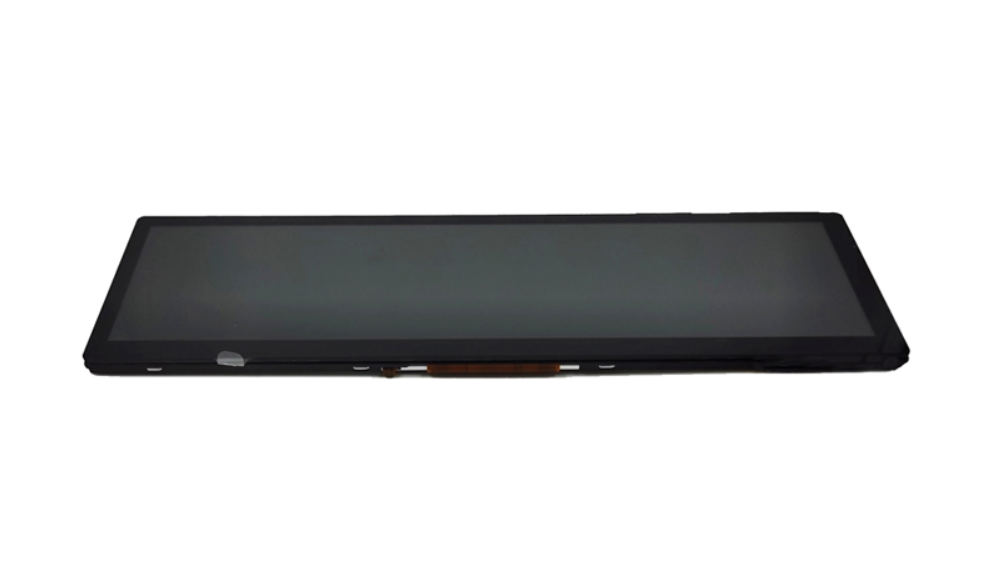
Automotive LCD screens must remain clear, reliable, and safe through heat, cold, vibration, glare, and long operating hours. A successful design combines a vehicle-qualified supply chain, wide-temperature TFT performance, high effective contrast, anti-glare optics, durable bonding, and human-centered HMI. These priorities apply across HUDs, digital instrument clusters, center displays, and passenger-information systems.
Part of the Vehicle LCD Displays guide — 23 articles on specifying, replacing and qualifying automotive TFT modules.
Last updated:
What Makes an LCD Screen Suitable for Automotive Use?
An automotive-grade LCD is a display module engineered for predictable performance under vehicle temperatures, vibration, sunlight, electrical stress, and extended service life. It requires more than a bright consumer panel: the complete stack-up, electronics, mechanics, optical treatment, and manufacturing controls must support the intended vehicle environment.
Vehicle displays are now central HMI components. A digital instrument cluster communicates speed, warning lights, ADAS status, battery range, and navigation prompts. A HUD projects selected driving information into the driver’s forward view. Both applications demand stable readability, rapid response, controlled luminance, and safety-oriented failure behavior.
A procurement specification should define the full module rather than only panel resolution or size:
-
Operating and storage temperature range
-
Brightness and effective contrast under ambient light
-
Viewing angle and color consistency
-
Anti-glare, anti-reflection, and anti-fingerprint requirements
-
Touch technology and glove or wet-touch behavior where applicable
-
Mechanical mounting, vibration, shock, and connector retention
-
Backlight lifetime, dimming range, and thermal management
-
Traceability, change control, validation documentation, and quality-system requirements
CDTech approaches vehicle display development as a system-level task. The LCD, backlight, cover lens, touch panel, optical adhesive, driver board, and enclosure must work together under real cabin conditions.
How Does IATF 16949 Improve Automotive Display Quality?
IATF 16949 improves automotive display quality by embedding defect prevention, traceability, risk management, and continual improvement into the supplier’s processes. For buyers, it provides stronger confidence that display design, production, inspection, process changes, and corrective actions are controlled rather than managed informally.
IATF 16949 is not a promise that every display will suit every vehicle location. Instead, it establishes a quality-management framework for automotive suppliers. It helps align product development and production with customer-specific requirements, documented controls, and evidence-based release decisions.
For a display program, the practical value appears throughout the lifecycle:
-
APQP: Aligns engineering, quality, manufacturing, and customer expectations early.
-
DFMEA and PFMEA: Identify potential design and production failure modes before launch.
-
Control plans: Define what must be measured, how often, and what happens if a result is out of specification.
-
PPAP: Provides evidence that the approved production process can repeatedly make compliant parts.
-
MSA and SPC: Improve measurement reliability and monitor process variation.
-
Change management: Prevents undocumented material, tooling, firmware, or process changes from reaching production.
-
Traceability: Supports root-cause analysis and containment if field issues emerge.
CDTech’s IATF 16949-certified quality system supports a zero-defect mindset from material intake through module assembly, aging, final inspection, and shipment. For Tier 1 and OEM procurement teams, this process discipline is as important as display appearance.
Which Temperature Grades Do Vehicle Modules Actually Carry?
A −30 °C to +85 °C operating range is available in vehicle interior sizes, but it is a property of the part number rather than of the product family, and it tracks the brightness grade closely. The list below is the current CDTech vehicle catalogue, and it is the honest answer to the question “what does the display actually survive” — every figure is the module specification, not a design target.
Two patterns are worth carrying into a design review. First, the widest temperature parts are also the bright ones: the 850-nit and 1,000-nit modules sit at −30 to +80 °C or better, while the 380-nit 10.1-inch panel stays at −20 to +70 °C. Second, storage is always wider than operation, which is why a module that survives transport to a cold site may still not be rated for cold start-up. Specify the band the unit must function in, then confirm it on the exact part number.
| Size | Module | Resolution | Interface | Brightness | Operating | Storage |
|---|---|---|---|---|---|---|
| 4.3" | S043HWQ50HD | 480 × 272 | RGB 24-bit | 500 nits | −30 to +85 °C | −30 to +85 °C |
| 5.0" | S050HWV18HS | 800 × 480 | RGB 24-bit | 500 nits | −20 to +70 °C | −30 to +80 °C |
| 7.0" | S070QWV81HD | 800 × 480 | RGB | 500 nits | −30 to +85 °C | −30 to +85 °C |
| 7.0" | S070SWV35EG | 800 × 480 | LVDS | 1000 nits | −30 to +85 °C | −30 to +85 °C |
| 10.1" | S101HWX55NS-DC45 | 1280 × 800 | LVDS | 380 nits | −20 to +70 °C | −30 to +80 °C |
| 10.1" | S101HWX53EP-FC47-AG | 1280 × 800 | LVDS | 850 nits | −30 to +80 °C | −40 to +80 °C |
| 12.3" | S123AWU07ES | 1920 × 720 | 2-port LVDS | 1000 nits | −30 to +80 °C | −40 to +80 °C |
| 12.8" | S128HWU01HP-FC01 | 1920 × 1080 | LVDS | 600 nits | −30 to +85 °C | −40 to +90 °C |
Module data from the CDTech vehicle LCD catalogue, retrieved 3 October 2026.
Where the temperature claim stops. A rated range is a statement about the panel and its electronics under the conditions the specification defines; it says nothing about how the assembly behaves inside a closed dashboard behind heat-soaked cover glass, and it does not cover a unit that is dimmed to 30 % brightness to control thermal load. Treat the module rating as the floor of the requirement, then validate in the enclosure, at the mounting angle, with the ventilation path the production part will actually have. The quality assurance and factory compliance page sets out the records behind these ratings, including the inspection and traceability steps a Tier 1 buyer would audit.
Which Temperature and Environmental Limits Matter Most?
The most important limits are operating temperature, storage temperature, humidity, thermal cycling, thermal shock, vibration, mechanical shock, UV exposure, and electrical stress. A common interior automotive target is -30°C to 85°C, but the required range must reflect the display’s actual installation position, enclosure design, and local heat load.
A display mounted behind a windshield can experience intense solar loading. A center-stack display may face heat from electronics and sunlight, while a cluster may operate in freezing morning conditions before cabin heating begins. The display must start, dim, render color, and maintain contrast across those conditions.
Do not specify -30°C to 85°C as a checklist item alone. Validate the assembled display in the intended mechanical and thermal environment, including the effect of the housing, display angle, sunlight, and local electronic heat sources.
How Can Anti-Glare Technology Improve Driver Readability?
Anti-glare technology reduces mirror-like reflections that can hide critical information from the driver. It diffuses reflected light on the cover surface, improving perceived readability under direct sunlight, while anti-reflection treatments and optical bonding further reduce internal reflections and raise effective contrast.
Brightness alone does not solve sunlight readability. A highly bright display with a reflective cover lens may still become difficult to read when sunlight enters the cabin at a low angle. The useful target is effective contrast in the installed environment.
A strong optical architecture may combine:
-
High-brightness LED backlighting matched to application needs
-
IPS or similarly wide-viewing-angle LCD technology
-
Anti-glare cover glass to reduce specular reflections
-
Anti-reflection layers to lower surface reflectance
-
Optical bonding between LCD, touch panel, and cover lens
-
Light-control films when privacy or directional brightness is required
-
Ambient-light sensing and automatic dimming
-
Surface hardness and anti-fingerprint treatment for touch displays
Anti-glare coating requires balance. A more aggressive matte surface may suppress reflections but increase haze, soften fine graphics, or create visible sparkle. Cluster and HUD-related displays therefore need optical evaluation with the actual fonts, warning icons, colors, and installation angles—not merely a coating datasheet review.
What Should Designers Consider for HUD Display Systems?
HUD display systems should prioritize low distraction, stable virtual-image quality, luminance control, thermal performance, and precise optical alignment. The display source is only one part of a HUD; the projection optics, windshield or combiner, enclosure, positioning mechanism, and software content determine the driver’s final viewing experience.
A HUD should present only time-sensitive, safety-relevant information such as speed, turn guidance, warnings, or ADAS alerts. Overloading the projection with entertainment, dense menus, or unnecessary visual motion can increase distraction rather than improve usability.
Important HUD design considerations include:
-
Virtual-image distance and position within the driver’s natural sightline
-
Daytime luminance sufficient for bright ambient conditions
-
Low-level nighttime dimming that avoids glare and eye strain
-
Color and symbol choices that remain legible in varied lighting
-
Ghost-image control caused by windshield reflections
-
Optical alignment across driver positions and vehicle tolerances
-
Fast response for alerts and turn-by-turn updates
-
Thermal control for LEDs, projection components, and electronics
-
Safety logic for degraded operation or communication faults
For HUD projects, CDTech can support display-source selection and customized module development while working with the optical-system requirements defined by the integrator. Early collaboration avoids costly rework caused by mismatched brightness, aperture, interface, or mechanical constraints.
Why Do Digital Instrument Clusters Need HMI-First Design?
Digital instrument clusters need HMI-first design because drivers must recognize essential information instantly, often while managing traffic, weather, and vehicle alerts. A technically capable LCD is not enough if speed, warning states, range, and navigation cues are visually unclear or inconsistent.
The cluster should establish an information hierarchy. Primary driving data must remain visible in all drive modes, while secondary information should not compete for attention. Typography, spacing, color, animation, and alert behavior should reinforce comprehension.
Effective cluster HMI design includes:
-
Persistent speed display in a stable, predictable location
-
Clear distinction between advisory, caution, and critical warnings
-
High legibility for numerals, icons, and text at a glance
-
Controlled animations that communicate change without distraction
-
Consistent day and night themes
-
Contrast tuned for sunlight and dark-cabin conditions
-
Redundant visual strategies for color-vision differences
-
Quick boot behavior and safe fallback states
-
Appropriate refresh rate and low latency for dynamic data
The display must also preserve visual quality over time. Image sticking, uneven backlight aging, color shift, and low-temperature response can all affect cluster usability. Testing should include real vehicle graphics, long static-content scenarios, and both extreme ambient-light conditions.
Which Mechanical and Optical Choices Prevent Field Failures?
The best mechanical and optical choices prevent field failures by reducing stress concentration, moisture paths, reflection losses, connector movement, and material aging. Key decisions include cover-lens selection, optical bonding, adhesive type, frame design, FPC routing, mounting tolerances, and thermal dissipation.
Optical bonding fills the air gap between layers with optically clear material. This can reduce internal reflections, improve contrast, strengthen the stack, and help resist shock and vibration. However, it must be designed for thermal expansion, rework strategy, curing control, and long-term environmental durability.
Mechanical reliability begins with the installation design:
-
Avoid hard clamping that transfers dashboard deformation directly into the LCD.
-
Provide controlled mounting points and adequate clearance for expansion.
-
Protect FPCs from sharp bends, pull forces, and vibration resonance.
-
Use connectors with appropriate locking and retention features.
-
Manage heat from backlights, processors, and nearby electronics.
-
Define lens-edge protection to reduce chipping and cosmetic damage.
-
Validate the finished display, not isolated components, in the final enclosure.
CDTech evaluates customization requests from the interface and optics through to mounting and production feasibility. This integrated approach helps buyers avoid selecting a panel that looks correct in a lab but becomes unreliable after vehicle integration.
How Should Buyers Validate an Automotive Display Supplier?
Buyers should validate an automotive display supplier through quality-system evidence, engineering capability, material controls, reliability testing, traceability, capacity planning, and response discipline. A quotation and sample alone do not demonstrate that a supplier can sustain stable production over a multi-year vehicle program.
Start by reviewing whether the supplier understands the application. A qualified team should ask about installation location, temperature exposure, sunlight angle, target brightness, cover-glass requirements, interface, expected lifetime, touch behavior, mechanical envelope, and validation standards.
A high-quality supplier assessment should include:
-
IATF 16949 certification scope and audit status
-
APQP, PPAP, FMEA, control-plan, and change-notification procedures
-
Material traceability for critical components
-
Incoming, in-process, and outgoing inspection methods
-
Aging, optical, thermal, vibration, and ESD validation capability
-
Supplier-management and component obsolescence processes
-
Engineering response time and design-for-manufacturing support
-
Production capacity, automation level, and yield-management methods
-
Nonconformance, corrective-action, and containment procedures
-
Long-term availability and lifecycle support
What Are CDTech Expert Views on Automotive LCD Screens?
CDTech Expert Views
“Automotive display sourcing should begin with the real visual and environmental challenge, not with a generic panel specification. A cluster behind a windshield, a center display exposed to fingerprints, and a HUD image source may share an LCD foundation, yet each requires different optical, thermal, mechanical, and validation priorities. At CDTech, we recommend defining the complete display stack—panel, backlight, touch, cover lens, bonding, electronics, and mounting—before finalizing performance targets. This approach creates clearer accountability, reduces prototype iteration, and supports more reliable volume production.”
When Should Teams Start Display Validation and DFM Reviews?
Teams should start display validation and design-for-manufacturing reviews during concept development, before industrial design, tooling, and electronics architecture become fixed. Early validation identifies optical conflicts, thermal risks, connector-access issues, and tolerance problems when changes remain affordable.
A staged process is more reliable than waiting for a final prototype:
-
Define use case, installation position, target conditions, and critical display content.
-
Select candidate panel, backlight, touch, lens, and bonding architecture.
-
Review thermal path, mechanical stack-up, interface, and serviceability.
-
Build optical and mechanical prototypes for sunlight, viewing-angle, and fit testing.
-
Run environmental and reliability validation on representative assemblies.
-
Complete PPAP-related documentation and pilot production controls.
-
Monitor early production data and maintain controlled change management.
What Are the Key Takeaways for Automotive LCD Procurement?
Automotive LCD procurement succeeds when quality, optics, environmental reliability, and HMI are specified as one integrated requirement. Choose an IATF 16949-capable supplier, define the complete operating environment, validate -30°C to 85°C performance where required, and assess effective contrast rather than brightness alone.
For HUDs and clusters, prioritize driver comprehension and controlled luminance. For all vehicle displays, use anti-glare treatments, appropriate optical bonding, robust mounting, and evidence-based reliability validation. CDTech can help translate these requirements into standard or customized TFT LCD, touch-display, and HDMI display solutions designed for automotive integration.
What Are Common Questions About Automotive LCD Screens?
How bright should an automotive LCD screen be?
Brightness depends on installation position, cover lens, reflection control, and direct-sun exposure. Dashboard-facing displays commonly require high brightness, but effective contrast, anti-glare treatment, optical bonding, and automatic dimming are equally important for real-world readability.
Can a standard commercial LCD be used in a vehicle?
Commercial LCDs may work in limited, low-risk applications, but they are not automatically suitable for automotive environments. They can lack the required temperature range, vibration resistance, sunlight readability, lifecycle stability, documentation, and quality controls needed for vehicle programs.
Does anti-glare glass reduce display clarity?
It can. Anti-glare surfaces reduce mirror reflections but may introduce haze or sparkle if the treatment is too aggressive. The correct solution balances reflection reduction, sharpness, contrast, touch feel, and the application’s viewing distance.
Why is optical bonding useful in automotive displays?
Optical bonding removes the air gap between display layers. It reduces internal reflections, improves contrast in bright conditions, increases structural robustness, and can support better resistance to shock, vibration, and moisture-related optical issues.
Which documents should automotive display buyers request?
Request IATF 16949 certification, product specifications, reliability test reports, control plans, PPAP documentation where applicable, material declarations, change-control procedures, traceability information, optical data, and drawings showing mechanical and electrical interfaces.
Related articles
 Automotive Wide-Temperature Displays: Designing for -40 C to +85 C OperationVehicle & Automotive Displays
 Headrest and Rear-Seat Entertainment Displays: Choosing Between LCD, OLED and ProjectionVehicle & Automotive Displays
 PCAP Touch Screens for Vehicles: EMI, Gloves, Water and Everything Else That Breaks ThemVehicle & Automotive DisplaysHow to Manage LCD End-of-Life in Vehicle Programs Without Redesigning the ModuleVehicle & Automotive Displays