Circular, Square and Ultra-Wide Displays: Custom Formats and Their Hidden Costs
Circular, square and ultra-wide displays: see the active-area and blank-utilisation maths behind format cost, and what belongs in the business case.
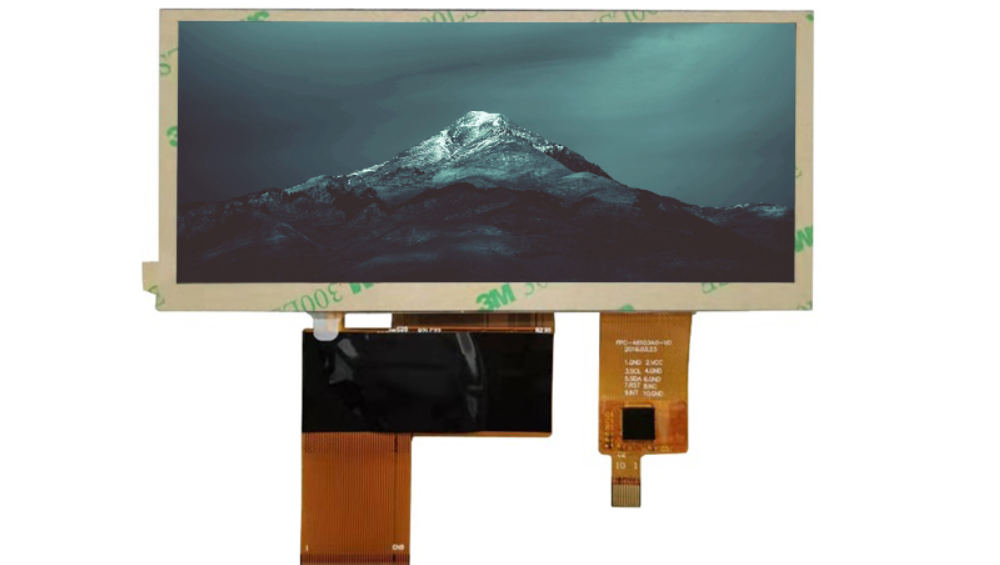
Non-standard formats sell products, and they charge for the privilege in ways that are not visible in a panel price. Tooling, yield, mechanical tolerance, interface configuration and content redesign all change when the format changes. Understanding the cost anatomy allows a product team to judge whether the shape is worth its price, and where a standard format with a custom front achieves the same result.
Part of the Custom Displays, Sourcing & Manufacturing guide — 46 articles on tooling, sampling, MOQ and supply-chain risk.
Last updated:
Why formats cost more than sizes
A different aspect ratio is a different product.
A panel with a standard 16:9 ratio exists in a mature supply chain: the glass, the driver arrangement, the backlight and the interface are all designed around it, and multiple makers produce similar formats. A circular, square or unusually wide panel requires either a panel made to that format or a standard panel cut or masked to present it, and either route adds tooling, yield risk or wasted material. The extra cost is not a premium on the panel; it is the absence of the economies that standard formats enjoy.
The practical question is what the format is for: whether it defines the product’s identity, or whether it is a design preference that a standard format plus a mask could satisfy.
The routes to a non-standard format
Four approaches with different economics.
| Route | How it works | Cost character |
|---|---|---|
| Native non-standard panel | Panel made to the format | Tooling and volume commitment; best appearance |
| Standard panel with custom cover glass aperture | Print or glass defines the visible shape | Moderate tooling; standard panel supply |
| Standard panel cut to shape | Panel resized and resealed | Yield risk and qualification; format freedom |
| Standard panel, active area not fully used | Content drawn within the desired shape | Lowest cost; the display’s outline remains visible |
Most products are best served by the second or fourth route: the visible shape is created by the front assembly or by the content, while the panel remains a standard part with a mature supply chain.
Circular displays
Round formats suit round products, at a price.
Circular displays are used in instruments, wearables, smart-home controls and automotive dials, and their visual appeal is genuine. A native round panel wastes the corners of the glass it is cut from, which is a real cost; a rectangular panel behind a circular aperture is cheaper but the visible active area is reduced and the corners must be masked convincingly. Where the design can accept a square or near-square active area behind a round bezel, the cost falls substantially.
The content implication is also significant: a circular layout needs its own design, and text must be laid out to fit a round boundary, which changes the information density substantially compared with a rectangular screen.
Square displays
Less dramatic, often genuinely useful.
Square formats suit instrument clusters, machine controls and products where the content is arranged in a grid rather than as a wide layout. A near-square standard panel with a custom front frequently achieves the appearance without a custom panel, because the difference between an exact square and a slightly rectangular active area is often invisible behind a bezel. Where an exact square is essential, a native square panel is available in a range of sizes, which makes it the least problematic of the non-standard formats.
The mechanical benefit is real: a square active area uses space efficiently in a compact enclosure, and the content layout is often simpler than in a wide format.
Ultra-wide formats
Bar formats with their own supply considerations.
Bar and ultra-wide formats are covered in CDTech’s bar display selection material, but the format cost anatomy is worth noting here: native bar panels exist in a limited range of sizes and resolutions, and anything outside that range means either cutting a standard panel or accepting a different aspect ratio. The interface also changes, because bar resolutions are outside standard video modes, so a controller or custom timing is usually required.
Where the format is close to an available bar panel, the cost is manageable; where it is not, the product should consider whether a standard bar format with a different visible area would serve.
The mechanical consequences
Shape changes the mounting problem.
A non-standard format changes the mounting: the load path, the bracket, the gasket and the cover glass all have to be designed for the new outline. A circular panel has a different stress distribution from a rectangular one, and a very wide panel is more susceptible to bending and to mura from uneven mounting. The mechanical design effort is part of the cost of a custom format and is easy to underestimate.
Where the format is presented by a cover glass rather than by the panel, the mechanical design is somewhat simpler because the panel itself remains standard and its mounting can follow established practice.
Interface and content implications
A different shape is a different design.
Non-standard resolutions usually mean non-standard timings, so the host may need a controller or a scaler, and the content has to be composed for the new aspect ratio rather than scaled from a standard layout. Both are development costs, and both are recurring if the product family has several formats. Where a product uses a standard aspect ratio, the content can be reused across variants and the interface can follow established practice.
The content redesign is often the largest hidden cost, particularly for products whose interface was developed for a 16:9 screen and whose layout must be rebuilt.
Deciding whether the format is worth it
Four questions that clarify the trade.
- Does the shape communicate something about the product that a standard format cannot?
- Can the shape be created by the cover glass or by the content rather than by the panel?
- Is the volume sufficient to amortise panel-level tooling, if that route is needed?
- Has the content redesign and the mechanical work been costed, not only the panel?
Where the answers support a custom format, the second route – a standard panel with a custom front – is usually the best balance. Where the shape is a genuine product requirement and the volume supports it, a native panel produces the best appearance at the highest commitment.
Why the Format Itself Carries Cost
Two panels with the same diagonal can differ by 15 % in usable area, and a circular active area leaves about a fifth of the blank unused — those two numbers, not the size label, are what the business case has to absorb. Format cost is a geometry and yield problem before it is a negotiation problem.
Model with stated assumptions: a 312.4 mm diagonal (12.3 inch), nominal aspect ratios, and a circular active area inscribed in a square blank. The comparison is area utilisation, so it ignores the tooling, cutting and yield penalties that sit on top — treat it as the floor of the format premium.
| Format | Active area at 312.4 mm diagonal | Relative to 16:9 | What it implies |
|---|---|---|---|
| 16:9 (reference) | 41707 mm² | 100 % | Standard panel, standard tooling |
| 21:9 ultra-wide | 35340 mm² | 85 % | Same diagonal buys 15 % less active area |
| 4:3 | 46851 mm² | 112 % | More area, but a shape few consumer supply chains still run |
| Circular (inscribed in a square blank) | 78.5 % of the blank | — | Roughly a fifth of the glass cannot carry active pixels |
The table explains the two commercial facts behind custom formats. An ultra-wide panel is not simply “a wider panel”: for the same diagonal it gives away active area, and if the product actually needs that area for information density, the format is the wrong lever. A circular display is worse paid for in glass, because the corners of the blank cannot be used and the wasted area has already been paid for upstream — which is why circular products usually justify the format through industrial design rather than through cost.
What to put in the business case. The active-area figure the product really needs, the format options that deliver it, the tooling and cutting steps each format adds, the yield assumption for the shape, and the content cost of adapting the user interface to it. A sample and quotation request will price the tooling once the format and the volume are both stated.
Costs to include in the business case
Five items beyond the panel price.
- Panel tooling and minimum order quantity, where a native format is required.
- Yield loss from cutting, where a standard panel is resized.
- Cover glass and print tooling for the new outline.
- Mechanical redesign: bracket, gasket, mounting and validation.
- Content redesign and interface configuration.
Including all five usually shows that the format decision is dominated by items other than the panel, which is precisely why the fourth route – a standard panel with the desired visible area – is so often the right answer. Glass substrate properties for the front assembly are documented by suppliers such as AGC, and panel format availability by manufacturers such as Innolux. CDTech’s notes on custom panel sizes and on second cutting describe the routes and their risks in more detail.
FAQ
Why are circular and square displays more expensive?
Because they lack the economies of standard formats: a native round panel wastes glass, and a resized panel adds yield risk and qualification work. Where the shape can be created by the cover glass or by the content instead, the panel remains a standard part and the cost falls substantially.
Can a standard panel be used for a circular display?
Yes, in two ways: a rectangular panel behind a circular aperture with the corners masked, or content drawn within a circular layout on a square or near-square panel. Both reduce cost compared with a native round panel; the trade is that the active area is smaller than the outline suggests.
What hidden costs should be included in a custom format business case?
Panel tooling and minimum order, cutting yield loss, cover glass and print tooling, mechanical redesign including bracket, gasket and validation, and content redesign plus any interface configuration. The panel price is usually a minority of the total.
Do ultra-wide formats need special interfaces?
Usually yes. Bar and ultra-wide resolutions fall outside standard video modes, so the host may need a controller or a scaler that generates the panel’s timing and presents a standard mode to the host. That development cost belongs in the format decision.
Next step
Send the desired outline, visible area and volume to CDTech; the reply will compare a native format with a standard panel behind a custom front, with the tooling and interface implications of each.
Contact sales@cdtech-lcd.com or use the contact page.
Related articles
 Fuel Dispenser and Forecourt Displays: Safety, Sunlight and Continuous UseCustom Displays, Sourcing & Manufacturing
 Landed Cost for Display Modules: Freight, Duty, Packaging and the True Unit PriceCustom Displays, Sourcing & Manufacturing
 How to Audit a Display Factory: An Evidence-Based ChecklistCustom Displays, Sourcing & Manufacturing
 TFT LCD vs OLED vs E-Paper for Industrial Products: A 2026 Decision FrameworkCustom Displays, Sourcing & Manufacturing