Protecting Your Display Design: Tooling Ownership, IP and NDA Practice
Tooling and IP in display sourcing: see who pays, owns and receives each asset, and the two contract boundaries buyers get wrong most often.
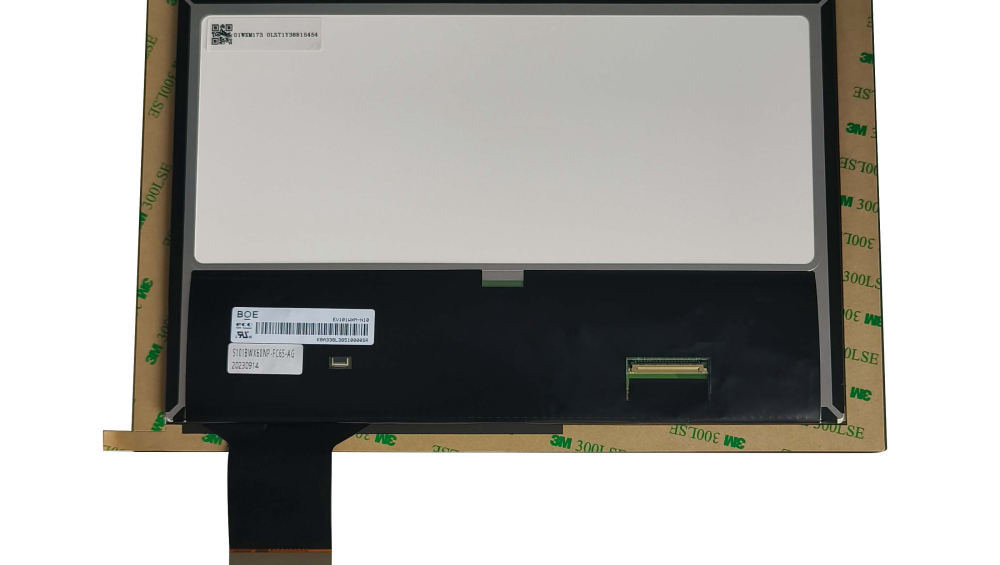
Display customisation involves a specific exposure: the buyer funds tooling for a glass shape, a print layout or an FPC, and those items are the product’s visible identity. Protecting that investment is less about general legal language and more about four instruments: who owns the tooling, who holds the drawings, whether the design is exclusive, and what happens when the relationship ends.
Part of the Custom Displays, Sourcing & Manufacturing guide — 46 articles on tooling, sampling, MOQ and supply-chain risk.
Last updated:
What tooling ownership actually covers
A tool is a physical asset with a purpose attached.
Owning a tool usually means the right to have parts made from it, to have it maintained, and to take it elsewhere. For displays, the tools are typically print screens, cutting or forming tools for cover glass, FPC tooling, backlight tooling and test fixtures. Ownership without transferability is of limited value, so the agreement should state who owns the tool, whether it can be moved, who pays for maintenance, and how it is handed over at the end of the relationship. Where a certificate is cited as evidence of the supplier system, its scope can be checked through an accreditation register as described by the International Accreditation Forum.
Where tooling is amortised into the unit price rather than paid separately, ownership is often less clear – an argument for paying tooling as a separate line item even when the total is the same.
Four questions to settle at the start
They are cheap now and expensive later.
Tooling and design ownership questions
| Question | Why it matters |
|---|---|
| Who owns each tool, and who paid for it? | Determines who can authorise its use and movement |
| Can the tool be transferred to another supplier? | Determines whether the buyer has a real second source |
| Who maintains it, and who pays for repair? | Wear is normal; responsibility should be defined |
| What happens to the tool if the programme ends? | Storage, return or destruction should be agreed |
Suppliers generally accept these terms when they are raised at the quotation stage, and respond differently when they are raised during a dispute, which is the practical reason to settle them early.
What an NDA can and cannot protect
It protects information, not designs in the abstract.
A non-disclosure agreement covers information disclosed in confidence, which for displays includes drawings, specifications, the intended application, volume plans and pricing. It does not prevent a supplier from making a similar product for another customer using knowledge it already had, and it does not protect a design that has become public through the product’s own launch. Effective protection combines the agreement with practical measures: marking documents confidential, disclosing only what is necessary, and recording what was disclosed and when.
Where the design is genuinely novel and commercially significant, the appropriate instrument is a registered design or patent rather than an NDA, and that decision belongs with the buyer’s own advisers.
Design registration and the display supply chain
Registered designs cover appearance rather than mechanism.
The visible elements of a display product – cover glass shape, printed layout, bezel – are candidates for design registration in many jurisdictions, and the registration is held by the party that owns the design, usually the buyer. The practical implication for a supplier is that they may be asked to acknowledge the buyer’s rights and to avoid supplying a substantially identical front to another customer in the same market. That commitment is best expressed as an exclusivity clause rather than left implicit.
Where exclusivity is agreed, its scope should be stated: which markets, which product categories and for how long, since unlimited exclusivity is commercially difficult for a manufacturer to give.
Exclusivity that both parties can live with
Scope it, price it or time-limit it.
- Market scope: the front is exclusive for a named market or customer segment.
- Category scope: exclusive for the product category, not the supplier’s whole catalogue.
- Volume condition: exclusivity holds while the agreed volume is maintained.
- Time limit: exclusive for a defined period, renewable on review.
An exclusive arrangement usually carries a price or volume implication, because the manufacturer is giving up opportunities. Stating that trade openly produces a workable agreement; leaving it implicit produces a dispute when a large order arrives from elsewhere.
Keeping the design portable
A design that cannot be transferred is not really owned.
Portability depends on documentation: complete drawings for the cover glass, print artwork, FPC layout, a bill of materials with named materials, process parameters for bonding, and the inspection standard with its boundary samples, whose optical criteria are measured using methods such as ASTM D1003. Where any of those exists only inside the supplier’s system, moving the design means recreating it. The agreement should require the documentation package to be kept current, available on request, and handed over at the end of the relationship.
Practically, buyers should hold copies of drawings and artwork as they are revised rather than waiting to request them, because supplier records can change hands or be lost.
What happens at the end of a relationship
Plan the exit while it is amicable.
- Tooling: returned, transferred or destroyed, with a defined process and cost.
- Documentation: complete package handed over, including revisions and process parameters.
- Stock and work in progress: purchased by the buyer or disposed of, with traceability records.
- Service and warranty: who supports units already delivered, and for how long.
- Confidentiality: what survives termination and for how long.
- Non-interference: whether the supplier may supply similar products to named competitors.
An exit clause negotiated at the start is usually accepted, because neither party expects to use it. The same clause requested after a disagreement is interpreted as an accusation, which is why its position in the agreement matters as much as its content.
Who Owns What: A Tooling and IP Matrix
Tooling ownership is decided by what the contract says about each asset, not by who paid the invoice, and the practical protection is a table like this agreed before the first payment. Ambiguity here is what turns a supplier change into a re-tooling project.
The matrix below is a working checklist rather than legal advice: for each asset it forces the three questions that matter — who pays, who owns, and what happens at the end. Fill in the fourth column with your own commercial intent before the quote is accepted, because after tooling is cut the negotiating position has already moved.
| Asset | Who normally pays | Who normally owns | What to write about the end state |
|---|---|---|---|
| Hardware tooling (moulds, fixtures, jigs) | Buyer, unless priced into unit cost | Negotiated — state it explicitly | Handover, buy-out, or transfer to a second supplier |
| FPC and PCB artwork | Buyer on custom designs | Buyer, with a licence for the supplier to manufacture | Deliverable files handed over on request |
| Test fixtures and software | Usually supplier | Supplier | Buyer asks for the test definition, not the fixture |
| Firmware and parameter sets | Either | Depends who wrote it | Escrow or a documented parameter list |
| Golden sample and drawings | Buyer | Buyer | Transferred as the inspection baseline |
Two boundaries are worth stating explicitly, because they are the ones buyers assume wrongly. An NDA protects confidential information you disclosed; it does not transfer ownership of a design or stop a supplier serving other customers with a different design. And exclusivity is a commercial arrangement with a cost — a supplier granting exclusivity on a panel is accepting that it cannot amortise the order across other programmes, so it normally appears with a volume commitment or a higher unit price rather than as a free clause.
What to ask for as evidence. Request a written tooling and IP schedule naming each asset and its owner, the change-control and notification terms, the list of documents you will receive at each stage (drawings, BOM revision, golden sample), and a written statement of what happens on termination. A sample and quotation request is the natural point to attach that schedule.
The practical protection checklist
Six items a buyer can control directly.
- Pay tooling as a separate line item and record ownership explicitly.
- Hold current copies of all drawings, artwork and the bill of materials.
- Mark documents confidential and disclose only what is necessary.
- Agree exclusivity with a defined market, category and duration.
- Require a complete documentation package, kept current and transferable.
- Agree the exit process at the start of the relationship.
Together these give the buyer a design that can be moved, a tool that can be used elsewhere, and clarity about what the supplier may do with similar designs. That combination is what design protection means in a manufacturing relationship.
FAQ
Who owns the tooling for a custom display?
It should be stated explicitly in the agreement: who paid for it, who owns it, who maintains it and whether it can be transferred. Where tooling is amortised into the unit price, ownership is often unclear, which is a reason to pay it as a separate line item.
Does an NDA protect a display design?
It protects confidential information such as drawings, specifications and volume plans, but it does not prevent a supplier from using knowledge it already had or from making similar products for others. For genuinely novel appearance, a registered design or patent is the appropriate instrument.
How can exclusivity be agreed practically?
Scope it by market, product category and duration, and tie it to a volume condition. An unlimited exclusivity commitment is commercially difficult for a manufacturer, so an exclusive arrangement usually carries a price or volume implication that should be discussed openly at the quotation stage.
What should happen to tooling if the relationship ends?
The agreement should state whether the tool is returned, transferred or destroyed, who pays, how documentation and work in progress are handled, and which obligations survive termination. Negotiating this at the start is straightforward; raising it after a dispute is not.
Next step
Send the customisation scope, expected volume and protection requirements to CDTech; the reply will state the tooling basis, ownership terms and documentation package available for the programme.
Contact sales@cdtech-lcd.com or use the contact page.
Related articles
 Fuel Dispenser and Forecourt Displays: Safety, Sunlight and Continuous UseCustom Displays, Sourcing & Manufacturing
 Landed Cost for Display Modules: Freight, Duty, Packaging and the True Unit PriceCustom Displays, Sourcing & Manufacturing
 How to Audit a Display Factory: An Evidence-Based ChecklistCustom Displays, Sourcing & Manufacturing
 TFT LCD vs OLED vs E-Paper for Industrial Products: A 2026 Decision FrameworkCustom Displays, Sourcing & Manufacturing