Segmented and Memory LCDs: Low-Power Alternatives Buyers Keep Overlooking
Segmented and memory LCD power: see the current each option draws, the battery life that buys on a 2,000 mAh cell, and what a TFT really costs.
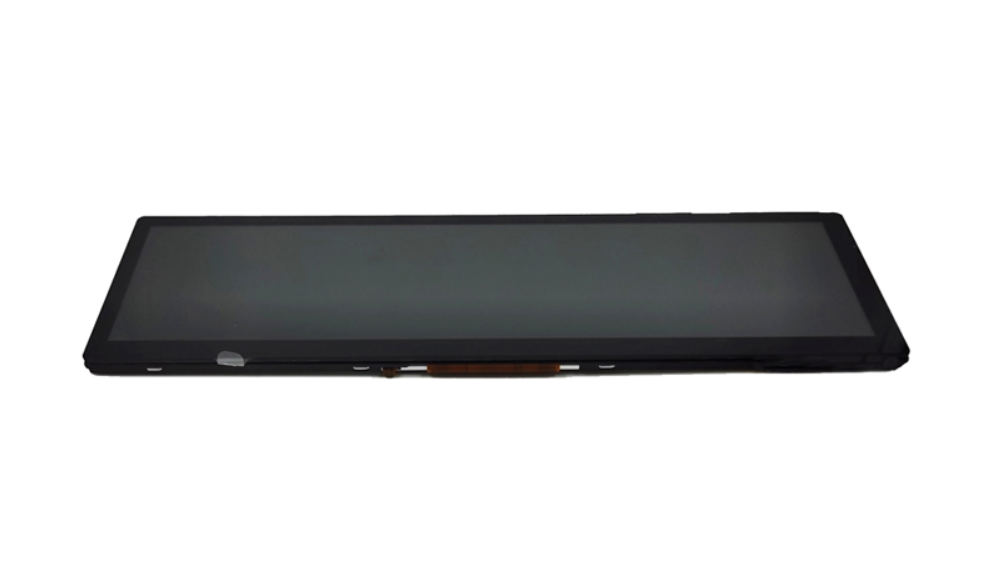
A surprising number of products specify a small colour TFT to display a number, a state and an icon. The result works, but it consumes power continuously, needs a driver, and often adds a backlight that the product did not need. Segmented and memory LCDs exist for exactly that content, and they change the power and lifetime calculation fundamentally.
Part of the Custom Displays, Sourcing & Manufacturing guide — 46 articles on tooling, sampling, MOQ and supply-chain risk.
Last updated:
What each technology actually is
Two simple displays with different properties.
A segmented LCD has fixed electrodes shaped as the digits, icons and bars it will display, so the content is determined by the artwork rather than by a pixel grid. A memory or bistable LCD has a matrix that holds its state without continuous refresh, allowing more detailed content than a segmented panel while consuming power only when it changes. Both are reflective by nature, which makes them readable in bright light and dependent on ambient light or front lighting in the dark.
The distinction matters for selection: segmented suits a small, fixed information set, while memory LCDs suit more detailed but infrequently changing content.
What Battery Life Does Each Option Actually Buy?
The gap between these options is three to four orders of magnitude, and almost all of it sits in the backlight — a 2,000 mAh cell that lasts years behind a segmented or memory LCD is measured in days behind a small TFT. That is the number a battery-powered instrument has to start from.
Model with stated assumptions: a 2,000 mAh cell used to roughly 100 % of its capacity (no self-discharge, no regulator losses, no other loads), average currents as listed, and a static or slow-changing user interface. Real designs add a regulator, a host MCU, and sleep behaviour, so treat the table as the display’s share of the budget rather than the product’s total runtime.
| Display option | Assumed average current | Life on a 2,000 mAh cell (model) | What sets the current |
|---|---|---|---|
| Segmented static LCD, no backlight | 20 µA | 11.4 years | Current is dominated by the driver, not the display |
| Memory LCD, 1 Hz partial refresh | 50 µA | 4.6 years | Refresh rate and update area drive the average |
| Memory LCD, 10 Hz refresh | 500 µA | 0.5 years | Ten times the refresh, ten times the average current |
| 2.4″ TFT, 200 nits backlight, static UI | 40 mA | 2083.3 days | The backlight consumes almost all of it |
The table also shows where a memory LCD can go wrong. Its advantage comes from refreshing rarely, so a design that redraws the whole screen at 10 Hz has quietly turned it into a different class of product — the current scales with refresh rate and with the updated area, and the firmware decides both. The segmented row is the floor for an always-on readout; the TFT row is what a colour UI costs, and it is why colour instruments use a duty cycle rather than continuous display.
What to ask for as evidence. Request the module current at the refresh rate and update area the product will actually use, the backlight current at the target luminance, the driver’s standby current, and the measurement conditions (temperature, supply voltage, interface clock) for those figures. The quality assurance and factory compliance page lists the module documentation CDTech keeps behind those numbers.
Power consumption compared
The difference is not incremental.
| Display | Static content | Backlight | Driver complexity |
|---|---|---|---|
| Segmented LCD | Microwatts to a few tens of microwatts | Optional; often none | Very low; direct drive possible |
| Memory/bistable LCD | Near zero while static | Optional for dark conditions | Moderate; simple interface |
| Transflective TFT | Backlight or ambient dependent | Optional, with reduced colour | Higher; controller required |
| Transmissive TFT | Continuous backlight | Required | Higher; controller and backlight driver |
The comparison that matters is over a whole product’s duty cycle: a display that consumes microwatts while static can extend a battery-powered product’s life from days to months, which frequently changes the product’s architecture rather than merely its display.
Sunlight readability without a backlight
Reflection is an advantage outdoors and a limitation indoors.
Because these displays modulate ambient light, they become more readable as the environment gets brighter, which is the opposite of an emissive display. In bright conditions no backlight is required, so the display contributes nothing to the power budget or the thermal load. In dark conditions the display needs front lighting, either by an integrated light guide or by the product’s own illumination, which reintroduces some power consumption and design complexity.
Where the product’s environment is usually bright, that trade is favourable; where it is usually dark, it is not, and the decision moves towards a transmissive display.
What they cannot do
Three limitations that decide the case.
- Colour and graphics: segmented panels show fixed shapes; memory LCDs show limited detail and usually monochrome or limited colour.
- Motion: refresh rates are low, so animation and video are not feasible.
- Cold-temperature response: liquid crystal switching slows at low temperature, so content changes may be visibly slow in freezing conditions.
Where any of these is a requirement, the choice moves to a TFT. Where none is, the simpler display usually produces a better product: lower power, longer battery life, a simpler interface, and often a lower total cost.
Tooling and content flexibility
Segmented content is fixed at tooling.
Because segmented electrodes are artwork, any change to the displayed content – an additional symbol, a different layout, a new language – requires new tooling. That makes the technology attractive for high-volume products with a stable content set and unattractive for products whose interface evolves. Memory LCDs offer more flexibility because the content is drawn into a matrix, though the display’s resolution limits detail.
The decision should therefore consider the product’s expected change rate, not only its current design. A product that will gain features in a firmware update needs a matrix display; one whose interface is genuinely fixed can use segments.
Interface and driver simplification
Fewer pins and less firmware.
A segmented display can often be driven directly from a microcontroller’s LCD peripheral, with no external driver, no frame buffer and minimal firmware. Memory LCDs typically use a simple serial interface with a small buffer. Both reduce the pin count, the board area and the firmware effort compared with a TFT, which needs a controller, a frame buffer and, in most cases, a backlight driver. The cumulative effect on a small product’s bill of materials and development effort is often larger than the display’s own cost difference.
CDTech’s notes on SPI and I2C for small displays cover the interface choices that suit these panels.
Where they beat a small TFT
Four situations where the simpler display wins.
- Battery-powered products with a tight energy budget and infrequent content changes.
- Instruments showing a small set of numbers and status indicators.
- Products used mainly in bright conditions, where reflection is an advantage.
- High-volume products with a stable content set, where tooling amortises well.
In each case the benefit is not only power: the simpler interface and the absence of a backlight reduce the thermal load, the failure modes and the firmware complexity. Interface practice for these small panels is documented in material from component vendors such as STMicroelectronics. That combination often makes the simpler display the more reliable product as well as the cheaper one.
Where a TFT is the right answer
Three requirements that rule the alternatives out.
- Content that includes graphics, colour or variable layout.
- Content that animates or updates rapidly.
- Operation across a wide temperature range with prompt updates.
Where these appear, the TFT’s power consumption is the price of capability rather than an inefficiency, and the design effort should go into managing it – dimming, content design, efficient drivers – rather than into replacing the display.
Selection questions
Five questions that settle the choice.
Selection questions for simple display technologies
| Question | If yes |
|---|---|
| Is the content a fixed set of values and icons? | Segmented display |
| Does the content change eventually but without animation? | Memory or bistable LCD |
| Is the product battery-powered with a tight budget? | Prefer reflective technologies |
| Is the environment usually bright? | Reflection is an advantage; backlight optional |
| Will the interface change over the product’s life? | A matrix display, possibly a TFT |
Working through these five questions takes minutes and often changes the display specification substantially. The remaining work is to confirm the achievable sizes, the temperature range and the tooling implications of the chosen technology.
FAQ
What is the advantage of a segmented LCD?
Very low power consumption, high contrast in bright light without a backlight, a simple interface that a microcontroller can drive directly, and a low bill-of-materials impact. Its limitation is that the displayed content is fixed by the electrode artwork, so any content change requires new tooling.
What is a memory LCD?
A matrix display that holds its image without continuous refresh, so it consumes power only when the content changes. It offers more content flexibility than a segmented display while retaining very low static power, and is usually monochrome or limited in colour with a low refresh rate.
Can these displays be read in sunlight?
Yes – they reflect ambient light, so they become more readable as the environment brightens, with no backlight power required. In dark conditions they need front lighting, either integrated or from the product’s own illumination.
When should I choose a TFT instead?
When the content includes graphics, colour or variable layout, when it animates or updates rapidly, or when the product must operate across a wide temperature range with prompt updates. In those cases the TFT’s power consumption is the price of capability, and the effort belongs in managing it.
Next step
Send the content the display must show, the update rate and the power budget to CDTech; the reply will compare segmented, bistable and TFT options for the application, with the tooling and interface implications of each.
Contact sales@cdtech-lcd.com or use the contact page.
Related articles
 Fuel Dispenser and Forecourt Displays: Safety, Sunlight and Continuous UseCustom Displays, Sourcing & Manufacturing
 Landed Cost for Display Modules: Freight, Duty, Packaging and the True Unit PriceCustom Displays, Sourcing & Manufacturing
 How to Audit a Display Factory: An Evidence-Based ChecklistCustom Displays, Sourcing & Manufacturing
 TFT LCD vs OLED vs E-Paper for Industrial Products: A 2026 Decision FrameworkCustom Displays, Sourcing & Manufacturing