Low Power TFT Display: Efficient, Rugged Visual Interfaces for August 2026
Discover how a low power TFT display supports energy-efficient, wide-temperature, water-resistant, and hardware-compatible embedded product design. Low Power TFT Display Market Context A low power TFT display is becoming a core design choice for…

Discover how a low power TFT display supports energy-efficient, wide-temperature, water-resistant, and hardware-compatible embedded product design.
Low Power TFT Display Market Context
A low power TFT display is becoming a core design choice for battery-powered instruments, smart appliances, industrial HMIs, medical devices, and vehicle terminals. Industrial automation systems were valued at approximately US$232 billion in 2023 and are projected to reach about US$493 billion by 2032, while the industrial display market was estimated at US$8.5 billion in 2024.
The demand is clear: equipment needs responsive colour interfaces without excessive energy consumption, thermal load, or field-maintenance risk. Yet display selection is increasingly judged by measurable performance under temperature, moisture, vibration, sunlight, and electrical integration conditions—not only by size and resolution.
CDTech Low Power TFT Display Solutions
CDTech develops TFT LCD, touch-display, and optical-bonding solutions for industrial control, smart home, medical, automotive, vehicle-display, and instrumentation applications. The company supports standard and customised display development, helping OEM teams align panel, touch, optical, and interface requirements.
For a low power TFT display project, CDTech’s approach is especially relevant when an application requires more than a standard panel: custom backlight design, touch integration, cover glass, optical bonding, anti-glare treatment, and a display interface selected around the host hardware.
What Is a Low Power TFT Display?
A low power TFT display is an active-matrix LCD module designed to control energy use across the LED backlight, LCD driving circuit, display timing, and standby operation while maintaining the visual performance needed for a specific embedded device.
Rather than being defined by one fixed wattage, a low power TFT display should be evaluated under real brightness, image-content, refresh, temperature, and host-system conditions.
Low Power TFT Display Pain Points
A display’s rated power figure can be misleading when it is reviewed outside the final product. A module may appear efficient during indoor evaluation but require maximum brightness in outdoor or high-ambient-light use. The result is faster battery drain, more heat inside the enclosure, and less predictable field performance.
Brightness is often the largest power variable in an LCD system because the backlight must remain active for content to be visible. Lowering the backlight can reduce energy use, but a display that becomes unreadable in its installed environment creates usability problems and can force users to raise brightness permanently.
Wide-temperature requirements add another layer of complexity. Low temperatures can slow liquid-crystal response, while high temperatures can change contrast, affect optical materials, and increase stress on LED backlights, adhesives, polarizers, touch layers, and driver electronics. A device that performs well at room temperature may show image lag, ghosting, reduced brightness, or unstable touch response at thermal extremes.
Waterproofing also requires precise language. A display module is not necessarily waterproof simply because it is installed behind a cover lens. The final protection level depends on the complete assembly: enclosure design, gaskets, adhesives, cable outlets, connectors, touch stack, and manufacturing quality. IP testing should therefore be performed on the finished device, not assumed from the LCD panel alone.
Hardware compatibility can become the most expensive late-stage failure. An apparently correct connection may still produce image noise, colour mismatch, flicker, poor boot behaviour, touch interference, electromagnetic compatibility issues, or unstable communication. Panel timing, supply voltage, power sequencing, cable routing, firmware, grounding, and host-board design should be validated together.
Low Power TFT Display Statistic
The industrial display market was valued at approximately US$8.5 billion in 2024 and is projected to grow as automation, connected equipment, warehouse digitisation, and advanced HMI deployment expand.
Low Power TFT Display Comparison
| Evaluation point | CDTech customised TFT LCD solution | Standard commercial TFT module | E-paper display |
|---|---|---|---|
| Display configuration | Can be developed around brightness, touch, optical, mechanical, and interface needs | Specifications are generally fixed | Built for mostly static content |
| Energy strategy | Can consider backlight, touch, interface, and operating profile together | Usually depends on host-side brightness control | Extremely low static-image power use |
| Wide-temperature testing | Can be planned around the actual project environment | Often intended for typical indoor use | Refresh behaviour may be limited at temperature extremes |
| Water-resistance integration | Can support touch, cover glass, bonding, and enclosure-level design | Requires separate mechanical integration | Depends heavily on final housing design |
| Hardware interface options | Supports interfaces including SPI, RGB, MCU, LVDS, MIPI, and HDMI | May not match the selected host platform | Uses a different controller and refresh architecture |
| Suitable applications | Industrial, appliance, medical, vehicle, and custom embedded devices | Indoor, standard, cost-sensitive products | Labels, signs, shelf tags, and slow-updating information |
Low Power TFT Display Features
Optimised optical performance
Energy efficiency must be balanced with real-world readability. CDTech supports custom backlight, anti-glare, and optical-bonding options that can help engineers address brightness, reflections, viewing conditions, and overall visual performance in the intended device environment.
Display and touch integration
Integrating the LCD, touch sensor, cover glass, and bonding approach early can reduce mechanical uncertainty and simplify final assembly. It also gives design teams a clearer path to evaluating touch responsiveness, visual reflections, and sealing needs together.
Flexible interface selection
CDTech supports SPI, RGB, MCU, LVDS, MIPI, HDMI, and other display-interface options. The correct selection depends on the host processor, available bandwidth, cable distance, PCB routing, boot process, EMI requirements, and firmware support.
Low Power TFT Display Examples
A portable diagnostic device can use controlled brightness, a matched display interface, and sleep-mode behaviour to support practical runtime goals.
A smart kitchen appliance can combine a capacitive touch display with a sealed cover-lens structure to better address moisture, cleaning, and repeated daily interaction.
A vehicle controller can validate the display, connector, touch layer, cover lens, and enclosure as one wide-temperature and vibration-exposed system.
Related CDTech Display Solutions
A low power TFT display should be selected according to the intended equipment category. Smart-home products may focus on compact touch interaction, moisture exposure, easy cleaning, and daily energy consumption. Industrial products may prioritise operating temperature, interface stability, long-term availability, and visibility under factory lighting. Vehicle products may need sunlight readability, vibration resistance, thermal stability, and reliable control interaction.
CDTech’s industrial LCD display solutions are relevant to factory HMIs, embedded controllers, machine interfaces, and measurement equipment. These projects benefit from early specification of operating hours, interface requirements, visual environment, and mounting constraints.
For automotive, transport, and dashboard-oriented projects, CDTech’s vehicle LCD display solutions can be evaluated alongside requirements for brightness, temperature, vibration, and mechanical integration.
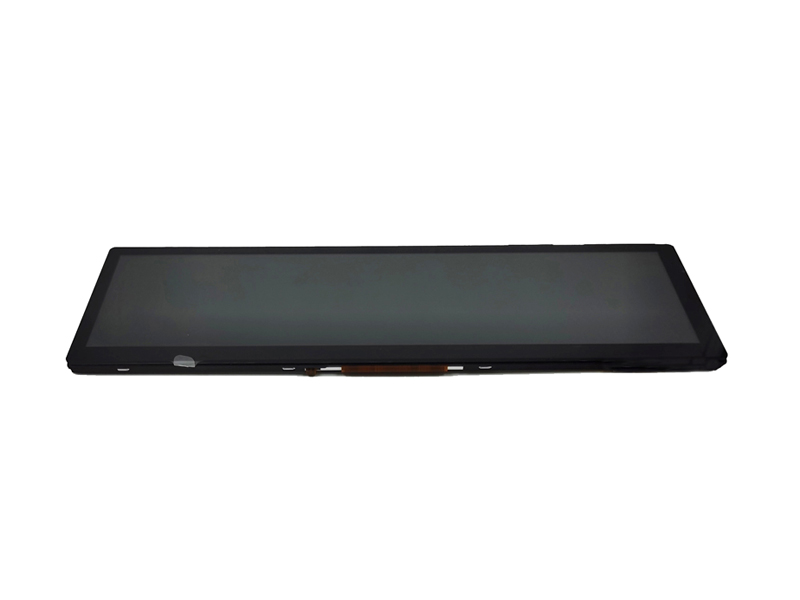
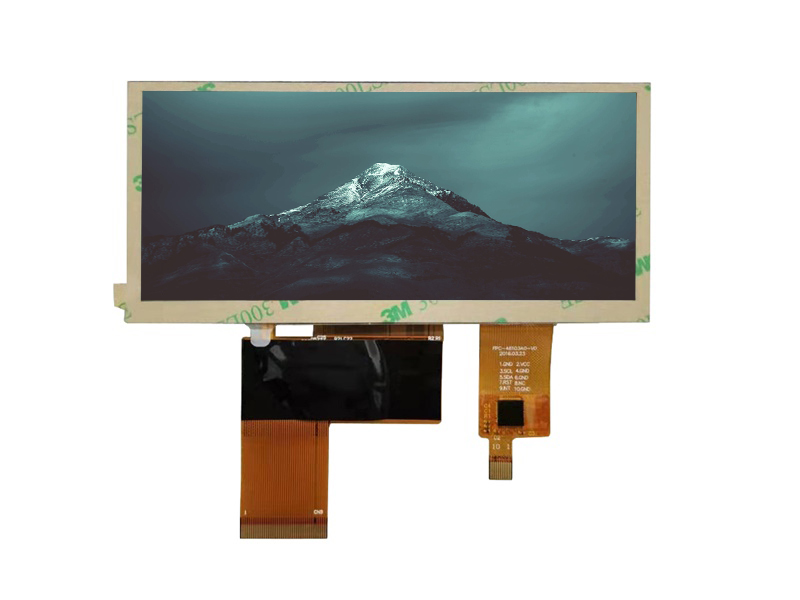
For narrow installation spaces, control panels, appliance interfaces, and information screens, bar-type LCD displays can be considered for their layout flexibility. Where a project has non-standard glass, touch requirements, FPC arrangement, pinout, optical stack, or mechanical dimensions, custom LCD display development can provide a more appropriate route than redesigning the host product around an off-the-shelf module.
How to Test a Low Power TFT Display
- Define the actual operating profile. Record display brightness targets, daily operating hours, content type, refresh frequency, standby duration, touch frequency, ambient light, and target battery life or power-supply capacity.
- Measure system-level consumption. Test the display, backlight, touch controller, display interface, processor, voltage regulators, and related circuitry under dark screens, bright screens, typical UI screens, video, sleep mode, wake-up, and maximum brightness.
- Create a wide-temperature validation plan. Test power-on behaviour, image stability, response time, brightness, contrast, touch function, and power consumption at the target low and high operating temperatures. Room-temperature testing alone does not prove wide-temperature suitability.
- Run environmental stress tests. Separate cold, dry heat, damp heat, thermal cycling, vibration, and shock tests according to the end-use environment. Humidity testing should evaluate the risk of condensation, corrosion, optical defects, adhesive changes, and touch instability.
- Validate water resistance on the finished product. Choose an IP target based on genuine exposure risks: dust, accidental drips, rain, cleaning, washdown, water jets, or temporary immersion. Do not treat IPX5 water-jet protection and IPX7 temporary-immersion protection as equivalent.
- Confirm hardware compatibility before production. Validate voltage rails, interface timing, pinout, connector fit, inrush current, reset sequence, signal integrity, grounding, EMI behaviour, cable design, firmware drivers, touch tuning, and enclosure revision. Maintain records for each validated panel and firmware version.
Low Power TFT Display Use Cases
Scenario: Battery-powered field instrument
Traditional approach: A team chooses the display with the lowest listed power rating and assumes the specification reflects real usage. During outdoor deployment, operators raise brightness to maximum because the screen is difficult to read. Battery runtime drops below expectations, and the enclosure becomes warmer than planned.
With CDTech: The team can start by defining ambient light, desired viewing angle, operating duration, touch requirements, host interface, and battery target. CDTech can support the evaluation of a customised TFT LCD, touch, and optical solution that is closer to the true operating environment rather than a basic room-temperature benchmark.
Scenario: Moisture-prone smart appliance
Traditional approach: A standard LCD is selected first, then fitted behind a front panel at a later stage. Condensation, cleaning chemicals, wet hands, reflections, and touch response become separate engineering problems. The enclosure needs repeated redesigns to improve sealing and usability.
With CDTech: The display can be planned alongside capacitive touch, cover glass, anti-glare treatment, optical bonding, and a practical sealing strategy. CDTech supports display solutions for smart-home and appliance applications, allowing teams to assess the full visual and interaction stack earlier in development.
Scenario: Vehicle or outdoor control terminal
Traditional approach: The project begins with a high-brightness panel but delays thermal, vibration, connector, voltage, and interface testing until the prototype stage. The result can be unstable images, excess heat, unreliable connections, or field-service complexity.
With CDTech: The project can evaluate a vehicle or industrial display solution around mounting structure, sunlight conditions, display interface, cable arrangement, cover lens, thermal path, and environmental verification. This helps keep the display decision connected to the complete terminal architecture.
Low Power TFT Display FAQ
What makes a TFT display low power?
A low power TFT display reduces energy demand through an appropriate combination of backlight design, display-driving method, brightness control, interface configuration, sleep behaviour, and system-level power management. The final consumption depends on the exact module and use case, so designers should measure power under actual operating conditions rather than rely only on a catalogue figure.
How should a wide-temperature TFT display be tested?
A wide-temperature TFT display should be tested at the target low and high operating limits while checking power-on behaviour, colour consistency, contrast, brightness, response time, image retention, touch response, and electrical stability. The exact accepted temperature range should come from the selected module’s documentation and the finished product’s validation plan.
Is a low power TFT display waterproof?
Not automatically. The TFT module may be suitable for use in a sealed product, but water resistance depends on the complete assembly. Cover glass, gaskets, adhesives, enclosure geometry, connectors, cable entries, and manufacturing control all influence the final IP protection level.
What IP rating is best for a low power TFT display?
The appropriate IP rating depends on real exposure conditions. A device that faces dust and routine washdown may need a different design from a handheld product that only faces occasional splashes. Select the target based on the installation environment, cleaning process, user behaviour, service requirements, and expected water exposure.
How do I confirm TFT display hardware compatibility?
Check the interface protocol, display resolution, timing requirements, operating voltages, power sequence, connector pinout, cable length, PCB layout, EMI behaviour, grounding, touch-controller support, mechanical dimensions, and firmware driver availability. CDTech supports multiple interface options, but each selected module must be confirmed against the host hardware documentation.
Can a low power TFT display replace e-paper?
It depends on the application. TFT LCD is generally better for colour graphics, fast updates, animated content, responsive touch interaction, and live device data. E-paper is often better for static or rarely changed information where extremely low standby power is the primary requirement.
Low Power TFT Display Selection Strategy
A low power TFT display is not simply a component purchase. It is a system-level design decision involving backlight performance, optical design, touch integration, enclosure sealing, heat management, battery capacity, power architecture, interface behaviour, and field conditions.
The most reliable process begins with the real deployment environment, converts it into defined electrical and environmental test criteria, and validates the finished product instead of only the LCD module. This approach reduces late-stage rework while supporting a better balance between visual quality, energy use, reliability, and product usability.
Start a Low Power TFT Display Project
CDTech is a Shenzhen-based manufacturer of TFT LCD, touch-display, HDMI-display, and optical-bonding solutions for standard and customised product development. For a low power TFT display project, contact CDTech with the target temperature range, brightness expectations, water-exposure conditions, operating profile, host interface, and validation requirements.
Sources
Market.us — Industrial Automation Systems Market 2024
Strategic Market Research — Industrial Display Market 2024
U.S. Department of Energy — Purchasing Energy-Efficient Televisions
Intertek — IEC 60068-2-30 Damp Heat, Cyclic Testing
Castle Compliance — IEC 60529 Ingress Protection Testing 2026
Crystal Display Systems — Wide Temperature TFT Displays 2025