Passenger Information Displays for Buses and Trains: Standards, Readability and Reliability
Passenger information displays for buses and trains: rail standards, wide temperature and thermal cycling, vibration, voltage transients and legibility.
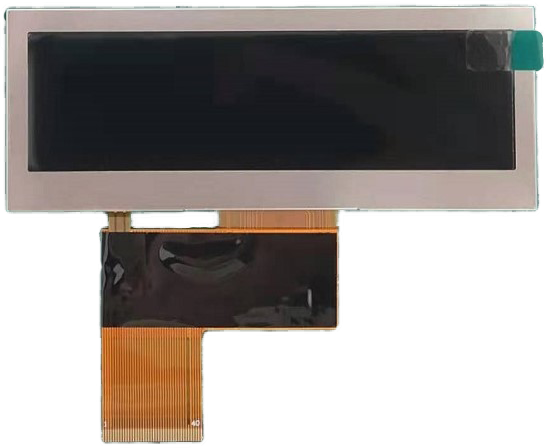
A passenger information display spends its life being read at a glance by someone standing, in a vehicle that is accelerating, in lighting that swings from tunnel darkness to direct sun through a window. It is also expected to run for the life of the vehicle with almost no maintenance. The specification that satisfies those conditions is closer to railway equipment practice than to signage, and the standards that govern it are specific.
Part of the Industrial LCD Displays guide — 40 articles on continuous duty, sealing and long service life outside the cabin.
What passengers need to read from a standing position
Destination, next stop and status, in large characters.
The information hierarchy is short and stable: what this service is, where it is going next, and whether anything has changed. Passengers may read from several metres in a moving vehicle, so character height and contrast dominate the specification, and the layout must survive partial obstruction by other passengers. Colour is useful for highlighting disruption but must not be the only carrier of meaning, since a proportion of passengers cannot distinguish hues reliably.
Design the display for the worst reading position rather than the average one, and verify in a vehicle with the lighting, vibration and seating layout in place.
EN 50155, EN 45545 and fire/smoke requirements
Rail vehicles bring their own standards family.
Rail equipment is typically specified against the EN 50155 family for electronic equipment on rolling stock, covering temperature classes, supply voltage ranges, transients and vibration, and against EN 45545 for fire behaviour of materials in railway vehicles. The European Union Agency for Railways and bodies such as the International Union of Railways publish the regulatory and technical context in which these requirements sit, and the standards themselves are maintained through CEN-CENELEC.
Two consequences matter for displays. First, the supplier must know which temperature class and which supply range applies, because those determine component selection. Second, the materials in the front assembly – glass, adhesive, printing, gasket, plastic – must satisfy the fire and smoke requirements, and that is a material declaration, not a panel choice.
Wide temperature and rapid thermal cycling
Rail equipment is specified across a temperature class, not a comfortable range.
A vehicle may stand overnight in freezing conditions and then operate with solar gain through glazing. The relevant specification is the equipment temperature class, which the display must meet at the internal air temperature implied by its enclosure rather than at the vehicle’s ambient. Rapid cycling between these states stresses polariser adhesion, bonding layers, gaskets and solder joints, and the failures appear as optical degradation or intermittent connections rather than immediate malfunction.
CDTech’s notes on what wide temperature means for LCD displays and on thermal cycling, humidity and altitude testing describe the test structure that applies.
Vibration and shock on rail bogies and bus bodywork
The mounting location sets the vibration profile.
A ceiling-mounted display in a train sees different vibration from one mounted on a bogie frame or on bus bodywork, and the profile must be taken from the vehicle manufacturer rather than a generic standard. The display’s own failure sites are the FPC, the connector, the mounting points and the backlight stack, all of which are mechanical rather than electrical. Testing in the production mounting, with the harness connected, is the only result that transfers.
CDTech’s material on vibration and shock testing for displays covers the profile information to request and the post-test inspections that reveal latent damage.
Wide voltage input and load dump
A vehicle supply is not a bench supply.
Rail and bus supplies vary widely and include transients from switching, load dumps and, in some cases, regenerative events. The display’s electronics must accept the specified range and survive the transients, which usually means a designed input filter and a backlight driver rated for the range rather than a nominal 12 V or 24 V design. Where the display is fed from an existing auxiliary supply, the same protection applies at the point of entry.
Specify the input range and the immunity class explicitly, and test with the supply simulated rather than assumed.
Sunlight through windows and tunnel lighting transitions
Vehicles move between extremes of ambient light within seconds.
A display may pass from a dark tunnel into direct sun through a window in under a second, and the readability requirement applies at both ends and during the transition. The optical solution is the familiar one – anti-glare treatment, optical bonding and sufficient luminance headroom – plus a dimming strategy that responds quickly enough to avoid a period where the screen is unreadable. Frequent transitions also cause the readability to depend on anti-glare treatment rather than on brightness, because reflections from the window glass add to the screen’s own reflection.
CDTech’s notes on keeping transit displays clear in sunlight cover the specific case of stretched formats used in these vehicles.

Legibility standards and font size
Write the legibility requirement as a number, and test it in the vehicle.
Legibility comes from character height, stroke width, contrast and viewing distance, evaluated under the worst lighting. The practical specification is a minimum character height in millimetres for the primary information at the greatest expected reading distance, plus a contrast requirement at the highest ambient level. Rapid refresh requirements matter for scrolling text: the scroll rate must be slow enough for a standing passenger to read a full line, which usually means limiting the amount of text rather than speeding up the movement.
Accessibility considerations add language cycling and a high-contrast mode; where a second language doubles the text length, the layout must be designed for the longer of the two.
Networked content and fail-safe behaviour
The display should degrade to something useful.
Transit information displays are fed from an on-board system that may itself lose connection to the depot. The display’s fail-safe behaviour determines what passengers see: a blank screen, a stale destination, or an error message. The preferable behaviour is usually to hold the last confirmed information for a defined period and then show a neutral state, with the choice documented as part of the vehicle’s information strategy rather than left to the display firmware default.
Monitor the display’s own health as well, so that a unit which is powered but not updating is detected before passengers complain.
Accessibility and multilingual display
Design the layout for the longest language and the largest text.
Transit information frequently cycles through two or more languages, and some services are legally required to provide accessible formats including audible announcements that mirror the visual information. The display’s contribution is to remain legible when the text is longest and to provide sufficient contrast for partially sighted passengers; a high-contrast mode is a small feature with a disproportionate benefit.
Where a display is used to present safety information, the legibility requirement becomes stricter, and the fail-safe behaviour should be defined accordingly.
Certification evidence expected by transit buyers
Expect a materials and test evidence package, not a certificate.
- Temperature class and supply range with test results at the internal enclosure conditions.
- Vibration and shock report using the vehicle-specific profile, in the production mounting.
- Fire and smoke material declarations for every material in the front assembly.
- EMC test results with the configuration and levels stated.
- Traceability example and change notification commitment for the supplied module.
- Service and spare-part strategy over the vehicle’s maintenance cycle.
The regulatory context for European rail equipment is published by the European Union Agency for Railways, and industry coverage of rail electronics is available from eeNews Europe, with the standards themselves maintained through CEN-CENELEC. Interface specifications that appear in these designs are published by MIPI and HDMI, and enclosure conventions by NEMA.
FAQ
What standards apply to train displays?
Rail electronics commonly follow the EN 50155 family for temperature classes, supply ranges, transients and vibration, with fire and smoke requirements for materials under EN 45545. The vehicle manufacturer specifies the applicable classes, and the display must meet them at the internal enclosure conditions rather than at the vehicle’s ambient temperature.
How do you design a bus passenger information screen for sunlight?
Use anti-glare treatment and optical bonding to control reflections from both the screen and the vehicle’s glazing, provide luminance headroom, and specify the dimming response so readability survives the transition between tunnel and daylight. Verify in the vehicle at the worst reading position rather than on a bench.
Why do transit displays need high vibration resistance?
The mounting location determines the profile: bogie-mounted equipment sees far more than a ceiling panel, and bus bodywork transmits road input directly. The failures are mechanical – FPC fatigue, connector fretting, backlight movement – so testing must be performed in the production mounting with the harness connected.
What should a transit buyer request from a display supplier?
Temperature class test results at enclosure conditions, vibration and shock reports using the vehicle profile, fire and smoke material declarations, EMC results with the configuration stated, traceability records and a change notification agreement, plus a spare-part strategy covering the vehicle’s service life.
Next step
Send the vehicle type, mounting location, temperature class and readability distance to CDTech; the reply will identify the display format, coatings, bonding and the test evidence available for the programme.
Contact sales@cdtech-lcd.com or use the contact page; bar and stretched formats are listed under bar-type LCD displays.
Related articles
 Solar Inverter and Combiner Box Displays: Readability in Direct SunlightIndustrial & Specialist DisplaysTransparent, Reflective and High-Ambient Retail Displays: Where LCD Still WinsIndustrial & Specialist Displays
 Long Display Cables in Industrial Machines: Signal Integrity Without an Expensive RedesignIndustrial & Specialist Displays
 Rugged Displays for Harsh Environments: IP, IK and Chemical Resistance in PracticeIndustrial & Specialist Displays