Transparent Display Technology for Retail
Transparent displays in retail: how transparent LCD, OLED and LED differ, what transmittance costs, and where a see-through panel earns its place. | Target URL: https://blog.cdtech-lcd.com/transparent-display-technology/
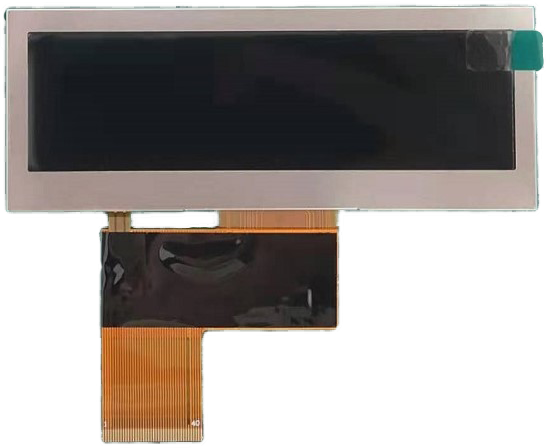
A transparent display is a solution to a specific problem: showing product and information in the same line of sight. It is not a normal display with the backlight removed, and the physics does not cooperate with that assumption. Understanding what transparency costs in contrast, brightness and complexity is what separates a window display that works from an expensive panel that looks washed out in the sun.
Part of the Industrial LCD Displays guide — 40 articles on continuous duty, sealing and long service life outside the cabin.
What is a transparent display?
A panel that passes background light while showing an image.
A transparent display forms an image in the field of view while allowing the scene behind it to remain visible. In practice that means the panel has no backlight and no opaque back polariser, and the cavity that would normally be sealed for a reflective or transmissive panel is opened to the background. The user sees the emitted or modulated image superimposed on whatever is behind. Several technologies do this in different ways, and the choice among them is decided by the ambient light the display will face.
How a transparent LCD works
An LCD needs light from somewhere, and here it comes from the room.
A conventional transmissive LCD sits between two crossed polarisers with a backlight behind. A transparent LCD removes the rear polariser and the backlight, so the image is formed by the liquid crystal modulating light that passes through from behind. The problem is that the liquid crystal alone cannot block light completely, so the dark state is not fully black, and the image competes with the background brightness. The result is a display that becomes visible mainly when it adds light through a backlight module placed at the edge or behind it, or when the background is dark. That is why a transparent LCD usually works as a light valve rather than as a self-sufficient image source.
Transparent OLED and transparent LED
Emissive transparency is simpler to make look good.
An emissive display does not need modulated external light: the pixels generate their own, so a transparent version simply has transparent spaces between the emitting areas. Transparent OLED panels are widely used in premium retail because the contrast against a bright background is much better than an LCD’s, at a higher cost and with organic lifetime to consider. Transparent LED film and mesh achieve the effect at very large sizes with individual pixel clusters, and their absence of a glass substrate makes them suitable for a shop window that must also be seen through from outside. Each family has its own supplier base and its own data sheet discipline, and the market development is tracked by outlets such as LEDinside.
Transmittance and what it costs
Every functional layer takes some light.
Transmittance is the fraction of background light that survives the panel, and it is quoted for the off state. A higher figure means a clearer view of the product and a weaker image, because the same layers that carry the electrodes and the polariser also absorb light. The trade is direct and cannot be avoided: a display tuned for a bright image will be more visible as a sheet of glass in the window, while a display tuned for transparency will look faint against a lit background. The number belongs in the specification together with the ambient illuminance at which it was measured.
Contrast without a black background
The background sets the black level.
A normal display can achieve a deep black because the panel is the only source the viewer sees. A transparent display cannot, because the background passes through the dark pixels and becomes the black level. A window facing a bright street therefore reduces contrast in proportion to the ambient light, and a product placed behind the panel adds its own contrast within the image. That is why transparent retail displays are usually positioned against a dim or controlled background, and why the largest single design decision is where the display is sited rather than which technology is chosen.
Where retail actually uses them
Windows, showcases and freezer doors.
Three applications dominate. A shop window with a transparent display behind the glass lets the product be seen while a message plays in front of it, which suits premium goods and automotive showrooms. A showcase or cabinet uses the panel as a front surface so that the object stays visible while its price or specification appears alongside it. A refrigerated cabinet uses a transparent panel as the door, showing the contents while an image is drawn over them, and the same technology appears in vending machines. Each of those settings has a different ambient light level, which is what determines the technology rather than the other way round.
Brightness, ambient light and the show window
Design for the brightest hour, not the average.
A display in a shop window must stay legible at midday in summer, which sets the luminance requirement well above what an interior screen needs. Where the technology is emissive, the answer is more output and more heat; where it is a light-valve LCD, the answer is a bright edge-lit or projector source behind it and enough contrast in the content to survive the background. Measuring the result under the real illuminance rather than in a dark room is the only way to make the decision honestly, and the method for that is described in measuring readability under real ambient light and in bar display brightness and contrast for outdoor use.
Mechanical design: glass, bonding and mounting
A transparent panel is still a piece of glass in a public place.
The front surface of a retail display is exposed to hands, trolleys, cleaning and impact, so the cover glass and its mounting carry most of the durability requirement. Where a touch sensor is added, the stack gains another transparent layer and the transmittance falls again, which has to be traded against the interaction the display is there to provide. Cover glass shapes, coatings and strengthening options are set out in cover glass design, shapes, coatings and strength and in cover glass design for industrial displays.
Touch through a transparent panel
Possible, at a further cost in clarity.
A capacitive sensor is transparent but not invisible, so putting one in front of a transparent panel reduces the background transmittance and adds its own reflections. Where interaction is essential, the usual compromise is a projected capacitive film laminated to the front glass with the touch area limited to a portion of the surface, or a frame-based sensing method that leaves the visible area clear. The manufacturing route is the same as for any other touch module, as described in custom touch panel manufacturing from sensor to module, with the extra requirement that every layer be assessed for its effect on transparency.
Reliability, cooling and cleaning
Sealed, lit and outdoors is a hard combination.
A bright display in a sealed enclosure generates heat, and a transparent display in a window receives solar load on top of it, so the thermal design becomes a first-order problem rather than a detail. Cleaning is the other daily reality: the surface will be wiped, sometimes with aggressive agents, and the coating has to survive it. Where the unit is in a public place, the enclosure also has to tolerate impact and, in some sites, deliberate interference. The same considerations that apply to a sealed outdoor display apply here, with the added constraint that the panel must remain transparent while it happens.
Selection and specification rules
Six items decide whether the concept is viable.
- The ambient illuminance at the panel face, at the brightest hour.
- The required transmittance in the off state.
- The background the display will be seen against.
- The luminance or contrast the image must reach at that illuminance.
- Whether touch is required, and over what area.
- The thermal load, the cleaning regime and the impact rating.
With those answered, the technology follows: emissive transparency where contrast against a bright background is essential, a light-valve LCD where the background can be controlled, and LED film where the surface is very large. The remaining display choices are the ones common to any project and are collected in the display and touch solutions centre. Supply and format trends for the panel families involved are published by houses such as TrendForce, and the technology positions of the major makers appear in the material published by AUO, BOE and Sharp Devices Europe, with the reflective alternative described by E Ink.
FAQ
Is a transparent display possible?
Yes. Transparent OLED, transparent LED film and light-valve LCD panels are all in production. The image is superimposed on the background, so the contrast depends on what is behind the panel and how much light is falling on it.
How does a transparent LCD work?
It removes the rear polariser and the backlight so that ambient light passes through the cell and the liquid crystal modulates it. Because the dark state cannot be fully blocked, the image competes with the background unless a light source is placed behind or at the edge.
What is the price of a transparent LCD display?
It depends far more on size, transmittance and technology than on a list price: a large emissive panel with high transmittance is a different product from a small light-valve panel. Ask for a quotation against a stated illuminance and transmittance, since those two numbers drive the cost.
Are there transparent LED screens?
Yes. LED film and mesh products place pixel clusters on a transparent substrate and are used for very large shop-window and stage applications. Their transparency comes from the spacing between the clusters, so resolution and transparency trade against each other.
Next step
Send the siting, the ambient light level, the background, the required transmittance and whether touch is needed to CDTech; the reply will state which technology can meet the concept and what the contrast will be at the brightest hour.
Contact sales@cdtech-lcd.com or use the contact page, or start from the sample and quote request page.
Related articles
 Solar Inverter and Combiner Box Displays: Readability in Direct SunlightIndustrial & Specialist DisplaysTransparent, Reflective and High-Ambient Retail Displays: Where LCD Still WinsIndustrial & Specialist DisplaysPassenger Information Displays for Buses and Trains: Standards, Readability and ReliabilityIndustrial & Specialist Displays
 Long Display Cables in Industrial Machines: Signal Integrity Without an Expensive RedesignIndustrial & Specialist Displays