MOQ, Lead Time and Payment Terms: What Is Actually Negotiable in Display Sourcing
MOQ, lead time and payment terms in display sourcing: which terms are negotiable, what drives each one, how to structure a first order and when to review.
Negotiating display supply terms is more productive when the drivers are understood. An MOQ is not a policy: it is the point at which a tooling and setup cost becomes economic. A lead time is not a promise: it is the sum of material, production, testing and logistics. Payment terms reflect risk as much as trust. Each has levers, and they are not the same lever.
Part of the Custom Displays, Sourcing & Manufacturing guide — 46 articles on tooling, sampling, MOQ and supply-chain risk.
What drives minimum order quantity
Tooling, setup and material purchase units.
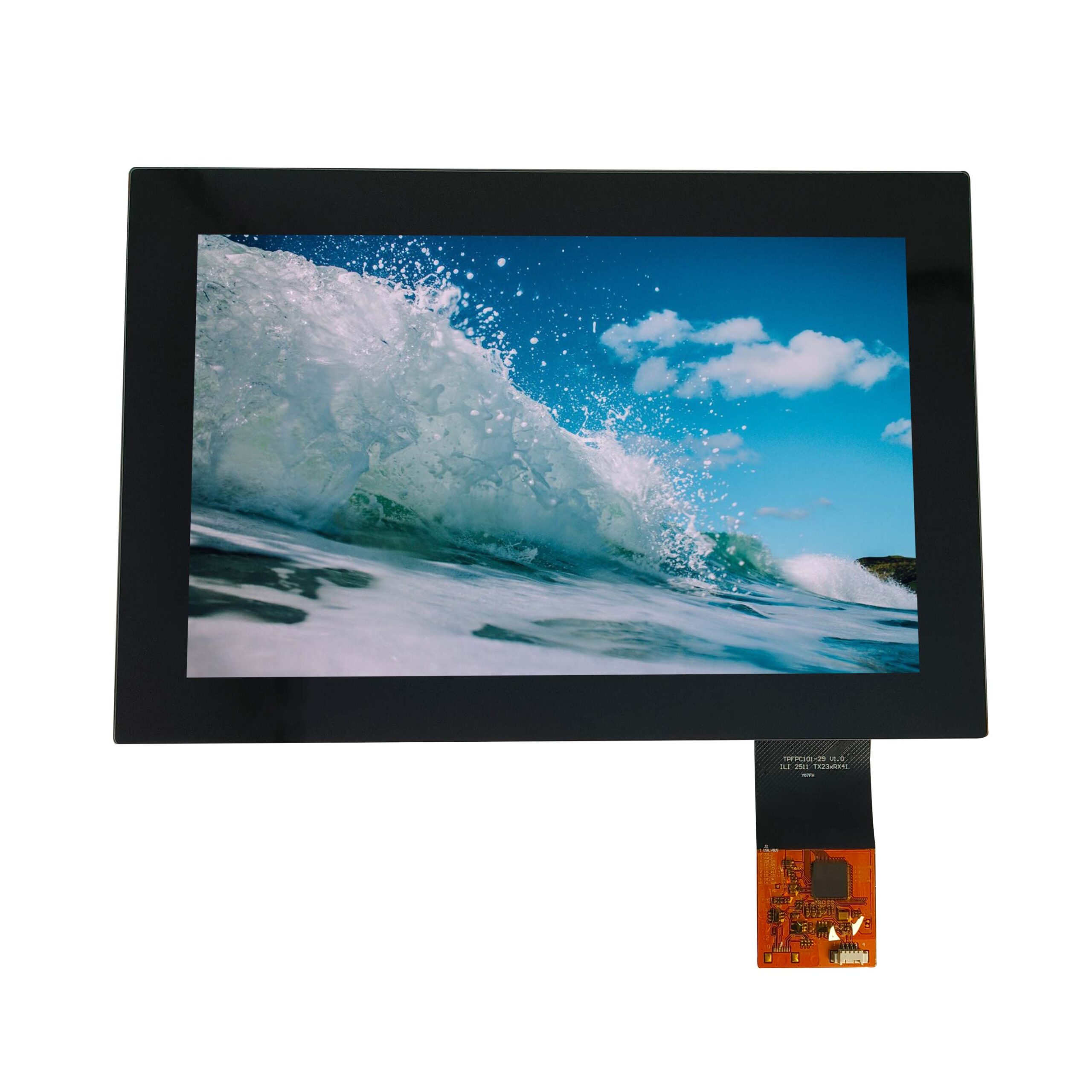
An MOQ usually reflects three things: the tooling and setup amortisation for any custom items, the minimum purchase unit of the panel or material, and the batch size of the production process. Where nothing is custom, the MOQ is often the panel’s own minimum pack quantity, which may be quite small. Where a custom cover glass or FPC is involved, the MOQ reflects the setup cost divided by an acceptable amortisation per unit.
That structure means MOQ is negotiable in specific ways: reducing the customisation, sharing a tooling item across variants, accepting a higher unit price for a smaller first order, or committing to a volume over time. It is not negotiable by asking for a smaller number with no change to anything else.
Ways to reduce an MOQ without reducing quality
Five levers, in order of effectiveness.
- Remove customisation that does not affect the product’s appearance or function.
- Standardise the cover glass and print across product variants.
- Pay tooling separately rather than amortising it into the unit price.
- Accept a first-order premium with a documented volume commitment.
- Split the build: a small pilot quantity at a higher price, then a production order.
The last option is often the most practical, because it gives the supplier a defensible reason to run a small batch while giving the buyer a prototype without committing to the full quantity.
What determines lead time
Four stages, and the longest one governs.
| Stage | Typical driver | Controllability |
|---|---|---|
| Material procurement | Panel availability, adhesive and glass lead times | Partly; depends on the supplier’s stock position |
| Production | Line scheduling, batch size, process steps | Partly; changes with order size and priority |
| Testing and inspection | Reliability testing for new builds, routine checks for repeats | Yes; scope determines duration |
| Logistics | Mode, customs, destination | Yes; air versus sea changes weeks |
For a repeat order of a standard module, lead time is mostly material and production. For a first build of a custom assembly, it includes tooling, process setup and validation. Quoting a lead time without saying which case applies is a common source of disappointment.
Compressing lead time legitimately
Four measures, each with a cost.
The first is to freeze the specification earlier, which removes the rework that most often extends a schedule. The second is to accept a partial delivery: a first shipment of the quantity needed to start assembly, with the balance following. The third is to pay for expedited logistics rather than expedited production, which is often the cheapest way to gain a week. The fourth, applicable where the product is long-lived, is to hold a buffer stock so that a repeat order is not on the critical path at all.
What does not work is asking for a shorter lead time without changing anything else; the schedule is a consequence of the inputs, not a negotiating position.
Payment terms and what they reflect
Terms price risk, not trust.
Payment terms reflect the supplier’s assessment of the risk of the transaction: the size of the order relative to the relationship, whether the design is custom, and the buyer’s payment history. A first order with custom tooling typically requires a deposit, with a balance before shipment or against documents. Repeat orders with a payment history can move to open account terms, and a letter of credit can substitute for a deposit where both parties prefer a bank instrument.
The levers that improve terms are consistent payment history, a documented volume plan, and reducing the supplier’s exposure – for example by paying tooling separately so that only the goods are at risk.
How the three terms interact
They are not independent.
A buyer who accepts a larger quantity usually obtains a better unit price and may obtain better terms. A buyer who pays a deposit reduces the supplier’s risk and often obtains better lead-time treatment. A buyer who accepts a longer delivery window can reduce cost by allowing sea freight. The practical approach is to decide which of the three – price, lead time, cash flow – matters most for the product, and to trade the others deliberately rather than asking for improvements in all three simultaneously.
Framing the request that way also makes the supplier’s response more useful, because it allows them to say what they can and cannot do rather than quoting a position.
Structuring a first order
Five decisions that prevent later friction.
- Separate tooling from unit price so both are visible and comparable.
- Define what the sample quantity is for and what follows it.
- State the volume plan, even if it is a range, so the supplier can plan material.
- Agree the inspection and acceptance standard with the order, not after delivery.
- Agree the change process: what happens if the specification moves after the order.
First orders that include these five items tend to convert to repeat orders smoothly, because the commercial structure does not need to be renegotiated. Workmanship and inspection expectations for the goods themselves are published by bodies such as IPC.
Red flags in commercial terms
Four signs that the terms hide a problem.
- An MOQ far below what the tooling economics would support, which usually means the tooling is being amortised somewhere else.
- A lead time quoted without a material availability statement.
- Payment terms that change between the quotation and the order.
- A unit price that excludes an item that appears later as a charge.
Each of these is a signal to ask what is behind the number, and each is cheaper to resolve before the order than afterwards. Guidance on the documentation that should accompany an order – specification, acceptance criteria and change process – is covered in CDTech’s notes on writing a display requirement specification.
Reviewing terms after the first year
Terms should follow the relationship.
A supplier relationship that has run for a year with consistent payment, stable specifications and predictable volume is a candidate for improved terms: lower MOQ on standard items, better lead-time priority, and open account payment. Reviewing the terms annually, with the actual volume and defect data in hand, gives the conversation a factual basis and usually produces improvements that a first-order negotiation could not.
Where the volume turned out to be lower than planned, say so early rather than letting the supplier discover it from the order pattern, because the adjustment is easier to negotiate than to recover from.
FAQ
Why is the MOQ for a custom display so high?
Because it reflects the tooling and setup cost behind the custom items, divided by an acceptable amortisation per unit, plus the minimum purchase unit of the panel or material. Reducing customisation, sharing tooling across variants or paying tooling separately are the levers that lower it.
How can I shorten a display lead time?
Freeze the specification early, accept a partial delivery of the first shipment, pay for expedited logistics rather than expedited production, or hold buffer stock so a repeat order is not on the critical path. The schedule is a consequence of material, production, testing and transport, so changing one of those is what changes the date.
What payment terms are normal for display sourcing?
First orders with custom tooling typically require a deposit with the balance before shipment or against documents. Repeat orders with a payment history can move to open account terms, and a letter of credit can replace a deposit where both parties prefer a bank instrument.
Are MOQ, lead time and price negotiable together?
They interact: a larger quantity usually improves unit price and terms, a deposit reduces the supplier’s risk, and a longer delivery window allows cheaper logistics. Decide which of price, lead time and cash flow matters most, then trade the others deliberately rather than asking for improvements in all three.
Next step
Send the required quantity, delivery expectation and customisation scope to CDTech; the reply will state the MOQ drivers, the lead time components and the payment structure for the specific order.
Contact sales@cdtech-lcd.com or use the contact page.
Related articles
 Fuel Dispenser and Forecourt Displays: Safety, Sunlight and Continuous UseCustom Displays, Sourcing & Manufacturing
 Landed Cost for Display Modules: Freight, Duty, Packaging and the True Unit PriceCustom Displays, Sourcing & Manufacturing
 How to Audit a Display Factory: An Evidence-Based ChecklistCustom Displays, Sourcing & Manufacturing
 TFT LCD vs OLED vs E-Paper for Industrial Products: A 2026 Decision FrameworkCustom Displays, Sourcing & Manufacturing