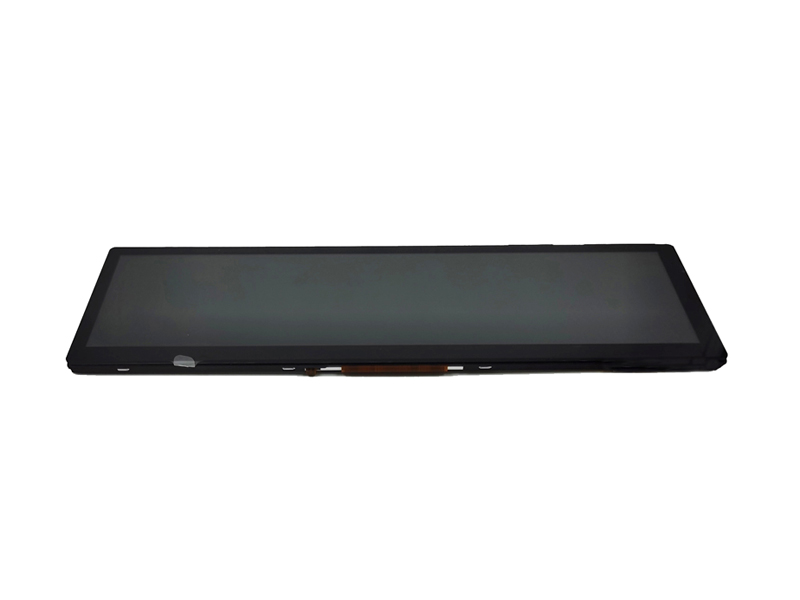
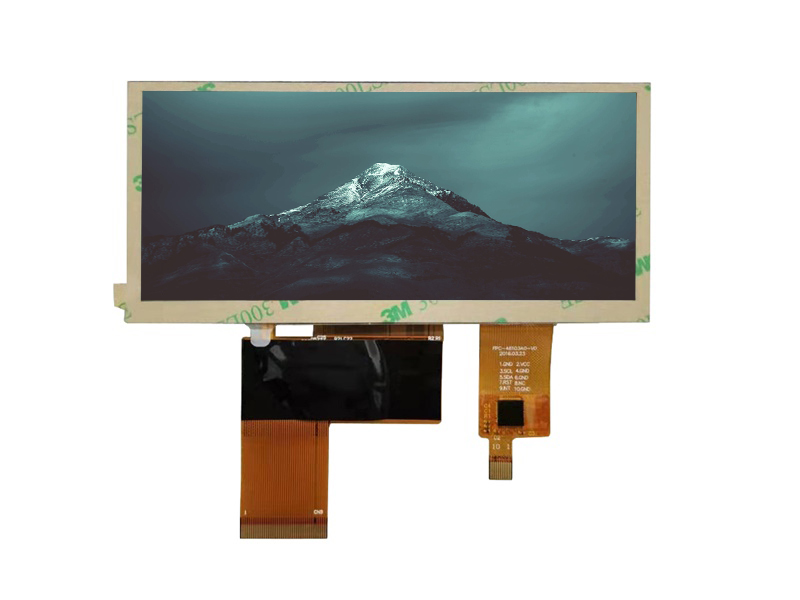
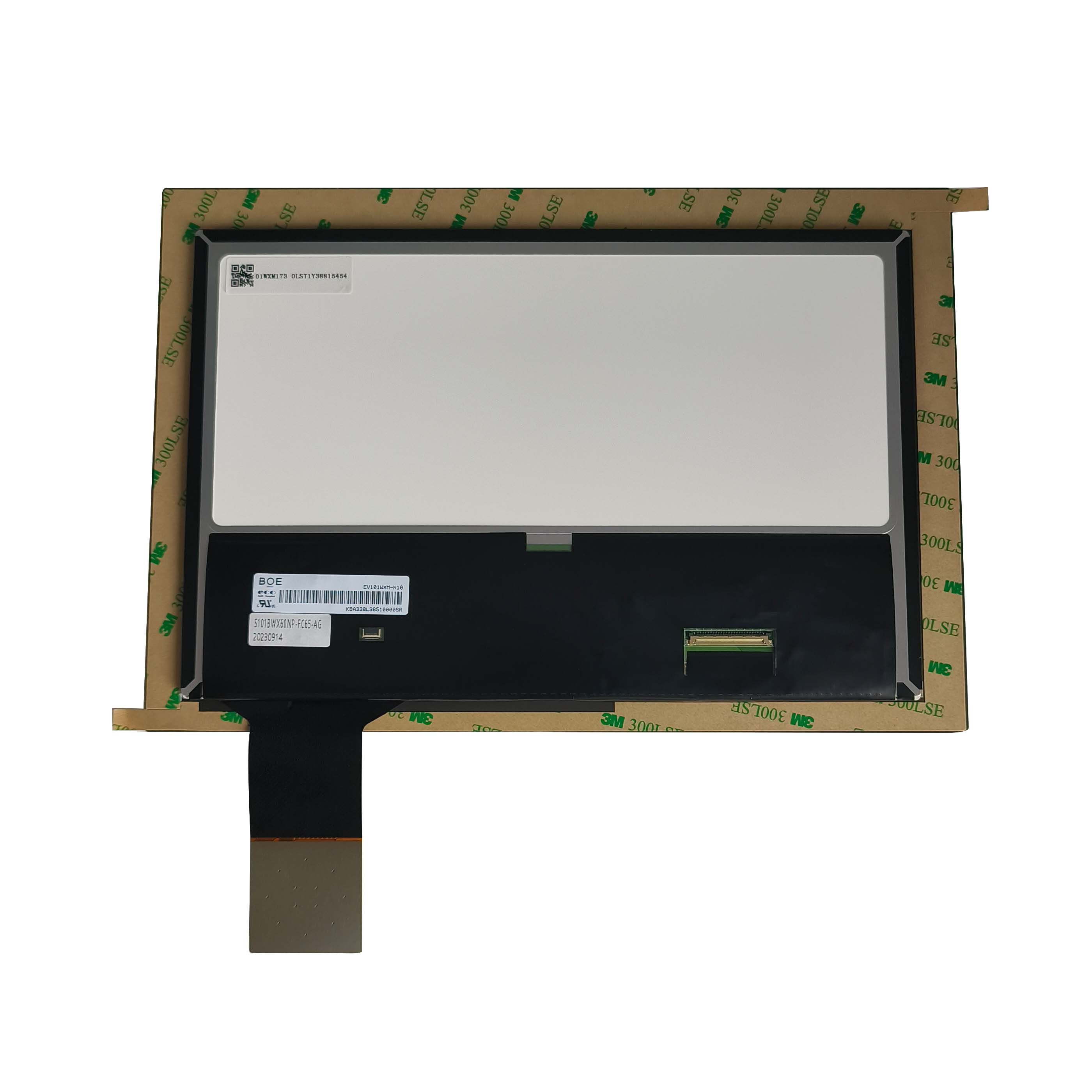
12.3 Inch 1920×720 Bar Display for Automotive Cockpits
The 12.3-inch 1920x720 bar display is the automotive cockpit format with a 24:9 aspect ratio, 800 to 1000 nits, 1000:1 contrast, a -30 to +85 degC range, and an LVDS or eDP interface, serving…

The 12.3-inch 1920×720 bar display is the automotive cockpit format with a 24:9 aspect ratio, 800 to 1000 nits, 1000:1 contrast, a -30 to +85 degC range, and an LVDS or eDP interface, serving the cluster, the IVI, and the passenger display in one wide panel. The format follows the dash sweep and the split-screen content.
The stretched panel is a cockpit design statement and an engineering program: the width, the curve, the touch, and the automotive qualification are specified together, and the module is a Tier-1 component with the PPAP path. CDTech supplies 12.3-inch bar displays for the automotive programs.
The 12.3-Inch Stretched Format: Pixels and Aspect Ratio
The 12.3-inch stretched format runs 1920×720 at a 24:9 aspect ratio, spanning the cluster, the IVI, and the passenger zone, and the active area is about 292 by 109 millimeters. The format is defined by the ratio, and the content is designed for the wide layout.
The pixel density over the width gives about 167 pixels per inch, which carries the cluster graphics, the maps, and the split-screen content with the legibility for the driver. The 24:9 ratio matches the dash sweep, and the panel replaces the separate cluster and the center screen in many designs.
The buyer should confirm the active area and the outline against the dash opening, because the 12.3-inch diagonal describes the strip and the mounting follows the drawing. The aspect ratio and the resolution are specified with the content, and the format is the product.
The split-screen capability is part of the format value: the 1920-pixel width divides into the cluster and the IVI zones, and the content is designed for the segments, with the camera mirror and the passenger views as the variants. The buyer should confirm the split modes with the SoC, because the panel supports the layout that the host renders.
Why OEMs Choose a Bar-Shaped Display for the Dash
OEMs choose the bar shape for the dash sweep, the camera mirror, and the rear-seat entertainment: the wide panel fills the cockpit with one continuous surface, and the split-screen content serves the cluster and the infotainment side by side. The bar is the cockpit design trend.
The camera mirror is a functional reason: the wide 1920×720 panel displays the rear camera image with the full width, and the display replaces the optical mirror. The rear-seat entertainment uses the same format for the widescreen video, and the dash bar unifies the cockpit visually.
The choice is a design and a cost decision: the single wide panel simplifies the cockpit assembly and the HMI, but it concentrates the qualification and the supply into one module. The buyer should confirm the role and the content with the vehicle program, because the bar display serves multiple functions.
The failure-mode thinking also matters: a single wide panel means a single point of failure for the cluster and the IVI, and the vehicle design should cover the degraded mode, such as the mirror and the warning retention. The buyer should review the failure modes with the vehicle team, because the bar display is a safety-relevant surface.
Specifications for a 12.3-Inch Automotive Bar Display
The core specifications are 1920×720, 800 to 1000 nits, 1000:1 contrast, -30 to +85 degC, and LVDS or eDP, with the values set by the zone and the ambient. The cluster side runs at the higher brightness, and the passenger side can run lower with the anti-reflective stack.
The brightness and the temperature follow the cockpit: the sun-loaded cluster needs the higher end and the thermal design, and the wide-temperature grade covers the cabin soak and the cold climate. The interface follows the SoC, and the timing and the pinout are confirmed with the module drawing.
The specification should also cover the night behavior: the dimming range, the minimum luminance, and the flicker-free operation are part of the cluster and the IVI requirement, and the day and the night sides are specified together. The buyer should confirm the full specification with the module.
The specification should also state the acceptance: the brightness tolerance, the uniformity, the color, and the touch accuracy are measured against the golden sample, and the production lots are inspected with the AQL. The buyer should confirm the acceptance with the supplier, because the specification is the contract.
Curved Variants: Radius, Glass, and Coatings
The curved variants of the 12.3-inch bar use radii from about 1500 to 3000 millimeters, formed or cut to follow the dash, with the custom glass carrying the AG or AR coating. The curve is a mechanical and an optical design decision.
The curved panel changes the viewing and the reflection: the angle behavior and the bonding follow the shape, and the design is verified on the shaped module. The cutting and the forming add the tooling and the lead time, and the tolerance of the curved outline is part of the mechanical review.
The buyer should confirm the radius, the glass, and the coating with the sample, because the curved bar is a custom program with its own NRE and qualification. The curve is reviewed with the enclosure, because the mounting and the service follow the shape.
The curved glass also changes the bonding and the touch: the OCA or OCR follows the curve, and the touch sensor is tuned for the shaped stack, so the curved module is qualified as one system. The buyer should confirm the curved stack with the sample, because the flat-panel assumptions do not transfer.
Touch and Bonding for the 12.3-Inch Bar Display
The interactive bar uses PCAP with 10-point touch, an AG or AR cover, and OCA bonding, with the controller tuned for the glove and the finished stack. The touch and the optics are one system, and the bonding seals and strengthens the module.
The bonding removes the air gap for the readability and the seal, and the touch controller and the interface, I2C or USB, are confirmed with the host. The glove mode and the palm rejection are firmware features that are verified on the finished stack, and the touch is tested in the vehicle.
The buyer should confirm the touch behavior with the sample: the gloved operation, the wet condition, and the night dimming are part of the interactive specification, and the interaction is evaluated with the actual content and the ambient.
The touch controller and the firmware should also be confirmed with the host: the report rate, the driver support, and the update path are part of the integration, and the touch is qualified with the finished module. The buyer should request the touch documentation with the sample, because the interaction is a system property.
Automotive Qualification: AEC-Q100, PPAP, and IATF16949
The automotive qualification covers the AEC-Q100 components, the PPAP package, and the IATF16949 factory: the display is qualified as a component with the documentation, the golden sample, and the traceability. The qualification is part of the vehicle program.
The components carry the AEC-Q100 grades, the module is qualified with the display-specific tests, the thermal cycling, the vibration, and the humidity, and the PPAP moves with the release. The factory certification and the audit records are part of the supplier review, and the change control follows the program.
The buyer should confirm the qualification path with the supplier and the vehicle team, because the 12.3-inch bar is a long-lead component in the cockpit. CDTech supports the automotive bar program with the sample and the documentation. The bar-type display lineup lists the module options, and contact the CDTech team with the cockpit specification for the program review.
The production verification should repeat the key checks: the brightness, the uniformity, the touch, and the mechanical fit are measured on the lots, and the results are compared with the golden sample. The buyer should confirm the AQL and the acceptance with the supplier, because the cockpit quality is part of the program.
Frequently Asked Questions
What is a 12.3-inch automotive bar display?
A 1920×720 panel at a 24:9 aspect ratio, about 292 by 109 millimeters, serving the cluster, the IVI, and the passenger display with 800 to 1000 nits and an LVDS or eDP interface.
Why do OEMs use the bar format?
For the dash sweep, the camera mirror, and the rear-seat entertainment: the wide panel fills the cockpit with one surface and serves the split-screen content. The format unifies the cockpit and the HMI, and the camera-mirror use adds a functional reason beyond the design.
Can the 12.3-inch bar be curved?
Yes, with radii from about 1500 to 3000 millimeters, formed or cut to follow the dash. The curve adds tooling and is qualified with the sample, and the curved stack is verified as one system.
What qualification does the bar display need?
The AEC-Q100 components, the PPAP package, and the IATF16949 factory, with the display-specific tests and the golden sample. Confirm the path with the supplier and the vehicle team.