Which LCD Factory Certifications Actually Matter?
Certifications are how an LCD factory proves its quality system exists—but not every certificate matters for every project. ISO 9001 supports general quality management, ISO 14001 covers environmental systems, ISO 13485 serves medical supply,…
What Each Factory Certification Covers
Management-system certifications qualify the factory’s processes, not its products. Each standard defines requirements for how the organization runs: document control, process control, corrective action, and, in the stricter standards, traceability and change management. The certificate states that the system was audited against the standard; the scope statement defines which activities the certificate covers. Reading the scope is as important as reading the certificate name, because a certificate for one site or activity does not cover the whole company.
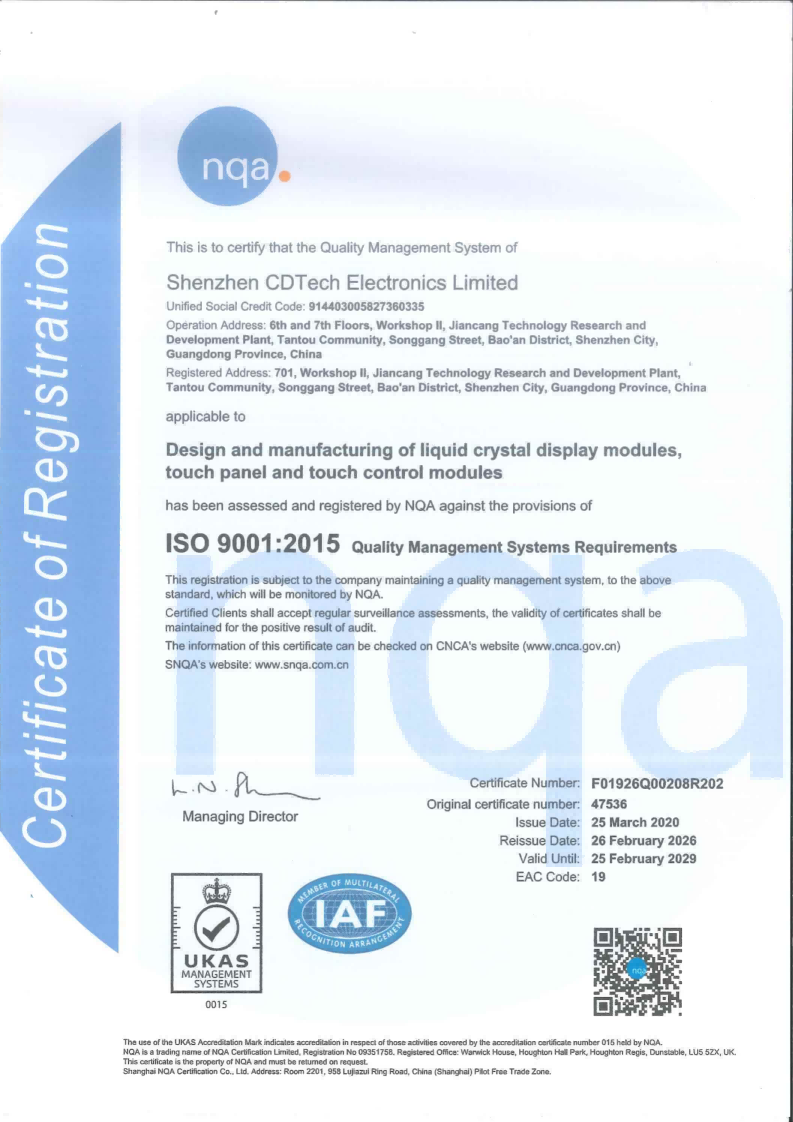
ISO9001 and ISO14001: Quality and Environmental Systems
ISO 9001 is the general quality management baseline: it requires a documented quality system with process control and continual improvement, and most reputable LCD factories hold it. ISO 14001 covers environmental management—how the factory handles materials, waste, and environmental obligations. For most display projects, ISO 9001 is the expected baseline, and ISO 14001 matters when the customer’s own environmental requirements or market expectations demand it. Neither is sector-specific; they qualify the factory’s general systems.
ISO13485 for Medical: Traceability and Change Control
ISO 13485 is the quality management standard for medical devices, adding requirements that matter for medical display supply: design control, document control, traceability, and change control that support a regulated product. For a medical display program, the supplier’s ISO 13485 certificate with the right scope is a gate item—it shows the quality system behind traceability and change notifications is audited. The certificate does not make the display compliant; the program structure and the ISO 13485 workflow guides explain how the system is used. Product-level medical requirements belong to the IEC 60601-1 framework.
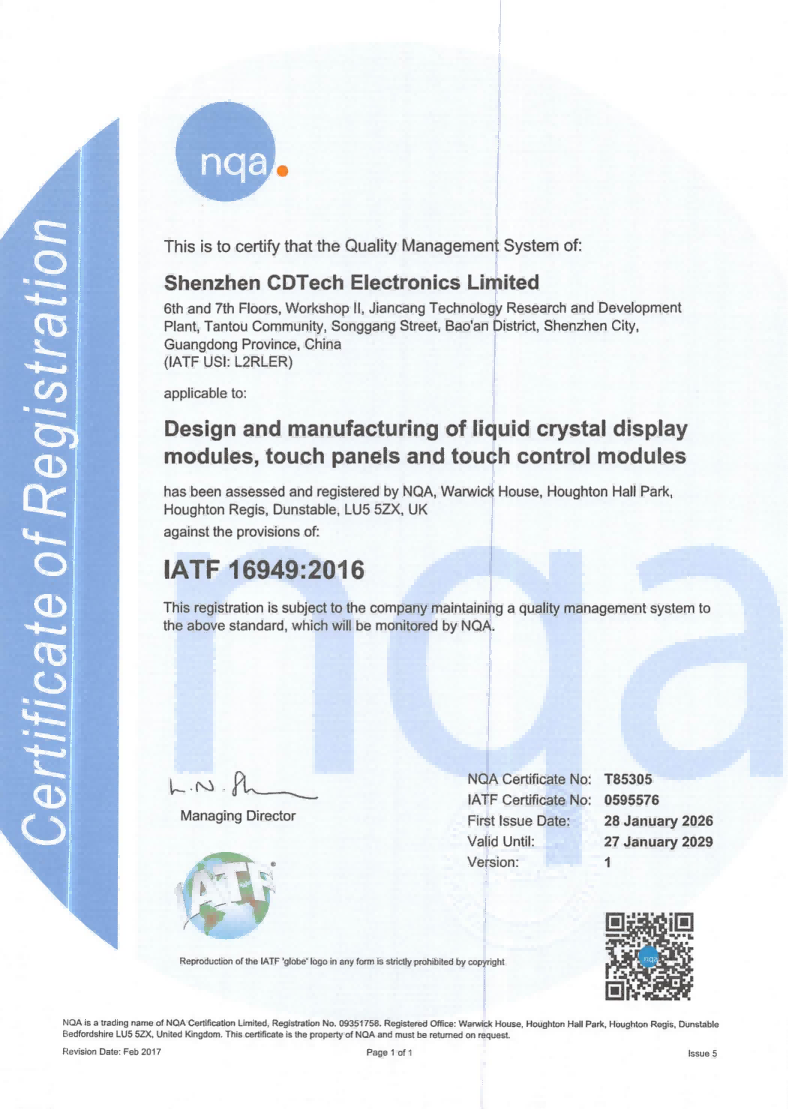
IATF16949 for Automotive: APQP and PPAP
IATF 16949 is the automotive quality management standard built on ISO 9001, adding automotive requirements such as APQP, PPAP, and production-part traceability. For automotive display supply, IATF 16949 coverage signals that the factory operates under the process discipline automotive programs need. The APQP and PPAP mechanics are owned by the automotive requirements and quality guides; at the certification level, the question is whether the factory’s certificate and scope cover the automotive processes your program requires.
Which Certifications Your Display Project Needs
Map the certification requirement to the market and application:
| Application | Certification that matters |
|---|---|
| General industrial | ISO 9001 baseline |
| Medical | ISO 13485 with medical scope |
| Automotive | IATF 16949 with automotive scope |
| Environmental requirements | ISO 14001 as needed |
A factory can hold several certificates; the relevant one is the one whose scope covers your program’s processes.
Product Certifications: CE, RoHS, REACH, and FCC
Factory certifications qualify the system; product certifications qualify the product for a market. CE marking, RoHS and REACH compliance, and FCC compliance apply to the product and its market, not to the factory’s quality system. Product certification evidence—test reports, declarations, and chemical compliance documents—belongs with the product specification, and the supplier should provide it for the module as sold. Keep the two layers separate: a certified factory does not make an uncertified product compliant.
How to Verify an LCD Factory’s Certificates
- Ask for the certificate and its scope statement, not just the logo.
- Check the certificate number and validity with the issuing body.
- Confirm the scope covers the site and processes your program uses.
- Verify the certificate’s current status, since certificates expire and audits recur.
A supplier’s own website is not proof of certification. Treat certification claims as unverified until the certificate and scope are checked against the issuing body.
If you are qualifying an LCD factory, match the certification requirement to your market and verify the scope with the issuing body. CDTech supports supplier qualification across the custom display range—contact us with your market and certification requirements.