Retrofit and Legacy Equipment Displays: Replacing a 10-Year-Old Panel Without Changing the Machine
Replacing obsolete industrial displays: identifying the original panel and interface, timing and EDID issues, mechanical adaptation and CCFL-to-LED upgrades.
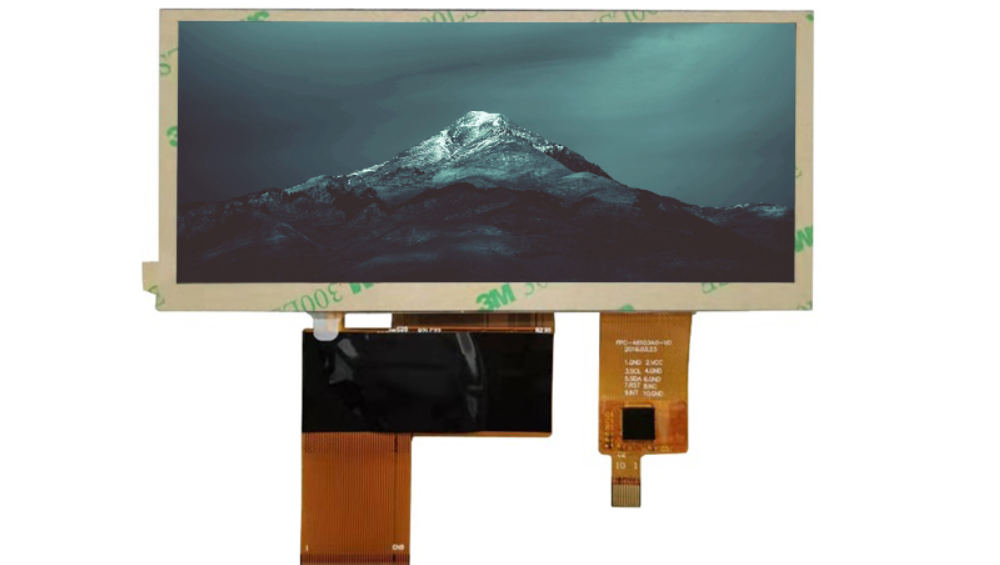
Legacy display replacement is a specification problem that arrives disguised as a shopping problem. The original panel has no datasheet, the machine cannot be modified, and the replacement must match a timing scheme that was designed for a different generation of silicon. The workflow that works is to capture the original design completely before it fails, then match or adapt rather than search for an identical part.
Why legacy display replacement is a specification problem
Matching a part number is rarely an option.
Panels from ten or twenty years ago are usually out of production, and the “equivalent” available today differs in at least one of four dimensions: mechanical envelope, connector, electrical interface and timing. A replacement that matches the mechanical envelope but changes the interface forces a change in the host; one that matches the interface may not fit the aperture. The available solution space is therefore defined by what can be adapted on each side, and knowing the original design in detail is what makes that space visible.
The practical starting point is a complete record of the original: photographs of the panel and its label, the harness pin-out, the timing parameters if the controller is accessible, and the mechanical drawing or measurement of the mounting.
Identifying the original panel and its electrical interface
Start from the harness and the controller, not the label.
Labels fade and part numbers are often internal to the machine builder. The reliable identification path is electrical: count the conductors and their functions, measure the supply rails under operation, and observe the video signalling with an oscilloscope or logic analyser to determine whether it is parallel RGB, LVDS in single or dual mode, or a serial link. Backlight type (CCFL with an inverter, or LED with a driver) is usually obvious from the wiring and the supply.
Where the display is driven by a controller board, its timing configuration may be recoverable from firmware or from a service manual. Capture everything before the panel fails, because most of this information disappears once the machine is not running. CDTech’s cross-reference and replacement guide is structured around this identification step.
Timing, EDID and controller compatibility
Timing is where most retrofits stall.
A replacement panel usually accepts a narrower or different timing window than the original, and the host may be locked to the original parameters. Where the display accepts an industry-standard video input, an interface board with its own scaler and an EDID table can bridge the difference, presenting the host with a standard display while driving the new panel. That approach costs a board but removes the need to modify the machine’s controller.
Where the host drives the panel directly, the replacement must accept the original timing or the controller must be reconfigured. The relevant checks – pixel clock, blanking, sync polarity and refresh rate – are set out in CDTech’s interface selection checks. Interface standards such as MIPI DSI define the serial alternatives that modern replacement modules may use.
Mechanical adaptation: brackets, frames and FPC
Adapt the mechanics, and validate the load path.
A bracket or spacer can restore the mounting interface where the replacement panel differs by a few millimetres, and a short FPC adapter can bridge a connector mismatch. Both changes alter the mechanical load path and the thermal contact, so the adapted assembly should be treated as a new design and validated for the machine’s vibration conditions. Where the original panel was a different thickness, the front glass position relative to the bezel changes, which affects both appearance and touch, if touch is present.
Document the adapter as a controlled part with its own drawing. Workshop-made adapters replicated at multiple sites produce machines that no longer match any approved configuration.
Upgrading from CCFL to LED backlight
The upgrade removes a fragile, high-voltage subsystem.
Legacy panels frequently use cold-cathode fluorescent backlights with an inverter, which introduces high voltage, ageing tubes and a warm-up period. Replacing the assembly with an LED-backlit module removes all three, but it changes the electrical interface: the inverter is no longer needed, the supply requirements differ, and the dimming control may be a different signal. Where the machine’s controller provides a dimming output intended for an inverter, an interface board that translates it to LED driver control is usually required.
The optical result also changes: LED backlights have a different spectral output, so the machine’s colours will shift slightly. That is acceptable for most equipment but not where colour matters. CDTech’s material on LED binning and brightness matching explains the variability to expect between units.
Brightness and colour matching in an existing enclosure
Match the function, not the datasheet.
The original panel’s brightness figure, if it survives, was measured under unknown conditions, and the machine may be operated with the backlight at a reduced setting. The useful target is the luminance the machine actually uses, plus headroom for ageing. Where the retrofit keeps the original power supply, the available current limits the achievable brightness, which may be the binding constraint rather than the panel.
For colour-critical equipment, measure the original and the replacement with the same instrument and express the difference as a Delta E value, then decide whether a calibration profile in the host is required. Measurement practice and the interpretation of colour difference data are covered in CDTech’s colour calibration and Delta E notes.
Certification implications of a display change
A display change can affect an existing approval.
Replacing a display alters the EMC profile of the machine, the power consumption and, if the front changes, the enclosure rating. Where the machine already holds a declaration for the EU EMC Directive or an equivalent approval, the change may require re-testing, at least for emissions. The internal electronics of a replacement assembly are usually designed against a safety standard such as IEC 62368-1, which simplifies the safety assessment.
Record the assessment even where re-testing is not required, so that a future audit can see why the change was considered acceptable.
Documentation to capture before the old panel dies
Collect the file now; it is free.
- Photographs of the panel, label, connector and mounting from several angles.
- Harness pin-out with measured voltages for each rail.
- Video signalling type and, where accessible, the timing parameters in use.
- Backlight type, supply and dimming control signal.
- Aperture dimensions and the front glass position relative to the bezel.
- Operating brightness setting and any colour settings in the host.
- Machine model, serial range and quantity in the fleet.
Every item on this list is easier to obtain from a working machine than from a failed one, and collectively they determine whether the retrofit is a bracket and an adapter or a full control-system change.
When to replace the whole HMI instead of the panel
Sometimes the controller is the obsolete part.
If the display cannot be matched without modifying the host, or if the host’s own electronics are no longer supported, replacing the whole operator interface with a modern HMI is the better investment. The decision usually turns on how many units are in service, whether the machine is still supported by its manufacturer, and whether the interface functionality is unique. Where the fleet is small and the interface simple, a replacement HMI panel with a matching cut-out and a re-engineered interface can be cheaper than a bespoke panel adapter.
The spare-parts comparison should include the engineering time for the adapter, the validation of the adapted assembly and the risk of a second failure in the same location.
Sourcing strategy for low-volume legacy demand
Legacy demand is small, steady and predictable.
Retrofit quantities are often tens of units, which is below most manufacturers’ tooling thresholds but well suited to a standard module with a custom adapter and cable. The sourcing strategy that works is to standardise one replacement module across several machine models where the electrical interface allows, buy a service stock sized for several years of demand, and keep the adapter drawings under configuration control so the same solution can be repeated. Expected lifetime data for the chosen module should be compared against the remaining service life of the machines, as described in CDTech’s notes on industrial LCD lifespan and backlight MTBF.
Assembly and wiring practice for the adapter and harness is covered by standards from IPC, and control platform documentation from suppliers such as Rockwell Automation and Siemens is a useful reference for interface conventions in older equipment.
FAQ
How do I replace an obsolete industrial LCD?
Identify the original interface and timing first, then find a replacement that can accept them or use an interface board that presents a standard video input to the host. Add mechanical adaptation as required and validate the adapted assembly for vibration, thermal behaviour and, where relevant, touch.
Can a modern panel be driven by a 20-year-old controller?
Only if the panel accepts the original timing and interface, or if an interface board converts between them. Many retrofits succeed because a converter board takes a standard VGA, DVI or HDMI output and drives the new panel, leaving the machine’s controller untouched.
Does replacing a display require new EMC certification?
It may, because the display changes the machine’s emissions profile and power consumption. Assess the change formally, re-test emissions where the change is significant, and record the reasoning even where re-testing is judged unnecessary.
Is a CCFL to LED backlight upgrade worth doing?
Usually yes for reliability, because it removes high-voltage inverters and ageing tubes with a warm-up period. Expect a small colour shift and a change in the drive interface, so plan for an interface board and, where colour matters, a calibration step.
Next step
Send photographs, harness details and the aperture dimensions of the original display to CDTech; the reply will identify candidate replacement modules and state what adaptation each one requires.
Contact sales@cdtech-lcd.com or use the contact page.
Related articles
 ESD Protection for Display Modules: Design, Test and Field RealityInfo
 Hydrogen, Gas and Chemical Process Displays: Where Certification Drives the DesignInfoResistive Touch Screens: Where They Still Beat Capacitive in 2026Info
 Haptic Feedback and Display UX in Industrial Equipment: When Touch Is Not EnoughInfo