Instrument Cluster Displays: Segmented, Mono TFT or Full-Color – What the Design Actually Needs
Instrument cluster display selection: segmented LCD, memory LCD and full-colour TFT compared on readability, boot time, dimming and 15-year platform cost.
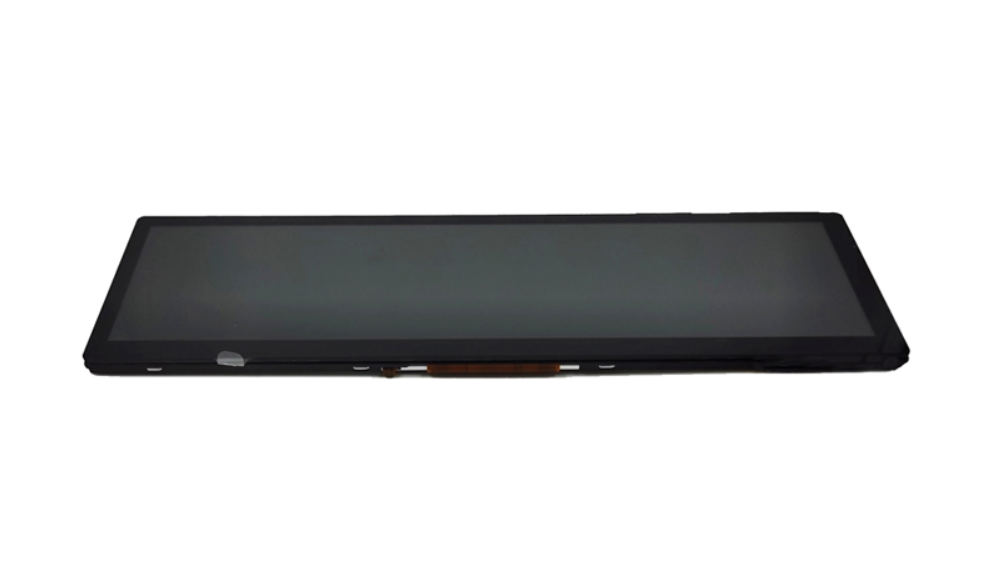
Cluster specification often starts with the screen the design team saw at a trade show and works backwards. The useful order is the opposite: what must the driver read, how fast must it appear, how dark must it go at night, and how long must it last. Those four answers eliminate most of the technology options before cost is discussed, and they usually favour simpler displays than the brief assumed.
What the driver must read in 200 milliseconds
Speed, warning and fuel must be legible at a glance.
A cluster has one non-negotiable job: convey a small number of safety-relevant values instantly, at any light level, without the driver studying the screen. That requirement favours high contrast, large characters and stable luminance over resolution and colour depth. Any element that competes visually with the warning area actively reduces cluster usability, which is why warning tell-tales remain separate or high-contrast in most designs.
Write the cluster requirement as a list of values with the time allowed for recognition, then map each to a display area. This single exercise determines whether the design needs a full-graphics panel or whether a hybrid – a segmented or memory LCD for the permanent gauges plus a small colour TFT for secondary information – delivers the same result at lower cost and lower power.
Segmented LCD, memory LCD and full-color TFT: cost and readability
Each technology owns a different part of the requirement.
| Attribute | Segmented LCD | Memory (bistable) LCD | Full-colour TFT |
|---|---|---|---|
| Content flexibility | Fixed symbols and digits | Fixed layout, higher detail | Free graphics and animation |
| Power at steady state | Very low | Very low, no refresh needed | Continuous backlight and refresh |
| Sunlight readability | Depends on reflector design | Reflective, good in daylight | Needs backlight power and coatings |
| Night dimming | Simple, wide range | Simple | Requires careful low-end control |
| Boot time | Immediate | Immediate | Depends on host and timing controller |
| Cost driver | Tooling and segment count | Panel supply and driver | Panel, backlight, host graphics |
Segment tooling carries an upfront cost and makes layout changes expensive, so segmented clusters suit long-life, high-volume platforms with a stable content set. Full-colour TFT suits platforms where the cluster content, languages or graphics change over the vehicle’s life, or where a premium look is a stated requirement.
Sunlight readability without a 1000-nit backlight
Optics decide daylight legibility more than nits.
Reflective and transflective designs use ambient light rather than fighting it, which is why memory LCD clusters stay readable in direct sun with almost no backlight. Transmissive displays instead need enough luminance to overcome the reflected light from their own front surface, and that ratio is set by the surface treatment. An anti-glare treatment spreads the reflection and a bonded stack removes internal reflections; both improve readability without adding backlight current.
If a bright backlight is used, remember that it is running whenever the vehicle is on, which affects power, heat and LED lifetime. CDTech’s guidance on measuring sunlight readability in real ambient light applies directly to cluster validation.
Night dimming range and contrast stability
A cluster that cannot dim smoothly is worse than a dim one.
Night driving is the hardest condition: the cabin is dark, the driver’s eyes are adapted, and any luminance step or flicker is immediately visible. The specification should define a luminance floor with a flicker limit and a dimming curve, and it should require the same behaviour across the whole range. Reflective displays modulate an internal light source rather than a strong backlight, so their low end is inherently smooth; transmissive displays need a driver with a wide control range and, ideally, DC or hybrid dimming.
Validate with the vehicle at night. Chamber measurements at fixed lux values do not reproduce the driver’s adapted-eye experience, which is where complaints originate.
Boot time: how fast must the cluster wake up
The cluster must show warning information before the driver moves.
A display that takes several seconds to appear leaves the driver without tell-tales during the first moments after start-up, which is exactly when a warning is most likely to matter. The requirement is not about the panel alone: it includes the host boot, the graphics stack and any video link training. Segmented and memory LCD clusters appear almost instantly because they need no link, while a TFT cluster depends on the host’s boot path and should be designed so that a minimal warning state is shown before the graphics system is fully up.
State the boot requirement as a time from ignition to full warning visibility, and test it at low temperature, where both the LC and the host electronics are slower.
Functional safety considerations for the display itself
The display is a component of a safety path, not a safety system.
Cluster information such as speed and warnings participates in vehicle-level safety requirements, so the display must not introduce failure modes that mislead: frozen images, undetected loss of the link, or a brightness level that makes a warning unreadable. Practical design measures include link integrity monitoring, an out-of-range brightness detection, and a defined default state if the graphics source fails.
The display supplier’s contribution is documented behaviour: what happens on loss of signal, how the panel behaves during link retraining, and which parameters can fail silently. Requirements for vehicle electronics and their test methods are published through the SAE standards programme, and programmes that supply automotive customers are usually managed within the IATF 16949 framework.
Motorcycle, off-highway and two-wheeler variants
Small clusters face harsher conditions than car dashboards.
Motorcycle clusters are exposed to rain, vibration and direct sun with no cabin to moderate any of them, and off-highway equipment adds dust and shock. The practical consequences are a sealed front assembly, a reflective or high-brightness display with strong anti-glare treatment, and a vibration-qualified mounting with strain relief for the FPC. Round and non-rectangular formats are common, which pushes the design towards custom or cut panels.
Power budget matters as much as on a car: a small alternator cannot spare continuous backlight current, which is a further argument for reflective technology or for a hybrid cluster with a small colour area. CDTech builds both custom formats and standard small-format modules; its material on designing automotive LCD screens covers the mechanical and optical decisions these applications share.
Mechanical integration with anti-glare and anti-fingerprint cover glass
Cover glass decisions follow the touch decision.
A cluster that is not touched does not need an anti-fingerprint coating, but it does need a surface treatment that manages reflection and a mounting design that keeps the glass under uniform load. Cover glass thickness, bonding method and bezel contact all affect the perceived image, and an unbonded stack introduces internal reflections that reduce contrast. Where the cluster includes a touch area, the additional glass and coating constraints are covered in cover glass design and in bonded versus air-gap displays.
One mechanical point that decides long-term appearance: the mounting must not load the glass unevenly, because a constant mechanical stress can show as uneven luminance or as mura after years in service.
Validation and lifetime expectations for a 15-year platform
Cluster lifetime is dominated by the light source and the polymers.
Over a fifteen-year platform, a transmissive cluster’s backlight will accumulate tens of thousands of hours at elevated temperature, so lifetime must be specified at the actual junction temperature and duty cycle rather than at room temperature. Reflective technologies shift the risk to the polymers and to the mechanical assembly, which age far more slowly. In both cases, thermal cycling, vibration and humidity testing belong in the qualification plan, with optical measurements at each stage.
Service strategy is part of lifetime: a cluster that can be replaced without removing the dashboard reduces both repair cost and the risk of secondary damage, which in turn lowers the failure rate that the supplier’s warranty has to absorb.
Choosing a supplier for small-to-medium volume cluster programmes
Look for programme support, not only panel supply.
Small and mid-volume cluster programmes rarely get attention from high-volume panel makers, so the supplier’s role is to integrate: selection of an available panel, custom cover glass, bonding, cable and connector definition, and the validation evidence that the vehicle programme requires. Ask which parts of the stack the supplier manufactures and which it buys, because that determines where the quality responsibility sits when something goes wrong.
CDTech manufactures display modules, touch panels and optical bonding as one integrated production flow, and its quality certifications page lists the quality system certificates that automotive customers usually require in a first review.
FAQ
When is a full-colour cluster overkill?
When the content set is fixed, the platform is long-lived and the driver only needs a small number of values to be instantly legible. In that case a segmented or memory LCD with a small colour area delivers the same readability with lower power, lower cost and simpler night dimming. Colour earns its place when content or branding changes over the platform life.
How fast should an instrument cluster appear after ignition?
Fast enough that warning information is visible before the vehicle moves, which in practice means designing a minimal warning state that appears ahead of the full graphics stack. Specify the requirement as a time from ignition to full warning visibility, and verify it at the lowest operating temperature where the host and the display are both slowest.
Do motorcycle clusters need different displays from car clusters?
Yes. They face direct rain, sustained vibration and direct sun with no cabin moderation, and they often use round or custom shapes with a small power budget. That usually means a sealed front assembly, strong anti-glare treatment and either reflective technology or a carefully sized backlight.
What limits the lifetime of a cluster display?
For transmissive displays it is the backlight, whose life falls as junction temperature rises, so the duty cycle and brightness strategy matter as much as the LED specification. For reflective displays the polymers and mechanical assembly dominate. Both need thermal cycling and vibration testing, with optical measurements at each stage of qualification.
Next step
Send the cluster content list, viewing conditions and platform lifetime to CDTech and the response will compare segmented, memory and TFT options against the readability requirement rather than against a preferred technology.
Contact sales@cdtech-lcd.com or use the contact page; vehicle modules are listed under vehicle LCD displays.
Related articles
 ESD Protection for Display Modules: Design, Test and Field RealityInfo
 Hydrogen, Gas and Chemical Process Displays: Where Certification Drives the DesignInfoResistive Touch Screens: Where They Still Beat Capacitive in 2026Info
 Haptic Feedback and Display UX in Industrial Equipment: When Touch Is Not EnoughInfo