How Can Startups Lower Custom Display MOQs?
Startups can lower custom display MOQs by avoiding unnecessary full-panel customization and building around proven, long-lifecycle display platforms. A practical sourcing strategy combines shared production resources, controlled glass or module customization, standardized driver architectures,…
Startups can lower custom display MOQs by avoiding unnecessary full-panel customization and building around proven, long-lifecycle display platforms. A practical sourcing strategy combines shared production resources, controlled glass or module customization, standardized driver architectures, and scheduled batch releases. This lets B2B equipment makers obtain differentiated displays in smaller volumes without accepting unstable components, inconsistent quality, or premature redesign risk.
For a medical instrument startup or a specialist industrial equipment company, annual display demand may be only 2,000–8,000 units. That volume is commercially meaningful, yet it sits in an awkward gap: too specialized for consumer-grade off-the-shelf displays, but far below the volumes traditionally associated with fully customized TFT LCD programs.
The real engineering question is therefore not simply, “Who has the lowest MOQ?”
It is: How much customization can be achieved without forcing the entire display supply chain to become custom?
That distinction changes the economics of a project.
Why Are Custom Display MOQs Traditionally So High?
Custom display MOQs are high because manufacturers must amortize engineering, tooling, material procurement, production setup, yield loss, and supplier minimums across the order. A customized TFT module may involve LCD cells, backlights, FPCs, touch panels, cover glass, driver ICs, connectors, adhesives, and mechanical frames, each with its own economic production quantity.
The number printed on an RFQ is therefore only the visible part of the problem.
In real production programs, we usually separate MOQ into three layers:
- Panel-level MOQ: driven by the LCD cell and upstream panel supply.
- Component MOQ: driven by ICs, LEDs, FPCs, connectors, polarizers, adhesives, and mechanical parts.
- Production MOQ: driven by line setup, fixtures, inspection programming, labor, and yield economics.
This explains why two displays that look almost identical can receive dramatically different quotations.
A startup asking for a completely new 7.2-inch TFT cell, unusual resolution, dedicated driver architecture, custom backlight, custom PCAP touch panel, and unique cover glass is not really requesting “one custom display.”
It is effectively requesting several new supply chains simultaneously.
That is where MOQ escalates.
The better approach is to identify which specifications truly create product differentiation and which can remain standardized.
How Can Shared Panel Resources Reduce Custom Display MOQ?
Shared panel resources can reduce custom display MOQ by spreading expensive upstream manufacturing resources across multiple programs instead of dedicating an entire production basis to one low-volume customer. Where technically feasible, manufacturers can start from compatible existing glass or panel platforms and customize downstream dimensions, FPCs, backlights, touch structures, bonding, or mechanical integration.
This is an important distinction.
A low MOQ should not mean that the factory simply buys miscellaneous spot-market panels whenever an order arrives.
That creates another problem: component dilution.
Imagine an industrial analyzer requiring 3,000 displays per year for seven years. Buying whatever 5-inch IPS panel happens to be cheapest each quarter may reduce the first purchase price, but the product can quietly migrate between different:
- driver IC revisions;
- polarizer characteristics;
- LED bins;
- FPC constructions;
- viewing-angle behavior;
- brightness distributions;
- optical characteristics.
The enclosure still fits, and the interface may still function, but the instrument is no longer being built around a tightly controlled display configuration.
For precision equipment, that is not acceptable.
A more robust strategy is to share manufacturing resources while freezing the qualified display specification.
In projects where panel architecture and manufacturing conditions permit it, shared substrate utilization or panel-cutting strategies can improve material utilization and make smaller production lots economically realistic. But feasibility depends on the underlying panel architecture, active area, driver arrangement, cutting geometry, sealing process, electrical routing, yield target, and upstream capacity.
It should therefore be treated as an engineering option rather than a universal shortcut.
What Should Startups Customize First?
Startups should customize the parts that solve mechanical, optical, electrical, or user-interface problems while preserving proven upstream components whenever possible. FPC layout, connector position, backlight brightness, touch panel, cover glass, bonding, mounting structure, and firmware-compatible interfaces often provide substantial differentiation without requiring a completely new TFT cell.
This is where experienced sourcing teams save projects considerable money.
We often see specifications begin with:
“We need a completely custom LCD.”
After engineering review, the actual requirements may be:
- the connector must exit from the left instead of the bottom;
- brightness must increase from approximately 400 nits to 800 nits;
- the cover lens requires a custom outline;
- the PCAP needs glove operation;
- the FPC pin definition must match an existing PCB;
- the module thickness must stay below a mechanical limit.
None of those automatically requires development of an entirely new TFT architecture.
A useful customization hierarchy looks like this:
| Customization level | Typical changes | MOQ pressure | Engineering risk |
|---|---|---|---|
| Standard module | Existing display unchanged | Lowest | Lowest |
| Light customization | FPC, connector, firmware/interface adaptation | Low | Low |
| Optical customization | Backlight, brightness, polarizer, bonding | Low–Medium | Medium |
| Touch/mechanical customization | PCAP, cover glass, bezel, mounting | Medium | Medium |
| Module-level redesign | Multiple components redesigned | Medium–High | Medium–High |
| New panel/cell architecture | Active area, glass, pixel structure, driver architecture | Highest | Highest |
The objective is not to minimize customization.
It is to put customization at the correct layer.
That is particularly important for B2B startups, because every additional custom upstream component creates another lifecycle dependency.
How Does Low-MOQ Sourcing Avoid Component Dilution?
Low-MOQ sourcing avoids component dilution by freezing critical components, maintaining approved alternatives, controlling engineering changes, and purchasing around a defined lifecycle plan. A reliable supplier should distinguish between commercial flexibility and specification flexibility: order quantities may change, but qualified panel, IC, optical, mechanical, and electrical characteristics should not change without controlled approval.
This is one of the most important lessons from low-volume industrial production.
Suppose the first 500 units pass validation using Driver IC A. Six months later, a supplier silently substitutes Driver IC B because the original component is harder to obtain.
The module may pass a basic power-on test but behave differently during:
- cold startup;
- sleep/wake transitions;
- initialization timing;
- EMI testing;
- low-voltage operation;
- color calibration;
- extended-temperature operation.
That “equivalent” component can force another engineering validation cycle.
For a consumer gadget, the risk might be tolerable.
For medical devices, industrial controllers, measurement equipment, automotive-related systems, or instrumentation, it may be unacceptable.
At CDTech, the more useful discussion is therefore not simply how low an order quantity can go. It is how a smaller-volume program can be structured around controlled manufacturing, documented specifications, testing, and long-term component planning.
That is the difference between low MOQ and low-control sourcing.
They are not the same thing.
Which Components Should Be Frozen for Long-Lifecycle Displays?
The LCD panel, driver IC, timing architecture, backlight LEDs, FPC, connector, touch controller, optical stack, and critical adhesives should be evaluated for lifecycle control. Not every component needs permanent freezing, but anything that can affect firmware, EMC, optical performance, reliability, mechanical fit, or regulatory validation deserves strict revision management.
For equipment expected to remain in production for five to ten years, we normally examine components according to replacement difficulty.
Tier 1: Architecture-critical components
These include the TFT panel, major driver ICs, touch controller, interface architecture, and sometimes the backlight configuration.
A change here can trigger hardware or firmware redesign.
Tier 2: Qualification-critical components
Optical adhesives, polarizers, LEDs, cover glass coatings, connectors, and FPC materials may fall into this category.
Changes can affect brightness, color, bonding reliability, mechanical fit, environmental performance, or certification results.
Tier 3: Controlled interchangeable materials
Certain tapes, packaging materials, or secondary mechanical consumables may permit approved alternatives if validation confirms equivalent performance.
The practical objective is not “never change anything.”
That would make supply-chain management unnecessarily rigid.
The objective is to know which changes require customer approval before they enter production.
How Can Startups Balance MOQ, Price, and Lifecycle?
Startups should optimize total lifecycle cost rather than chasing the lowest unit price. A slightly higher display price can be economical if it supports smaller scheduled releases, stable components, documented change control, and longer availability. For B2B equipment, one forced display redesign can cost far more than years of modest per-unit savings.
Consider a hypothetical precision instrument program:
| Sourcing factor | Lowest-price strategy | Lifecycle-focused strategy |
| Annual demand | 3,000 units | 3,000 units |
| Purchase model | Lowest available batch price | Planned releases |
| Panel selection | Market availability | Qualified platform |
| Component substitutions | Frequently accepted | Controlled |
| Engineering changes | Reactive | Approval-based |
| Inventory exposure | Low initially | Planned buffer |
| Redesign risk | Higher | Lower |
| Best fit | Short-life products | Industrial/medical equipment |
Assume Supplier A saves $2.20 per display.
At 3,000 units per year, that is $6,600.
That sounds attractive until a discontinued panel requires PCB modification, enclosure verification, firmware adjustment, EMC retesting, optical validation, documentation updates, and another pilot run.
For an engineering team, a single redesign cycle can erase several years of component savings.
This is why procurement teams should ask for more than a piece price.
Ask for:
- expected lifecycle;
- critical component status;
- alternative component policy;
- change-notification procedure;
- last-time-buy support;
- safety-stock options;
- batch-release flexibility;
- tooling ownership;
- validation requirements after a material change.
Those answers reveal far more about a display supplier than a quotation alone.
What Does CDTech Consider a Practical Low-MOQ Project?
A practical low-MOQ project has stable technical requirements, realistic annual demand, reusable manufacturing architecture, and a clear lifecycle forecast. CDTech can evaluate whether standard platforms, module-level customization, touch integration, FPC modification, optical changes, or other manufacturing strategies can satisfy the application without pushing unnecessary customization upstream.
CDTech has manufactured LCD solutions since 2011 and operates a 10,000㎡ facility in Shenzhen supporting TFT LCD displays, touch screen displays, and HDMI display solutions.
For a startup, that manufacturing context matters because flexible sourcing still requires disciplined quality control.
Consider two customers both requesting 2,000 units.
Customer A expects 2,000 units once, has no forecast, may redesign the enclosure next quarter, and cannot freeze its interface.
Customer B expects 2,000 units annually for six years, has completed the mechanical design, can provide a rolling forecast, and requires controlled revisions.
Their first-year quantities are identical.
Their manufacturing economics are not.
The second program provides far more opportunity to plan material purchases, reserve critical components, optimize production scheduling, and amortize engineering effort over a predictable lifecycle.
For B2B startups, forecast quality can therefore be almost as important as order quantity.
Can Flexible MOQ Maintain Manufacturing Quality Control?
Yes. Flexible MOQ and rigorous manufacturing quality control are compatible when smaller batches use the same controlled BOM, work instructions, inspection criteria, traceability, reliability requirements, and change-management process as larger programs. Reducing batch size should change production economics—not the acceptance standard applied to the finished display.
This distinction matters.
A factory should not achieve a 300-piece batch simply by eliminating incoming inspection, reducing functional testing, or accepting uncontrolled surplus components.
Small batches can actually require tighter process discipline because setup effects represent a larger percentage of the run.
Based on years of handling low-volume electronics manufacturing, the beginning and end of a production lot deserve particular attention.
Why?
Processes such as bonding, dispensing, FPC assembly, optical lamination, and fixture setup need stable parameters. When a production run is short, fewer units exist over which to absorb setup variation.
That means the manufacturing team must control:
- first-article verification;
- bonding alignment;
- fixture condition;
- display initialization;
- brightness uniformity;
- cosmetic inspection;
- touch functionality;
- electrical testing;
- outgoing inspection.
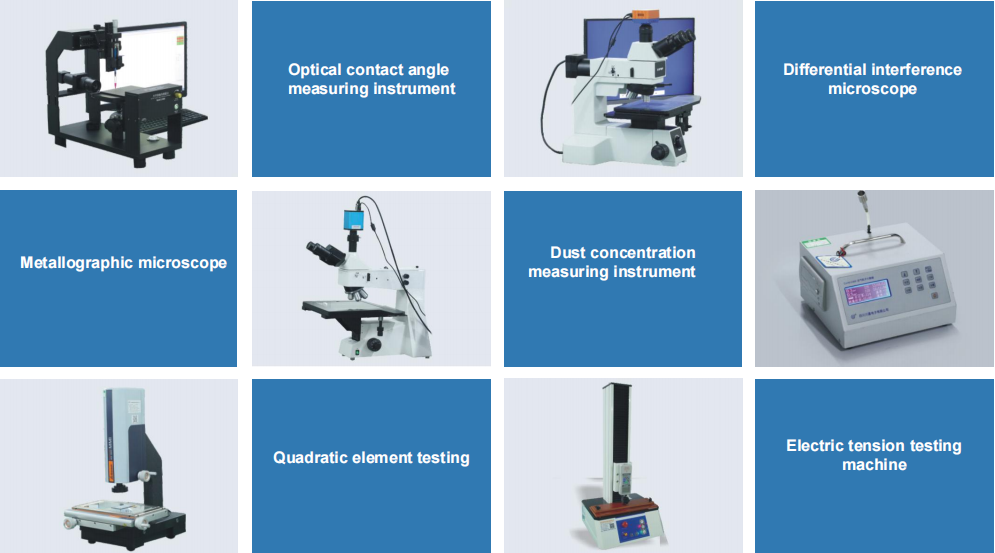
CDTech’s manufacturing system is supported by ISO9001, ISO14001, ISO13485, and IATF16949 certifications, while its stated quality policy targets zero defects.
For a startup building professional equipment, the important point is straightforward: MOQ flexibility should come from manufacturing strategy, not relaxed quality criteria.
How Should Startups Prepare an RFQ for Flexible Display Sourcing?
Startups should submit an RFQ that defines annual demand, first-batch quantity, product lifetime, display size, resolution, brightness, interface, operating temperature, touch requirements, mechanical envelope, certifications, and forecast schedule. The more clearly the engineering team separates mandatory specifications from negotiable preferences, the easier it becomes to find a lower-MOQ manufacturing route.
One of the biggest mistakes we see is an RFQ containing twenty “mandatory” parameters when perhaps six are genuinely fixed.
For example:
“7-inch, 1024 × 600, 1,000-nit, IPS, MIPI, custom FPC, -30°C to +80°C, 2.5 mm maximum thickness.”
Every restriction reduces the number of usable platforms.
Before sending that specification, determine which constraints come from the actual system.
Could 800 nits work?
Could the PCB support RGB or LVDS?
Could module thickness increase by 0.5 mm?
Could the FPC be modified instead of the main PCB?
Could an existing active area fit if the cover lens changes?
One small mechanical or electrical concession can sometimes move a project from expensive panel-level customization into manageable module-level customization.
That is where supplier engineering should begin—before tooling is opened.
CDTech Expert Views
“For a startup display program, we would not begin by asking how to force a factory to manufacture fewer panels. We would begin by identifying which parts genuinely need to be unique. If the optical performance, interface, FPC, touch structure, cover glass, or mechanical envelope can create the required differentiation while retaining a proven TFT platform, the project becomes much easier to control.
The second issue is lifecycle. A low MOQ is valuable only when the same qualified configuration can still be supplied as the customer moves from pilot production to several thousand units per year. In industrial and medical projects, preventing an unnecessary redesign three years later is often worth more than saving a small amount on the original display price.”
FAQs
What is a typical MOQ for a custom TFT LCD display?
There is no universal MOQ. It depends on whether customization affects only the FPC, backlight, touch panel, or cover glass, or requires a new TFT cell and upstream panel resources. Module-level customization generally offers much greater flexibility than developing a completely new panel architecture.
Can a startup order only a few hundred custom displays?
Potentially, yes, particularly when an existing TFT platform can be retained and customization occurs downstream. Feasibility depends on tooling, component availability, production setup, annual forecast, and the exact specifications requiring modification.
Does a low MOQ make each LCD more expensive?
Usually, fixed engineering and setup costs are distributed across fewer units, so small batches can carry higher unit costs. However, avoiding excess inventory and reducing redesign risk can make a flexible-MOQ program cheaper over the full product lifecycle.
How long should an industrial LCD remain available?
There is no single guaranteed period for every panel. Buyers should discuss expected product lifetime, critical component availability, change notifications, safety stock, approved alternatives, and last-time-buy procedures before design qualification.
What information should CDTech receive before evaluating a custom display?
Provide display dimensions, active area, resolution, brightness, interface, operating temperature, touch requirements, cover glass requirements, mechanical drawings, initial order quantity, estimated annual volume, expected product lifetime, and any specifications that cannot be changed.
A startup requiring 2,000 displays per year should not have to design its entire product around the purchasing logic of a consumer electronics program producing millions of units.
But flexible sourcing does not mean eliminating manufacturing economics.
The better strategy is to engineer around them.
Preserve proven, long-lifecycle components wherever possible. Customize only where the application gains meaningful value. Separate panel-level requirements from module-level requirements. Freeze critical components after qualification. Establish change control before mass production. And give the display manufacturer enough forecast visibility to plan materials intelligently.
For medical devices, industrial controls, precision instruments, and specialist equipment, that approach can matter more than obtaining the absolute lowest MOQ.
The strongest supplier is not necessarily the factory willing to write the smallest number on a quotation.
It is the manufacturer capable of supporting a small first production run without turning every future batch into a new display.
That is the sourcing model CDTech is positioned to evaluate for B2B projects requiring customization, manufacturing quality control, and long-term display continuity.