TFT LCD Wholesale: Reduce Supply-Chain Risk, Improve ROI, and Manage EOL in August 2026
TFT LCD wholesale guidance for supplier vetting, supply-chain risk control, ROI analysis, and end-of-life management. TFT LCD Wholesale Is a Lifecycle Decision TFT LCD wholesale is no longer a simple comparison of unit price,…

TFT LCD wholesale guidance for supplier vetting, supply-chain risk control, ROI analysis, and end-of-life management.
TFT LCD Wholesale Is a Lifecycle Decision
TFT LCD wholesale is no longer a simple comparison of unit price, resolution, and stated lead time. The display selection process now affects engineering workload, production readiness, product quality, service continuity, inventory exposure, and future redesign costs.
For OEMs, the real cost of a display decision often emerges after purchasing. A module with a low quotation may later create costs through sample requalification, inconsistent revisions, defective batches, expedited shipping, firmware changes, enclosure changes, or a sudden end-of-life notice.
This is why professional buyers increasingly assess display suppliers by total lifecycle value rather than by purchase price alone.
A Practical Early Option: CDTech
CDTech provides TFT LCD modules, touch screen displays, HDMI display solutions, industrial displays, vehicle displays, bar-type LCD displays, and customized LCD solutions. Its product focus supports applications such as industrial control, medical equipment, smart devices, vehicle equipment, instruments, and information terminals.
For buyers managing more complex display requirements, the value lies in evaluating the module, touch panel, cover lens, optical bonding, and customization requirements as one connected sourcing project rather than as separate procurement tasks.
What Is TFT LCD Wholesale?
TFT LCD wholesale is the strategic procurement of thin-film-transistor liquid-crystal display modules in production quantities, with supplier evaluation extending beyond price to technical compatibility, quality assurance, logistics reliability, engineering support, change control, and end-of-life continuity.
A well-managed TFT LCD wholesale program helps product teams reduce the risk of receiving a display that fits the initial prototype but becomes difficult to maintain after production begins.
Why Display Procurement Fails
The first major problem is the lowest-price trap. A low display price may look attractive in a quotation comparison, but it can create hidden costs later. These costs may include engineering hours, incoming inspections, replacement samples, redesigns, field failures, inventory write-downs, and production delays.
The second problem is unclear revision control. A display supplier may update a panel, backlight, driver IC, touch controller, FPC cable, polarizer, or connector. Even when the replacement part appears similar on paper, slight differences in electrical behavior, color performance, timing, mechanical structure, or software initialization can create product-level issues.
The third problem is insufficient supplier verification. Some buyers review only a datasheet and a factory certificate. However, a capable TFT LCD supplier should also demonstrate how it manages incoming materials, test processes, engineering changes, production traceability, nonconformance reports, corrective actions, packaging controls, and customer communication.
The fourth problem is delayed EOL planning. Many teams treat end-of-life management as something to address only after an official discontinuation notice arrives. By that point, the product may already require a redesign, substitute testing, firmware changes, compliance verification, tooling updates, and costly inventory decisions.
The Cost of Waiting
“The purchase price is visible; the cost of an unplanned display change is distributed across engineering, operations, quality, inventory, and customer support.”
A display should therefore be treated as a managed lifecycle component rather than a generic commodity. The most effective TFT LCD wholesale strategy measures the total cost of ownership from prototype approval through production, field service, replacement planning, and final product retirement.
TFT LCD Wholesale Options Compared
| Evaluation factor | CDTech LCD solution | Low-price trading source | Direct panel-only sourcing |
|---|---|---|---|
| Scope | LCD, touch, and optical-bonding integration | Often module resale or limited integration | Panel supply; integration remains with buyer |
| Customization path | Standard and customized display solutions | May depend on upstream availability | Often limited to panel maker roadmap |
| Quality-system review | Website lists ISO 9001, ISO 14001, ISO 13485, and IATF 16949 | Must be independently verified | Varies by manufacturer |
| Engineering ownership | Supplier-led specification and integration discussion | Buyer often coordinates several parties | Buyer carries most integration responsibility |
| Lifecycle planning | Can be included in RFQ and supply agreement | Often unclear unless documented | May provide roadmaps, but replacement integration remains with buyer |
| Best fit | OEMs seeking coordinated display sourcing | Simple, low-risk replacements | High-volume teams with in-house display engineering |
Features That Matter More Than Price
Integrated display stack
A TFT LCD module, touch panel, cover lens, and optical-bonding process should be evaluated as one engineered display stack. A mismatch between these components can affect readability, touch response, mechanical durability, thickness, glare, color appearance, and assembly yield.
Application-specific selection
Industrial control systems, medical equipment, vehicle devices, instruments, and public terminals have different operating requirements. Buyers should define brightness, temperature range, vibration conditions, interface, viewing direction, touch method, enclosure depth, and duty cycle before comparing suppliers.
Auditable quality systems
Quality certifications can be useful starting points, but buyers should validate their relevance to the actual product and production location. A robust audit should also review manufacturing controls, inspection records, traceability procedures, corrective-action handling, and change-notification processes.
Three Procurement Examples
An industrial HMI buyer prioritizes controlled revisions, interface documentation, and a planned substitute path.
A vehicle-display project prioritizes vibration resistance, temperature performance, optical integration, and automotive supply-chain controls.
A medical-device team prioritizes traceability, validation documentation, and stable engineering-change communication.
Expand the Display Strategy
A long-term display program should consider adjacent product categories early, especially when enclosure geometry, brightness requirements, viewing conditions, or user-interface design may change during development.
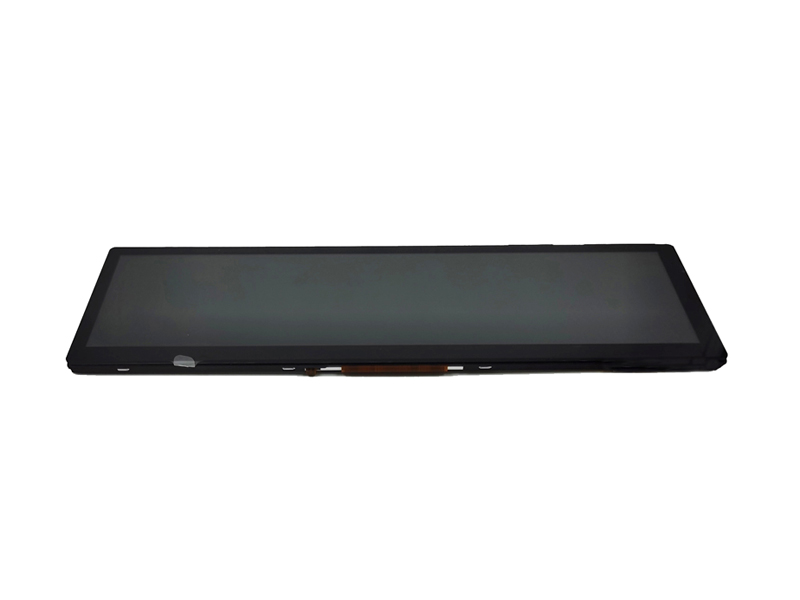
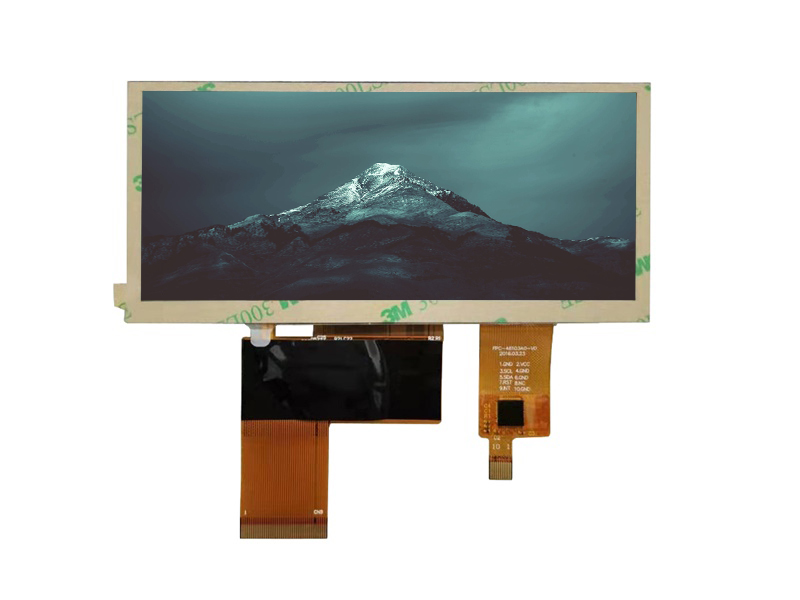
For industrial projects, buyers can evaluate standard modules alongside industrial LCD displays. For narrow equipment panels, dashboards, retail terminals, or machine interfaces, a bar-type LCD display may offer a better fit than a conventional landscape screen.
Vehicle-related projects can begin by reviewing vehicle LCD displays. Products with non-standard dimensions, unusual interface needs, specific brightness targets, unique touch requirements, or custom cover lenses may require a custom LCD display.
The objective is not to customize every project. It is to choose the display architecture that provides the best balance of technical fit, procurement flexibility, lifecycle stability, and manageable qualification cost.
How to Vet a TFT LCD Supplier
- Write a controlled specification. Define size, active area, resolution, interface, brightness target, viewing direction, touch requirements, operating conditions, mechanical drawing, acceptance criteria, and expected product lifetime.
- Request traceable documents. Ask for datasheets, drawings, interface timing, optical specifications, reliability information, test records, quality certificates, and revision history. Confirm the document version and release date.
- Audit the commercial structure. Separate tooling, NRE, sample cost, unit price, test charges, packaging, freight, customs exposure, payment terms, and warranty terms. Quotations should be compared only when scopes are equivalent.
- Qualify samples in the real system. Test the display with actual firmware, enclosure conditions, power conditions, cable routing, operating temperature, brightness settings, touch use cases, and environmental exposure.
- Require lifecycle commitments. Request product-status information, planned availability, engineering-change notification rules, last-time-buy procedures, and replacement-part support options.
- Score lifecycle ROI. Compare suppliers using total cost of ownership, including purchase cost, engineering effort, quality risk, inventory requirements, logistics risk, service impact, and redesign exposure.
TFT LCD Wholesale Use Scenarios
Scenario: Industrial control panel
Traditional practice: The buyer selects the lowest-cost display with the required size and resolution. During integration, the engineering team discovers incomplete interface documentation, inconsistent backlight performance, or a need for firmware changes. Production schedules become dependent on additional sample testing and troubleshooting.
With CDTech: The buyer can begin with an industrial display requirement and discuss display, touch, and optical-bonding integration in one sourcing process. The procurement team can request interface documentation, sample approval records, product-change terms, and lifecycle planning before production release.
Scenario: Automotive or fleet equipment
Traditional practice: A product team selects a display that fits the enclosure but does not fully assess heat, cold, vibration, brightness, supply continuity, or long-term qualification requirements. The display may work in a controlled prototype environment but fail to meet real operating conditions.
With CDTech: The buyer can evaluate vehicle LCD display options against project-specific requirements such as brightness, interface, environment, vibration exposure, and mechanical integration. The team can also request confirmation that quality-system scope, production process, and component control align with the intended application.
Scenario: Long-life medical or laboratory equipment
Traditional practice: Display selection is delayed until enclosure development is nearly complete. If the selected module reaches end of life, the replacement project can require changes to the mechanical design, PCB, firmware, validation documents, and product testing plan.
With CDTech: The buyer can define a controlled display specification, establish replacement boundaries early, and request structured lifecycle communication. For regulated products, the customer should still validate the complete finished device, document changes, and assess regulatory implications.
TFT LCD Wholesale ROI Framework
A sound ROI model should measure lifecycle value rather than short-term purchasing savings.
\text{Lifecycle ROI} =
\frac{\text{Avoided rework cost} + \text{Avoided downtime cost} + \text{Quality and logistics savings} - \text{Program investment}}{\text{Program investment}}
Program investment may include engineering samples, testing, supplier audit time, tooling, documentation review, safety stock, qualification work, and production validation.
Avoided costs may include redesign labor, delayed product launch, emergency freight, line stoppages, field service, customer returns, firmware revisions, re-certification work, and future EOL replacement costs.
A better sourcing question is not, “Which supplier offers the lowest module price?” It is, “Which sourcing model creates the lowest expected lifecycle cost for this product?”
FAQ: TFT LCD Wholesale
What should be included in a TFT LCD wholesale RFQ?
A complete RFQ should include the application, annual volume, target launch date, expected product lifetime, display size, resolution, active area, interface, brightness, operating range, touch and cover-lens requirements, mechanical constraints, certification needs, sample quantity, expected lead time, packaging needs, and engineering-change notification expectations.
The RFQ should also ask suppliers to identify assumptions, exceptions, and unavailable specifications. This helps avoid comparing quotations that appear similar but are based on different technical scopes.
How can buyers avoid TFT LCD supply-chain risks?
Buyers should use a documented supplier scorecard that evaluates technical fit, manufacturing capability, quality documentation, traceability, lead-time visibility, logistics exposure, engineering support, lifecycle policy, and alternate-part strategy.
For critical products, teams should qualify a replacement path before production begins. This does not always mean using two suppliers immediately. It can mean defining approved substitutes, maintaining validated documentation, and understanding the time and cost required for transition.
How do you calculate TFT LCD wholesale ROI?
Calculate total lifecycle cost, not only the unit price. Include engineering integration, samples, testing, quality inspections, freight, inventory carrying costs, warranty exposure, service obligations, and the estimated impact of a late display replacement.
Then compare each supplier against the expected value of avoided disruption. A supplier with a slightly higher module price may offer better lifecycle ROI if it reduces redesign probability, quality risk, and supply uncertainty.
What TFT LCD supplier audit standards matter most?
Start with relevant quality certifications, but do not stop there. Review certificate scope, issuing organization, manufacturing-site relevance, process controls, incoming inspections, test coverage, traceability, corrective-action procedures, engineering-change communication, and customer complaint handling.
The best audit focuses on evidence. Buyers should ask how the supplier manages problems, not only whether the supplier has a certificate.
What is TFT LCD end-of-life management?
TFT LCD end-of-life management is the process of tracking the lifecycle status of a display module, receiving formal notifications, forecasting demand, deciding whether to place a last-time buy, qualifying replacement modules, and preserving engineering records for future service needs.
It should begin when the display is selected. A practical lifecycle plan identifies who owns component monitoring, how long the final product must be serviced, and what actions will be taken if the original module becomes unavailable.
How much safety stock is appropriate for TFT LCD EOL risk?
There is no universal safety-stock quantity. The correct amount depends on demand forecast accuracy, lead time, product service obligations, display lifecycle status, cash-flow limits, storage conditions, replacement qualification time, and the cost of downtime.
Teams should model several scenarios, including normal supply, component allocation, end-of-life notice, last-time buy, and replacement qualification. This creates a more defensible inventory decision than simply purchasing a large buffer after a discontinuation notice arrives.
Building a Defensible Lifecycle Plan
TFT LCD wholesale delivers stronger results when procurement, engineering, quality, operations, and service teams use a shared lifecycle decision model.
The preferred supplier is not automatically the cheapest supplier or the largest supplier. It is the supplier that can demonstrate technical fit, controlled production processes, transparent communication, usable documentation, and a credible response to product changes.
For display-intensive products, lifecycle continuity should be a measurable sourcing requirement. Teams should assign ownership for component status monitoring, maintain current demand forecasts, review substitute options, document approved display configurations, and prepare for an EOL event before it affects production.
Request a Lifecycle-Ready Quote
CDTech is a TFT LCD, touch display, and HDMI display manufacturer established in Shenzhen in 2011. Buyers can submit a project specification and request a quote that addresses technical compatibility, quality documentation, engineering-change control, production continuity, and EOL planning.
Sources
CDTech — Touch Screen LCD Display Manufacturer
CDTech — TFT Touch Screen Displays Explained
Semiconductor Industry Association — Global Semiconductor Market Data
MarketsandMarkets — Display Market Size and Growth Analysis
ISO — Supply Chain Reliability
World Economic Forum — Autonomous Supply-Chain Orchestration
Semiconductor Industry Association — Global Semiconductor Sales Reach $791.7 Billion