Small Size TFT Display: Physical Parameters, Selection Guide, Design Limits, and Customization Process (August 2026)
Learn how to select a small size TFT display by physical parameters, interface, brightness, design constraints, and custom display requirements. Small Size TFT Display Market Context Small size TFT displays remain a core interface…

Learn how to select a small size TFT display by physical parameters, interface, brightness, design constraints, and custom display requirements.
Small Size TFT Display Market Context
Small size TFT displays remain a core interface component in industrial controls, handheld instruments, smart-home devices, medical equipment, vehicle auxiliaries, and embedded terminals. The medium- and small-size TFT-LCD segment accounted for an estimated 73.7% of the global TFT-LCD panel market in 2025, supported by demand from consumer, automotive, industrial, and medical applications.
Industrial display demand is also expanding: the global industrial display market was estimated at USD 5.9 billion in 2024 and is projected to reach USD 8.7 billion by 2030, driven by IIoT adoption, smart HMIs, and connected equipment. Meanwhile, total display-market value is forecast to rise from USD 109.43 billion in 2026 to USD 137.83 billion by 2032.
For OEM teams, the priority is no longer simply fitting a color screen into a compact enclosure. It is matching mechanical dimensions, readability, electrical compatibility, operating conditions, touch requirements, and lifecycle expectations before a board layout or tooling decision becomes expensive.
CDTech Small Size TFT Display Options
CDTech provides standard and customized display-and-touch solutions, including TFT LCD modules, touch displays, HDMI displays, optical bonding, customized backlights, and interface configurations. Its industrial LCD display range includes modules from 2.4 to 10.1 inches, with available configurations for industrial control, HMI, instrumentation, elevators, vehicles, and other embedded applications.
For compact products, CDTech’s catalog includes examples such as 1.54-inch, 2.4-inch, 2.8-inch, 3.2-inch, 3.5-inch, 4.0-inch, and 4.3-inch TFT modules. Available catalog parameters span SPI, MCU, RGB, MIPI, and LVDS interfaces; luminance options from 250 to 1,000 nits; and IPS or full-viewing-angle options on selected modules.
What Is a Small Size TFT Display?
A small size TFT display is an active-matrix LCD module, generally used in compact embedded equipment, in which thin-film transistors control individual pixels for stable color, sharper graphics, and faster image updates than passive LCD technologies.
Why Compact TFT Projects Become Difficult
A display may physically fit the housing but fail during integration because the active area, outer dimensions, FPC location, and mounting geometry were never evaluated together. A 3.5-inch display is not a universal mechanical standard; two panels with the same diagonal can have different aspect ratios, thicknesses, bezel widths, and connector positions.
Brightness is another recurring issue. Indoor lab testing can make a 300-nit panel appear adequate, while the same product becomes difficult to read beside a factory window, in a vehicle cabin, or in outdoor service conditions. Raising brightness can increase power consumption and thermal load, so sunlight readability cannot be treated as a cosmetic requirement.
Interface compatibility can also create unnecessary redesigns. A processor may support RGB but not MIPI DSI; an existing cable assembly may suit a legacy connector but not the selected module; or a panel’s pixel-clock and timing requirements may exceed the graphics hardware’s practical capability.
Touch integration adds another layer of risk. Projected capacitive touch can provide a clean multi-touch interface, but gloves, water exposure, thick cover glass, EMI, and enclosure grounding can affect usability. Resistive touch remains relevant where gloves, styluses, or wet conditions matter more than gesture control.
Finally, a prototype-ready display is not automatically production-ready. OEM buyers need to assess lead times, availability, qualification, documentation, revision control, backlight aging, and the impact of supplier changes across the device lifecycle.
“Medium- and small-size TFT-LCD panels represented about 73.7% of the TFT-LCD panel market in 2025—evidence that compact, application-specific displays remain central to modern electronics.”
Small Size TFT Display Alternatives
Core Small Size TFT Display Parameters
Mechanical envelope
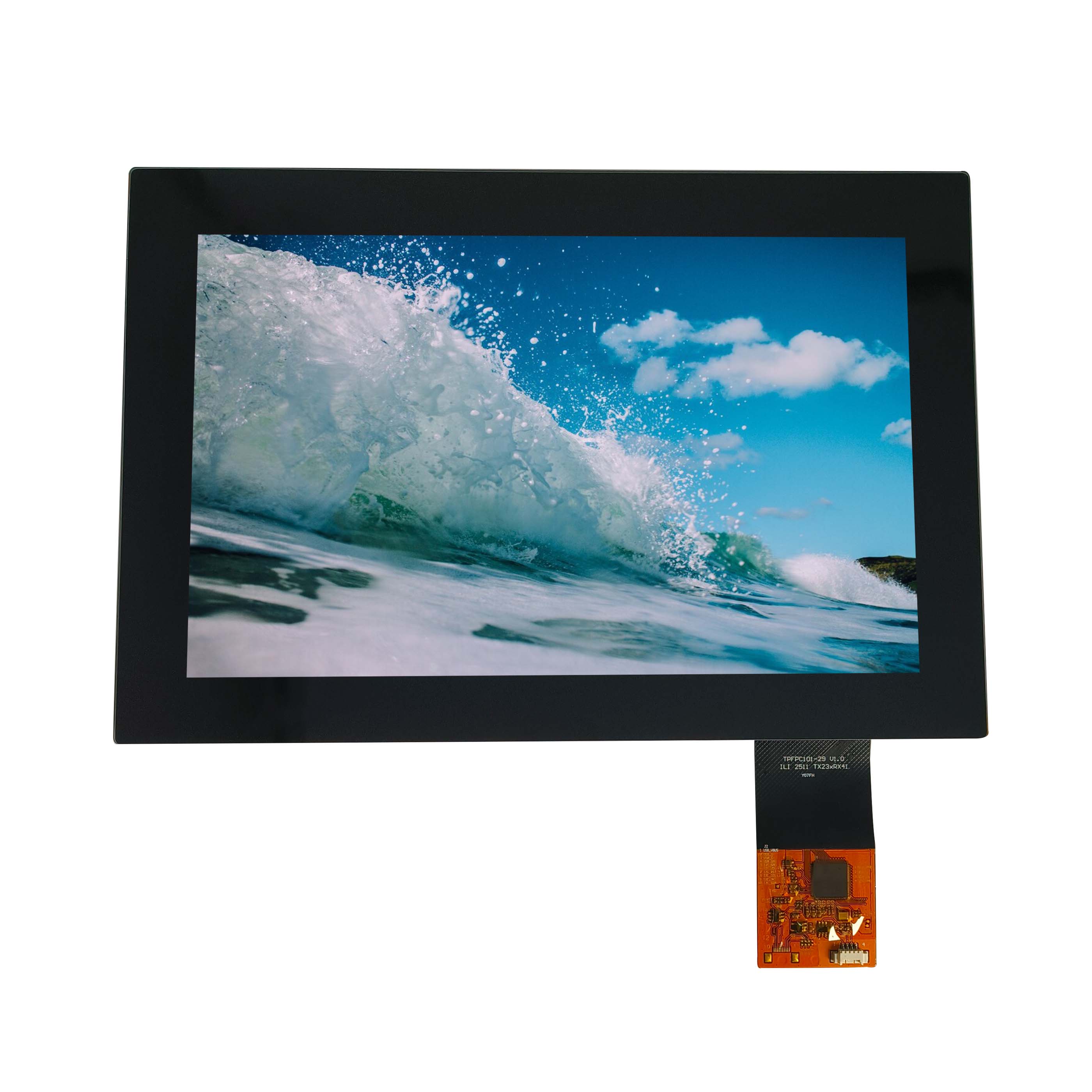
Start with overall dimensions, thickness, active area, viewing area, bezel boundaries, mounting holes, and FPC orientation. CDTech’s 3.5-inch S035BWV99HN-1, for example, is listed with a 49.36 × 83.6 × 2.15 mm outer dimension, while the 3.5-inch S035HQ55HS measures 76.90 × 63.90 × 3.26 mm. The same diagonal does not guarantee the same fit.
Optical performance
Assess resolution, luminance, viewing angle, contrast, surface treatment, and expected ambient light. IPS panels are often selected when users view the interface from varying positions. A compact display should be specified by viewing distance and content density—not by maximum resolution alone.
Electrical and environmental fit
Verify interface, supply voltage, pixel timing, connector type, operating temperature, storage temperature, and backlight power. For example, CDTech lists the 2.4-inch S024HQ42NN as 240 × 320, MCU/RGB/SPI, 350 nits, with a −20°C to +60°C operating range; the 3.5-inch S035BWV99HN-1 is 480 × 800 MIPI, 600 nits, IPS, and rated from −20°C to +70°C.
Small Size TFT Display Examples
Handheld diagnostic device: A 2.4- or 3.5-inch module may favor SPI, MCU, or MIPI compatibility, compact depth, and readable numeric data.
Factory controller: A 3.5- or 4.3-inch industrial TFT may prioritize higher brightness, stable viewing angles, touch integration, and wide operating temperatures.
Smart-home control panel: A portrait-oriented 3.5-inch or 4.0-inch TFT can support touch-led UI layouts where icons, status indicators, and settings need more clarity than a segmented LCD can provide.
Small Size TFT Display Integration Options
CDTech’s product approach extends beyond a standalone panel. The company describes one-stop display, touch, and optical-bonding production, allowing engineering teams to evaluate a more integrated module architecture instead of separately sourcing each visual component.
A suitable cross-selection path may include:
-
Industrial LCD displays for compact HMI, instrumentation, and industrial-control requirements.
-
CDTech’s LCD display selection guide for narrowing choices by size, resolution, interface, brightness, and application.
-
LCD technology and buying criteria guidance for evaluating TFT, IPS, touch, interfaces, and lifecycle needs.
-
RGB-to-LVDS interface design guidance for projects where signal integrity and interface conversion affect design reliability.
How to Select a Small Size TFT Display
-
Define the physical constraint before choosing a diagonal size. Record enclosure opening, allowable module depth, viewing window, mounting reference points, cable exit direction, and keep-out zones.
-
Define the user task. Determine whether the screen shows basic numbers, live graphics, alarms, menus, video, or touch controls. This guides resolution, orientation, touch type, and UI density.
-
Match luminance to the actual environment. Consider ambient light, reflections, viewing angle, window glare, and whether users wear safety glasses. Validate readability on a physical prototype, not only through datasheet comparison.
-
Select the electrical interface early. Confirm processor support for SPI, MCU, RGB, MIPI DSI, LVDS, or HDMI before locking the module. For high-speed designs, account for impedance control, clocking, pin mapping, and EMC from the start.
-
Choose touch and cover construction. Specify no-touch, resistive touch, or projected capacitive touch based on gloves, liquid exposure, stylus use, cleaning processes, and required user interaction.
-
Validate production conditions. Supply the manufacturer with drawings, application details, target annual volume, expected lifecycle, required environmental range, and requested customization. CDTech recommends including the intended use case, interface requirements, environmental conditions, and estimated annual usage when requesting technical matching.
Small Size TFT Display Use Cases
Scenario: Portable industrial instrument
Traditional approach: A monochrome or low-resolution screen provides limited status information, forcing operators to navigate through nested menus or rely on separate indicator lights.
With CDTech: A compact TFT can combine real-time readings, warning colors, trend indicators, and touch-driven settings in one interface. A 2.4-inch module such as the S024HQ42NN supports 240 × 320 resolution and MCU/RGB/SPI options, helping teams align the display with lower-complexity embedded hardware.
Scenario: Smart-home wall controller
Traditional approach: A mechanical thermostat or segmented LCD creates a low-cost interface but limits visual hierarchy and future software-driven features.
With CDTech: A 3.5- or 4.0-inch small size TFT display can support room status, schedules, device controls, icons, and touch-based navigation. A portrait-oriented MIPI display may be appropriate when the product requires a phone-like vertical UI, while RGB can be practical for compatible embedded platforms.
Scenario: Vehicle auxiliary display
Traditional approach: A basic LCD provides necessary information but may be difficult to read at off-axis angles or under changing cabin light.
With CDTech: An IPS small size TFT display can support graphical alerts, battery information, status menus, or camera-related interface elements. Depending on the selected module, teams can target high brightness, IPS viewing angles, and operating-temperature requirements appropriate to the application. The final choice should be verified against vehicle environmental and regulatory requirements rather than inferred from consumer-display performance.
Small Size TFT Display FAQ
What physical parameters matter most for a small size TFT display?
The essential parameters are outer dimensions, active area, viewing area, thickness, mounting method, FPC location, connector type, display orientation, and tolerances. Diagonal size alone is not enough for a mechanical decision. A 3.5-inch panel can be portrait or landscape, with substantially different width, height, and cable-exit requirements.
How do I choose the right small size TFT display resolution?
Choose resolution according to viewing distance, UI complexity, font size, and graphical content. A compact status display may not need the same pixel density as a handheld product that displays detailed menus or images. Higher resolution can increase interface bandwidth, graphics-processing requirements, memory use, and cost. Design the user interface at the intended physical size before selecting resolution.
Which interface is best for a small TFT LCD module: SPI, RGB, MCU, MIPI, or LVDS?
The best interface is the one compatible with the host processor, required refresh performance, resolution, and cable architecture. SPI is common for smaller, lower-bandwidth interfaces; RGB and MCU interfaces can suit certain embedded platforms; MIPI is common in thin, higher-resolution compact products; and LVDS is typically more relevant as resolution, cable length, or noise-control requirements rise. CDTech’s catalog lists compact modules with SPI, MCU, RGB, MIPI, and LVDS options depending on the model.
What brightness should a small size TFT display have?
Brightness should be selected for the deployment environment, not for a generic category. Indoor equipment may work with moderate luminance, while installations near windows, in vehicles, or outdoors may need substantially higher brightness plus anti-glare design and optical bonding. CDTech’s industrial catalog includes compact module listings from 250 nits to 1,000 nits, but the right level depends on the finished product’s cover lens, reflections, power budget, and ambient light.
What are the main small size TFT display design limitations?
Key limitations include backlight power, thermal management, reduced physical space for connectors and mounting, interface bandwidth, FPC bend-radius constraints, optical reflections, touchscreen noise sensitivity, and supply continuity. A thinner module can simplify industrial design but make heat dissipation, cable routing, or cover-lens integration harder. Requirements should be frozen only after mechanical, electrical, and environmental reviews.
How does the custom small size TFT display process work?
A practical custom process begins with a requirements package: drawings, target dimensions, resolution, interface, brightness target, touch configuration, cover-glass needs, operating environment, compliance requirements, and projected volume. The supplier then reviews standard-module fit, identifies customization options, provides technical documentation or samples, and supports prototype validation before pilot and mass production. CDTech states that it can evaluate tailored solutions for custom backlights, touch-panel bonding, and housing integration when a catalog product is close but not exact.
Conclusion
A small size TFT display should be chosen as an integrated system component—not as a diagonal-size purchase. The strongest projects align physical fit, active area, interface, brightness, touch behavior, operating temperature, and lifecycle support before committing to tooling or PCB routing. CDTech’s catalog offers compact industrial TFT options across multiple screen sizes, interfaces, brightness levels, and viewing technologies, while its customization capabilities can help close the gap between a standard module and a production-specific design.
Request a Display Match
CDTech is a display manufacturer focused on TFT LCD, touch display, HDMI display, and integrated display solutions for industrial control, medical devices, smart-home products, automotive applications, and instrumentation. Submit enclosure dimensions, interface requirements, use environment, touch needs, and volume expectations to identify a suitable standard or customized small size TFT display solution.