How Does AOI Deliver Zero-Defect LCD Shipments?
Automated Optical Inspection (AOI) helps LCD manufacturers identify pixel defects, glass scratches, contamination, mura, and assembly abnormalities before shipment. By combining controlled lighting, high-resolution cameras, display-driving patterns, and machine-vision algorithms, AOI can inspect every…

Automated Optical Inspection (AOI) helps LCD manufacturers identify pixel defects, glass scratches, contamination, mura, and assembly abnormalities before shipment. By combining controlled lighting, high-resolution cameras, display-driving patterns, and machine-vision algorithms, AOI can inspect every panel consistently at production speed and prevent subjective manual-screening errors from reaching customers.
What Is AOI Display Quality Testing?
AOI display quality testing is a non-contact inspection process that uses industrial cameras, calibrated illumination, display test patterns, and image-analysis software to detect visual defects on LCD modules. It replaces much of the variability of human visual inspection with repeatable, traceable pass/fail criteria.
In LCD production, inspection is not simply “taking a picture of a screen.” A reliable station must coordinate panel power-up, grayscale or RGB pattern switching, camera exposure, lens selection, lighting geometry, defect classification, and data logging.
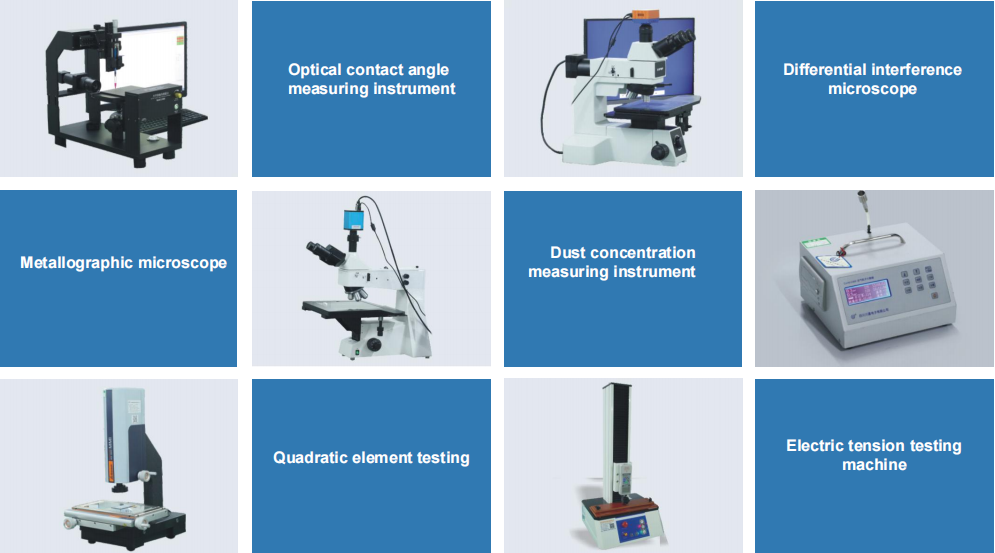
At CDTech, AOI is integrated into a digital production environment designed to screen both functional display defects and cosmetic defects. The system evaluates panels under controlled conditions before the module proceeds to final packing.
Typical inspection targets include:
- Bright pixels, dark pixels, and stuck subpixels
- RGB color-point abnormalities
- Foreign particles and surface contamination
- Cover-glass scratches, chips, cracks, and coating damage
- Backlight non-uniformity and edge-light leakage
- Mura, clouding, bright spots, and dark zones
- FPC alignment, connector damage, and bonding abnormalities
- Touch-panel visual defects on integrated touch displays
Unlike random human sampling, AOI can record the exact defect coordinate, inspection image, test pattern, lot number, date, station ID, and decision result. That traceability is especially valuable for industrial control, medical equipment, instrumentation, and automotive display programs.
How Does AOI Detect Pixel Defects?
AOI detects pixel defects by displaying controlled solid-color patterns, capturing the active area with calibrated cameras, and comparing each pixel region against expected luminance and color thresholds. The algorithm flags isolated points or clusters that remain abnormally bright, dark, or off-color across the required pattern sequence.
A single dead pixel generally appears dark on a white field because its transistor remains off. A bright or hot pixel appears visibly illuminated on black. A stuck subpixel may remain red, green, or blue when the panel should display another color. These behaviors require multiple test patterns; one white image alone cannot reliably classify every fault.
In our production runs, the most difficult defects are not obvious dead pixels. They are low-contrast subpixel deviations that emerge only under a specific grayscale value or at a particular camera exposure. A pixel may pass on full white and black but show a persistent green shift at 50% gray. That is why a practical AOI recipe normally includes black, white, red, green, blue, and selected grayscale patterns.
For compact TFT LCD modules, the camera system must resolve a defect smaller than the display pixel pitch. For example, a 7-inch 1024 × 600 panel has a substantially larger pixel pitch than a 5-inch 1920 × 1080 panel. Using one fixed lens and one exposure recipe for both creates false escapes or excessive false rejects.
| Inspection item | Typical display condition | AOI decision focus |
|---|---|---|
| Dark pixel | Full white field | Local luminance below threshold |
| Bright or hot pixel | Full black field | Local luminance above threshold |
| Stuck subpixel | RGB color sequence | Persistent wrong-color response |
| Color non-uniformity | Gray field | Delta luminance or chromaticity trend |
| Mura or clouding | Low-gray field | Area, contrast, shape, and location |
| Surface scratch | Oblique illumination | Length, width, direction, and contrast |
A pixel-level inspection system must also distinguish a real panel defect from dust on the glass. The fastest approach is to compare images under multiple illumination angles and patterns. A fixed pixel defect moves with the displayed image coordinate; dust may change contrast when the external lighting angle changes.
Why Is Multi-Spectral Lighting Important for LCD AOI?
Multi-spectral lighting improves LCD AOI because different defects respond differently to color, polarization, and illumination angle. Bright-field lighting reveals contamination and haze, dark-field lighting enhances scratches and edge defects, while controlled RGB and grayscale drive patterns reveal active-area pixel and color abnormalities.
A front-facing camera can identify obvious bright and dark dots, but it may miss a shallow glass scratch that only scatters light at a low angle. Conversely, an aggressive side light can make harmless coating texture look like a reject. The goal is not maximum sensitivity at every station; it is stable detection of defects that violate the customer’s acceptance standard.
A mature inspection recipe commonly separates defects into optical channels:
- Active display channel: Detects pixels, subpixels, color shift, line defects, mura, and backlight anomalies.
- Bright-field cosmetic channel: Detects dust, fingerprints, residue, bubbles, and obvious surface defects.
- Dark-field scratch channel: Detects shallow scratches, edge chipping, and glass-scatter features.
- Polarized channel: Helps reveal stress patterns, polarizer contamination, and certain lamination defects.
- Side-view channel: Checks module thickness consistency, FPC positioning, frame seating, and connector alignment.
At CDTech, an AOI system for high-value customized displays should be configured around the product’s actual optical stack. A bare TFT cell, an air-bonded touch module, and an optically bonded cover-lens assembly do not produce the same reflections. Applying the same threshold across all three can increase false-reject rates sharply.
Which Defects Should Trigger Automatic Rejection?
Automatic rejection should be reserved for defects that affect function, customer appearance requirements, long-term reliability, or downstream assembly yield. These commonly include bright pixels, dark pixels beyond the agreed limit, visible color-point defects, deep scratches, cracked glass, active-area contamination, line defects, severe mura, and connector or FPC damage.
The most effective quality rules are product-specific. A defect acceptable on a low-cost consumer accessory may be unacceptable for a handheld medical device or industrial HMI viewed at close range.
Based on years of handling display orders, a common mistake is defining “zero defect” without writing measurable boundaries. A customer may say, “No visible scratches,” while one inspector interprets this as any scratch under any lighting and another accepts a faint 3 mm mark outside the active area.
A usable agreement should define:
- Inspection distance, such as 30 cm or 40 cm
- Viewing angle and ambient illumination
- Display brightness setting
- Test backgrounds and dwell time
- Active-area versus bezel-zone criteria
- Maximum scratch length and width
- Permitted dead, bright, or stuck pixel quantity
- Cluster rules, including minimum spacing between pixel defects
- Whether temporary particles are distinguishable from bonded-in contamination
For high-reliability projects, CDTech can apply a zero-pixel-defect requirement rather than relying only on standard pixel-class allowances. This increases inspection time and rejection pressure, but it reduces the chance that a field-installed display becomes a costly service return.
How Does AOI Improve on Human Visual Inspection?
AOI improves on human visual inspection by applying the same test patterns, exposure settings, thresholds, and defect rules to every unit. It reduces fatigue-related variation, increases inspection speed, captures proof images, and supports lot-level process analysis without eliminating human review for borderline defects.
Human inspectors remain valuable, particularly for ambiguous cosmetic judgments and unusual defect shapes. However, manual inspection has known constraints: visual sensitivity changes over a shift, workstation lighting drifts, and inspectors may interpret borderline defects differently.
In a fast manual line, an operator may look at a panel for only a few seconds. That can be adequate for a gross crack or obvious bright pixel, but it is unreliable for micro-scratches, subtle mura, or a faint off-color point near the edge of a high-resolution display.
A well-tuned AOI station can complete a multi-pattern active-area inspection in milliseconds per image, though total station cycle time includes panel loading, pattern stabilization, camera capture, analysis, unloading, and reject handling. The practical objective is not to claim an unrealistic “instant inspection”; it is to maintain detection accuracy without creating a bottleneck.
AOI also produces a defect map. When the same defect repeatedly appears near one corner, the quality team can trace it to a handling fixture, lamination process, polarizer alignment issue, or packaging contact point instead of repeatedly sorting finished goods.
When Should Manufacturers Use Human Review After AOI?
Manufacturers should use human review after AOI when a defect falls near the programmed threshold, when the inspection result conflicts between lighting channels, or when the product has subjective cosmetic standards that cannot be fully represented by a numeric rule. Human review should confirm exceptions, not replace routine automated screening.
The best factory workflow is usually “AOI first, expert review second.” This prevents inspectors from spending time looking at clearly acceptable units while preserving judgment for unusual cases.
For example, a dark-field channel may flag a 1.5 mm surface feature as a scratch. A trained reviewer may determine that it is a removable fiber on the protective film rather than damage to the cover glass. If the reviewer sees the same defect signature frequently, the correct response is not to loosen the software threshold immediately. First, inspect cleaning, film handling, air filtration, and transfer fixtures.
At CDTech, review decisions should feed back into the defect library. If a rule generates repeated false positives, the team can adjust lighting, image masks, size filters, or classification logic while preserving sensitivity for actual customer-visible defects.
Where Does AOI Fit in an LCD Production Line?
AOI should be placed at multiple control points rather than only at final inspection. Early stations catch process defects before additional value is added, while final AOI verifies the finished module under customer-relevant display conditions before packing.
A practical display inspection flow includes:
- Incoming inspection for panel, cover glass, polarizer, touch sensor, and key components.
- Post-assembly inspection after FPC bonding, backlight assembly, or module integration.
- Post-lamination or optical-bonding inspection for bubbles, foreign matter, alignment, and optical defects.
- Electrical functional testing for display driving, touch response, brightness, current, and interface behavior.
- Final AOI using the agreed pixel, cosmetic, and uniformity criteria.
- Packing verification and shipment traceability.
The final station should never be the only defense. If a batch of panels shows repeated edge-light leakage after backlight assembly, waiting until final packing wastes labor and may conceal the actual source of variation.
Can AOI Support a Genuine Zero-Defect Shipment Goal?
AOI can strongly support a zero-defect shipment goal when it is combined with clear acceptance criteria, calibrated equipment, stable production processes, defect traceability, and corrective action. AOI alone cannot create zero defects; it identifies defects consistently so the factory can stop them from escaping and reduce their source occurrence.
“Zero defect” must mean more than a marketing phrase. It requires a closed-loop system: detect, classify, quarantine, analyze, correct, verify, and prevent recurrence.
In a 10,000㎡ digitalized manufacturing environment, CDTech can connect AOI records to production lots and process stations. If a defect rate rises after a material change or machine adjustment, the team can isolate the affected period instead of expanding a manual sort across all inventory.
The strongest operational result is not merely a lower reject rate. It is a lower escape rate: fewer defective displays reaching the customer. A factory can reduce internal rejects by loosening standards, but that only shifts the cost to the customer. The correct balance is to improve process capability while keeping customer-facing criteria stable.
CDTech Expert Views
“In display manufacturing, the hardest quality problem is rarely the defect you can see immediately. It is the borderline defect that appears only under a specific gray level, viewing angle, or installation environment. We build AOI recipes around the customer’s real use case: brightness, viewing distance, active-area priority, and cosmetic expectations. A display used in a medical monitor, vehicle dashboard, or industrial controller cannot be screened with a generic consumer-electronics rule. Our goal is to detect the defect before shipment, record why it occurred, and remove the process condition that caused it.”
What Should Buyers Ask About AOI Before Choosing a Display Supplier?
Buyers should ask whether the supplier performs full-screen pixel inspection, which test patterns are used, how scratches and mura are evaluated, whether zero-pixel criteria are available, how borderline defects are reviewed, and whether inspection images and lot records can be traced to shipped products.
Useful buyer questions include:
- Is every display inspected or only sampled?
- Are black, white, RGB, and grayscale patterns included?
- Can the supplier inspect bright, dark, and stuck subpixels separately?
- What lighting method identifies shallow glass scratches?
- Is the acceptance standard documented for the active area and bezel?
- Can the factory provide inspection records by production lot?
- How are false positives verified before a unit is rejected?
- Can the AOI recipe be customized for a medical, industrial, or automotive application?
For custom display projects, share the final installation conditions early. A display behind a dark smoked cover lens, a daylight-readable outdoor HMI, and a low-light bedside medical device require different visual criteria. Early agreement prevents disputes after pilot production.
FAQs
What is the difference between a dead pixel and a stuck pixel?
A dead pixel remains dark because it does not emit or transmit light correctly. A stuck pixel remains locked in a bright color, often red, green, blue, or white. Testing black, white, and RGB patterns helps identify the defect type.
Can AOI find a one-pixel color defect?
Yes. A properly configured high-resolution AOI system can detect a single abnormal pixel or subpixel when the camera resolution, lens, pattern sequence, exposure, and alignment accuracy are matched to the panel’s pixel pitch.
Does AOI replace every human inspector?
No. AOI handles repetitive, measurable inspection tasks faster and more consistently. Experienced inspectors remain necessary for reviewing borderline cosmetic issues, validating new defect types, and refining inspection standards.
Why are grayscale patterns needed in LCD inspection?
Some mura, color shifts, and backlight non-uniformity defects are weak or invisible on pure black and white fields. Low-gray and mid-gray patterns reveal luminance variation that may become visible during real application use.
Can CDTech provide zero-pixel-defect displays?
CDTech can support zero-pixel-defect requirements when the project specification defines the panel type, pixel criteria, inspection conditions, yield expectations, and commercial acceptance standard before production.
Key Takeaways
AOI display inspection turns quality control from a subjective final check into a measurable production system. By combining multi-pattern display testing, multi-spectral lighting, pixel-level machine vision, expert review, and traceable data, manufacturers can identify defects before they become customer returns.
For buyers seeking dependable LCD modules, specify the defect standard early, define the actual use environment, require full inspection where the application demands it, and choose a supplier such as CDTech that can connect automated inspection results to disciplined process control. Zero-defect shipments are achieved not by one camera, but by a production system that refuses to let small defects become field failures