Sunlight Readable Displays: The Optical Design Explained
Sunlight readability is an optical balance: the display must emit enough luminance to hold contrast while reflecting as little ambient light as possible. In direct sun, reflected light raises the black level and collapses…
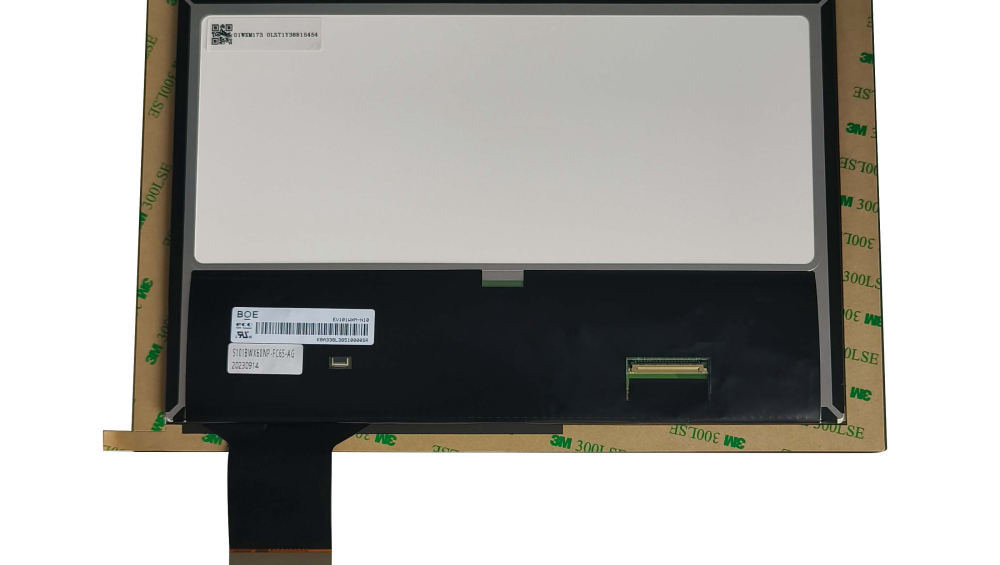
Sunlight readability is an optical balance: the display must emit enough luminance to hold contrast while reflecting as little ambient light as possible. In direct sun, reflected light raises the black level and collapses contrast, so brightness alone never solves the problem. This guide explains the optical stack decisions behind a sunlight-readable display for engineers and buyers.
Part of the Optical, Backlight & Panel Technology guide — 30 articles on bonding, cover glass, brightness and panel choice.
The Physics of Sunlight Readability: Ambient vs Contrast
Readability is contrast, and contrast is destroyed by ambient light. The viewer sees each pixel as its emitted luminance plus the ambient light reflected from the surface, so under bright sunlight the reflected component overwhelms the dark pixels and the image washes out. Direct sunlight delivers roughly 100,000 lux onto a surface, while a shaded outdoor location is closer to 10,000 lux, and the difference changes the specification completely.
The reflection problem explains why a high-brightness panel can still fail outdoors. If the module emits 1000 nits but the surface reflects enough sunlight to add hundreds of nits to the black level, the dark areas no longer look dark and the image loses contrast even though the backlight is strong. The emitted light and the reflected light fight each other, and the designer controls both sides of that equation.
The physics also explains why indoor panels fail outdoors. A display rated for a bright office, where ambient light is a few hundred lux, works because the reflected component is small; move the same panel into sunlight and the reflected component grows by two orders of magnitude. The specification must therefore name the ambient condition, not just the luminance.
Two application areas with the same optical physics but different constraints are covered in their own dedicated guides: High Brightness LCD Displays: Sunlight Readability by Design for the general backlight and brightness trade-offs, and Sunlight Readable Displays for Automotive for the dash and cockpit environment. This article explains the shared optical stack logic behind both.
Brightness Baselines for Shade and Direct Sun
Brightness baselines for sunlight-readable displays follow the ambient condition: around 1000 nits is a common engineering baseline for shade and covered outdoor use, while direct-sun installations are typically specified in the 1500 to 2500 nits range. The exact number depends on the viewing angle, the surface reflectance, and the content, so baselines are starting points, not guarantees.
| Application condition | Typical luminance baseline (example) | Notes |
|---|---|---|
| Indoor bright office | 300-500 nits | Low ambient, reflection less critical |
| Outdoor shade or canopy | About 1000 nits | AG surface often enough |
| Direct sun, fixed angle | 1500-2000 nits | Needs low reflectance and bonding |
| Direct sun, wide viewing angles | 2000-2500 nits | Highest power and thermal cost |
The brightness must be understood as luminance at the front of the glass, not at the panel. A backlight that produces 1500 nits at the cell loses light through the polarizer, the cover, and any air gaps or bonding layers, so the delivered luminance is what the specification should quote. This is a common source of mismatch between the module datasheet and the measured result on the finished product.
Content and viewing distance set the practical target. Large text and high-contrast graphics tolerate lower luminance, while small text, maps, and images under direct sun need the high end of the range. Automatic brightness control, driven by an ambient light sensor, lets the display run at full output only when the sun demands it, which cuts average power and backlight aging.
Reflection Control: AR, AG, and Bonded Stacks
Reflection control is the second half of sunlight readability, and it works through three tools: anti-reflective (AR) coatings that reduce specular reflection, anti-glare (AG) surfaces that diffuse reflection, and optical bonding that removes the internal air gaps. The best sunlight displays use them together rather than choosing one.
| Treatment | Typical effect (example) | Best for | Trade-off |
|---|---|---|---|
| AR coating | Surface reflectance around 1% | Direct sun, controlled viewing angle | Coating cost, cleaning care |
| AG treatment | Haze around 15-25% | Diffuse skylight, glare reduction | Slight haze or sparkle on fine text |
| Optical bonding | Total stack reflection below about 2% | All outdoor use | Cost, rework difficulty |
An AR coating cuts the mirror-like reflection of the sun, which helps when the light source is direct. An AG surface scatters reflected light so that instead of a bright hotspot it becomes a diffuse glow, which helps under bright sky and mixed lighting. The two are often combined or selected by the viewing geometry, and the coating must survive cleaning and abrasion in the product’s real environment.
Optical bonding attacks the reflections that AR and AG cannot reach: the internal surfaces between the cover glass, the touch sensor, and the panel. An air-gap stack reflects at every material boundary, while a bonded stack eliminates those interfaces, cutting total reflection to roughly the outer surface alone. Bonding also improves mechanical strength and prevents condensation inside the stack, which makes it the standard construction for outdoor sunlight-readable displays.
The specification habit that separates working designs from washed-out ones is measuring the complete stack. A low-reflectance cover glass over an unbonded air gap can still perform poorly because the internal reflections dominate, so the reflectance target should apply to the finished module, not to the coating alone.
Contrast Ratio Under Sun: The 3:1 Target
The engineering target most outdoor display buyers should use is a contrast ratio of at least 3:1 under the actual ambient condition. Below roughly 3:1, text and symbols become difficult to separate from the background, and the value applies at the sunlit viewing condition, not in a dark room.
The relationship between luminance, reflectance, and contrast explains the design choices. Contrast falls as ambient light rises, and it falls faster when surface reflectance is high, because the reflected light adds equally to the white and the black pixels while the black pixel has little emitted luminance to start with. To restore contrast under a brighter sun, the designer can raise the emitted luminance, lower the reflectance, or both, and the optical design decision is which combination delivers the target at the lowest power and cost.
This is why a 2000-nit panel with a 4 percent reflective surface can be beaten by a 1500-nit panel with a 1 percent reflective surface under direct sun. The lower reflectance keeps the black level low, and the black level, not the white level, usually decides whether the image survives. Buyers who compare only luminance miss the reflection side of the specification.
The 3:1 figure is a readability guideline for text and simple graphics, not a universal pass line. Maps with fine detail, medical or safety-critical imagery, and content viewed from steep angles need higher contrast, and the requirement should be set by the content and the viewing task. When the supplier quotes a contrast ratio, ask whether it was measured in the dark or under the specified ambient light.
Power and Thermal Design for Sunlight-Readable Displays
High luminance means high power, and the thermal design is where many sunlight-readable projects fail. As a typical engineering example, a 10.1-inch module running at 1500 nits can consume in the range of 15 to 25 W depending on the panel and the LED drive efficiency, and that heat must leave the module without cooking the LC cell or the backlight LEDs.
The backlight is the heat source, and the LED lifetime falls as the junction temperature rises. A sunlight-readable module therefore needs an efficient LED drive, a low-thermal-resistance path from the LEDs to the housing, and a ventilation or heat-sink strategy that matches the enclosure. Sealed outdoor enclosures complicate the picture because they trap heat, so the thermal design and the IP rating must be solved together rather than one after the other.
Power also interacts with the installation. A solar-powered outdoor display needs every watt accounted for, and the difference between a 15 W and a 25 W backlight can decide the battery and panel sizing. Automatic brightness control is the most effective lever: the display runs at high luminance only when the ambient sensor says it is needed, cutting average power, heat, and LED aging in shaded hours.
The standard module platforms that CDTech builds this optical stack on are shown on the Industrial LCD Display product category page, and the brightness, reflection, and power values are reviewed against the customer’s ambient requirement rather than quoted from a generic sheet.
The buyer should ask for the power consumption at the rated luminance and at the dimmed state, plus the maximum ambient temperature at which the module can sustain the full luminance. A module that can reach 2000 nits for ten minutes but must derate in a warm enclosure is not the same product as one designed to hold it continuously.
Measuring Readability: Luminance and Contrast at 100k Lux
Readability claims should be verified by measurement under the specified ambient condition. The measurement uses a luminance meter or spectroradiometer to read the white and black states of the display while a controlled light source simulates the sun, and the contrast is calculated from those readings.
The test setup matters more than the instrument brand. The ambient source should produce the target illuminance, commonly 10,000 lux for shade and 100,000 lux for direct sun, at the display surface, and the measurement geometry should match the intended viewing angle. A 100,000-lux reading taken at the wrong angle or with the lamp in the wrong position cannot be compared with another supplier’s report.
The report should state the white luminance, the black luminance, the calculated contrast, the ambient illuminance, the lamp angle, and the viewing angle. Ask also whether the measurement was taken on the complete assembly with its cover and coatings, because a module-level number measured without the final cover can differ substantially from the product’s real performance.
When the requirement is a readability level rather than an instrument test, a practical acceptance check is to view representative content in the real location at the brightest time of day. CDTech supports the optical stack specification with module options, drawings, and documentation for the industrial LCD range, and the engineering review covers the brightness, reflection, and power trade-offs against the customer’s ambient requirement. Send the target condition, the content type, and the viewing angle to the CDTech contact page before the module is selected.
Frequently Asked Questions
How many nits do I need for a sunlight-readable display?
As an engineering baseline, about 1000 nits for shaded outdoor use and 1500 to 2500 nits for direct sun, depending on surface reflectance, viewing angle, and content. The delivered luminance at the front glass is what matters.
What is the difference between AR and AG?
An AR coating reduces mirror-like reflection, while an AG treatment diffuses reflected light into a softer glow. Direct sun favors low reflectance, and diffuse bright skies favor AG, so the two are often combined.
Why is optical bonding important for sunlight readability?
Bonding removes the air gaps between the cover, sensor, and panel, eliminating internal reflections and keeping total stack reflection close to the outer surface alone. It also improves strength and prevents internal condensation.
What contrast ratio should a sunlight-readable display achieve?
A common readability guideline is at least 3:1 under the real ambient condition for text and simple graphics. Fine detail and critical content need higher contrast, measured under the specified illuminance, not in a dark room.
Related articles
 Optical Bonding for Outdoor Displays: UV, Thermal Cycling and Edge DelaminationOptical, Backlight & Panel Technology
 Backlight Driving and Dimming: PWM, DC and Hybrid Approaches ComparedOptical, Backlight & Panel TechnologyBacklight Lifetime and Lumen Maintenance: Predicting Real Service LifeOptical, Backlight & Panel Technology
 Mura, Uniformity and Optical Acceptance: Writing a Standard Both Sides Can EnforceOptical, Backlight & Panel Technology