PCAP vs Resistive Touch Screens: The Complete Comparison
PCAP (projected capacitive) and resistive are the two dominant touch technologies, and the choice between them shapes the entire user experience. PCAP supports multi-touch gestures on a glass surface; resistive responds to any pressure,…
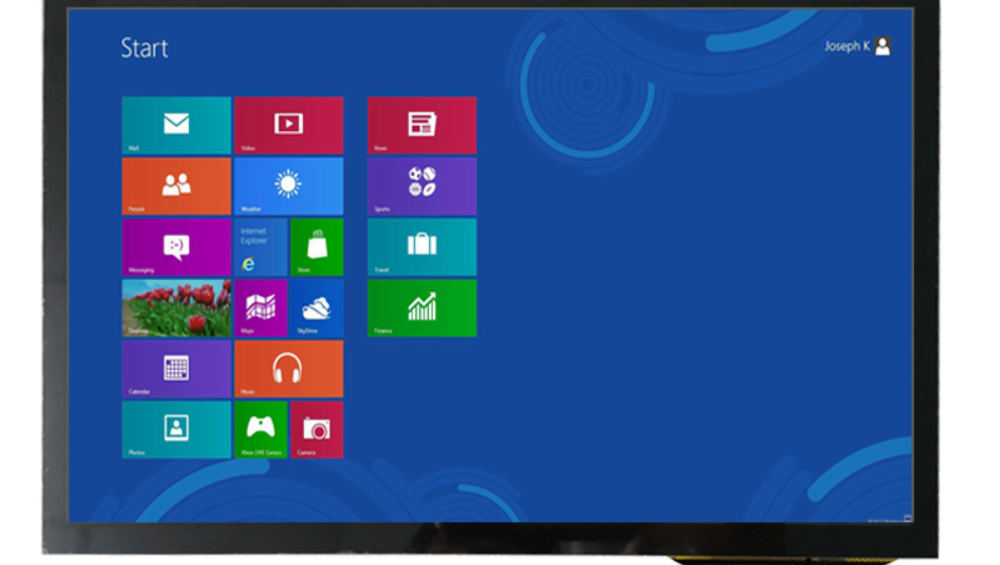
How PCAP and Resistive Touch Screens Work
PCAP measures capacitance changes at electrode intersections when a conductive object—normally a finger—approaches the sensor. Resistive measures pressure between two conductive layers separated by a gap; pressing the top layer bridges the layers and closes the circuit. The physics difference drives everything else: PCAP needs a conductive touch (finger or active stylus), while resistive responds to any firm press.
Multi-Touch and Gestures: What Each Technology Supports
PCAP natively supports multi-touch, gestures, and high report rates because it tracks multiple capacitance changes independently. Resistive screens are inherently single-touch, and multi-touch resistive implementations are limited and rare. If the UI uses pinch, swipe, or multi-finger gestures, PCAP is the practical technology.
Optical Performance: Brightness, Transmittance, and Readability
PCAP stacks typically use a glass cover with higher transmittance and fewer optical layers, so they look brighter and clearer. Resistive film layers scatter light and reduce transmittance, lowering contrast; the same backlight looks dimmer behind resistive touch. For sunlight readability and image quality, PCAP starts with an advantage—at a higher cost.
Durability and Touch Life: Which Stack Survives Longer
Resistive screens wear where they are pressed: the film and coatings degrade with use, and the air gap inside the stack can change behavior over time. PCAP has no moving layers, so its wear is concentrated in the cover and coatings rather than the touch mechanism itself. Both need environmental qualification; PCAP generally wins on touch-life in high-use products, while resistive remains adequate for light, occasional use.
Gloves and Rain: Where Resistive Keeps Its Edge
Thick gloves are resistive’s classic strength: a press works without tuning. PCAP can work with gloves only when the controller supports glove mode, and rain is the reverse case—PCAP with wet rejection handles water better than resistive, which can false-trigger when wet. The glove-and-rain guide covers these techniques in depth; the comparison here is that resistive is the low-risk choice for thick gloves, PCAP for wet environments.
Cost Comparison: Why PCAP Carries a Premium
PCAP costs more than resistive at the same size because of the sensor, controller, and glass stack. The premium buys multi-touch, better optics, and a modern glass surface. Compare the system cost—PCAP can remove physical buttons or reduce backlight brightness, while resistive may need a brighter backlight—not just the touch panel price.
Frequently Asked Questions
Which technology should I choose for gloves and rain?
Thick gloves favor resistive; rain and wet environments favor PCAP with wet rejection. Match the technology to the dominant condition and verify glove mode or wet rejection with the actual use case.
How much more does PCAP cost?
The premium varies with size, volume, and stack. Industry experience puts PCAP above resistive per unit; compare total system cost, including UI simplification and backlight savings.
Which is clearer: PCAP or resistive?
PCAP stacks typically transmit more light and keep contrast higher because they use a glass cover instead of resistive film layers.
Which suits sealed, dust- and liquid-resistant products?
PCAP with a bonded glass front is easier to seal and has no internal air gap, making it the stronger choice for sealed and washdown environments.
If you are choosing between touch technologies, start with the input conditions—gloves, water, gestures—and the optical environment. CDTech supports touch display specification across the custom LCD range—contact us with your application conditions.