Patient Monitor Displays: Specs, Interfaces, and Certifications
A patient monitor is one of the few displays whose failure is noticed immediately by someone who is already busy. This page covers the landscape: what a bedside monitor is asked to do compared…
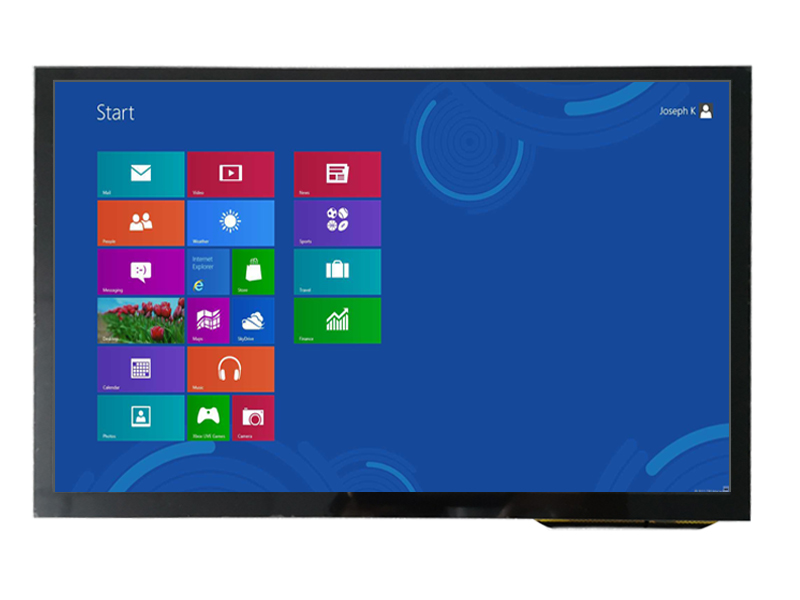
A patient monitor is one of the few displays whose failure is noticed immediately by someone who is already busy. This page covers the landscape: what a bedside monitor is asked to do compared with a transport monitor, which interfaces are used, and what certification context surrounds the module. The specification numbers – character height, dimming range, colour consistency and alarm visibility – are covered in the companion guide, Patient Monitor Displays: Specs, Interfaces and Certification Requirements.
Bedside versus transport roles
A bedside monitor in intensive care is watched from several positions and at distances up to about 2.5 m, while a transport monitor is viewed close up by one person who is also moving. The two roles produce different requirements: the bedside unit needs wide viewing-angle tolerance and multi-viewer readability, while the transport unit needs robustness, low power and a compact format.
Many devices serve both roles, which is why the display specification usually has to satisfy the harder case rather than the average one.
Which interfaces patient monitors use
LVDS remains common because it is well understood, widely supported and tolerant of the cable lengths and flexing found on carts and arms. MIPI DSI appears where the host is a mobile-derived processor, and embedded DisplayPort where resolution and bandwidth are higher. Whichever is used, the connector needs a positive lock and the cable needs strain relief and a defined bend radius, because a monitor on a cart is moved constantly.
Where the host provides a standard video output, a display with an integrated timing controller avoids a conversion stage and its latency.
Certification context around the module
The device, not the display, holds the medical approval. IEC 60601-1 and its accompanying EMC standard apply to the finished equipment, and the display contributes through leakage current, surface temperature, EMC behaviour and mechanical construction. On the supplier side, ISO 13485 describes the quality system under which the module is designed and produced.
What the buyer needs from a supplier is therefore component evidence rather than a certificate for the panel: specifications with tolerances, material declarations, and documented behaviour in a defined configuration. The standard itself is published by IEC as IEC 60601-1, the European framework around medical devices is described by the Commission on its medical devices pages, and supplier quality expectations are described through bodies such as AAMI.
Design constraints that shape the module
Monitors are cleaned frequently, operated with gloves and, in many designs, run without a fan. Those conditions push towards a bonded, sealed front assembly with an anti-glare surface, touch tuned for the gloves in use, and thermal behaviour that holds at the brightness level used in service rather than at maximum.
They also make the front assembly the service item, which is a design and stocking decision rather than a component choice.
Supply questions for a monitor programme
Four questions establish whether a supplier fits a patient monitor programme: what the factory’s quality-system scope covers, what change notification applies to materials and processes, how traceability is reconstructed from a delivered lot, and what the discontinuation notice period is. Monitors stay in service for many years, so the last of those matters as much as the price.
CDTech’s notes on medical display traceability and change control describe the records involved.
Where to go next
For the numbers – resolution for waveforms, brightness and dimming, colour consistency between units, viewing angle, interface choice, cleaning and alarm visibility – read the patient monitor display specification guide. The device-level regulatory context is covered in medical display requirements.
FAQ
What is the difference between a bedside and a transport patient monitor display?
A bedside monitor is viewed from several positions at up to about 2.5 m, so viewing-angle tolerance and multi-viewer legibility dominate. A transport monitor is viewed close up by one moving person, so robustness, power and a compact format matter more. Devices serving both roles must meet the harder case.
Which interface do patient monitors use?
LVDS remains the most common because it is widely supported and tolerant of cart cables, with MIPI DSI on mobile-derived hosts and embedded DisplayPort where resolution and bandwidth are higher. Connector locking and cable strain relief matter more here than in fixed equipment.
Who owns the medical certification for a patient monitor?
The device manufacturer. IEC 60601-1 and the associated EMC requirements apply to the finished equipment, and the display contributes component data such as supply characteristics, surface temperature and EMC behaviour. The supplier’s ISO 13485 certificate describes its own quality system.
Next step
Send the device role, viewing distance and cleaning regime to CDTech; the reply will state the achievable optical, dimming and touch specification for the module.
Contact sales@cdtech-lcd.com or use the contact page.
Related articles
 OLED Versus LCD for Industrial HMI: Lifetime, Burn-In and FitInfo
 Display Timing Parameters Explained: Pixel Clock, Blanking and Sync for PractitionersInfoCustom Medical Displays: DICOM, Grayscale and Panel Selection ExplainedInfo
 Ventilator and Infusion Pump Displays: Design Constraints Nobody DocumentsInfo