Rework, Repair and Re-Bonding of Display Modules: What Is feasible and What Is Scrap
Rework and re-bonding of display modules: what can be repaired, debonding risks, the repair-versus-replace threshold and how to document rework.
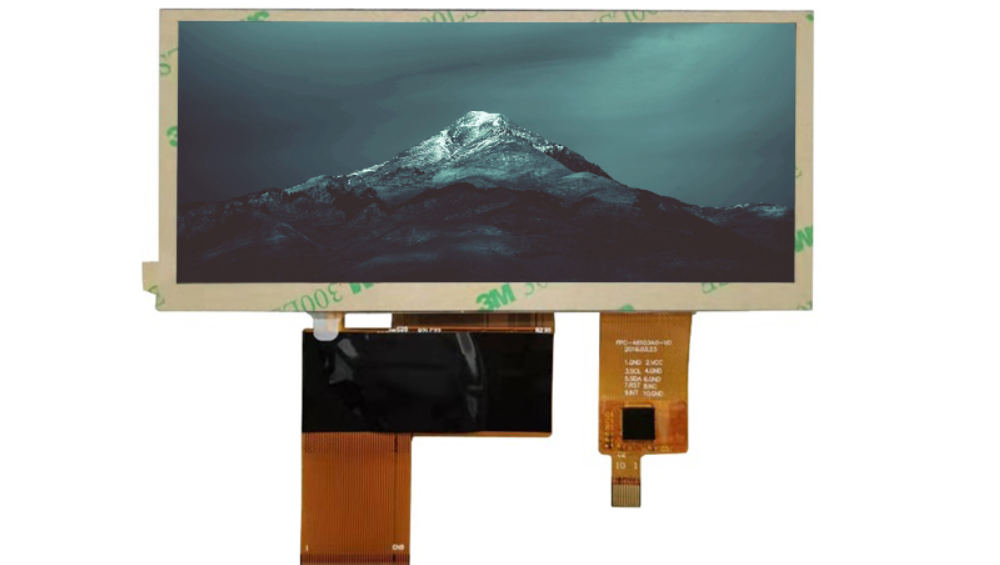
Rework decisions are usually made under time pressure, which is the worst moment to be deciding them. Whether a bonded assembly can be debonded, whether a touch panel can be replaced without destroying the display, and whether the repair is cheaper than a replacement part – all of these have answers that can be established in advance, with a procedure and a cost threshold written down.
What can be reworked without destroying the module
Some operations are routine; others are destructive.
Connector replacement, FPC re-bonding, backlight replacement in an unbonded assembly, and firmware or calibration work are conventional repairs. Separating a bonded stack is a different category: it requires controlled heating or mechanical separation, and the outcome depends on the adhesive chemistry, the size of the assembly and the materials on both sides. In practice, a bonded stack is either designed for separation or it is not, and the answer should come from the supplier before a repair is attempted rather than afterwards.
A useful first question in any repair programme is which operations the supplier considers routine, which are possible with care, and which invalidate the assembly.
Debonding techniques and their risks
Every separation method damages something.
| Method | How it works | Risk |
|---|---|---|
| Thermal softening | Heat applied to soften the adhesive | Polariser damage, panel stress, uneven heating on large parts |
| Mechanical separation | Wire or blade drawn through the bond line | Scratches, cracked glass, damaged touch sensor |
| Chemical swelling | Solvent penetrates and releases the adhesive | Long process, residue, panel contamination, safety handling |
| Designed release | Adhesive chosen for reworkability, with a defined process | Lower optical performance or higher cost in some chemistries |
Where the design supports debonding, the procedure should be written with temperatures, times and tooling, and validated on sample units. Where it does not, the honest answer is that the assembly is a replacement item, and the service strategy should reflect that.
Cleaning and re-coating after separation
The substrate is rarely reusable in the condition it was found.
After separation, both surfaces carry adhesive residue that must be removed without damaging the polariser, the touch sensor or any printed layer. Cleaning chemistry must be compatible with all of them, and the process should be validated to show that the optical properties are restored rather than merely improved – measured with haze and transmission methods such as ASTM D1003 rather than assessed by eye. Where the cover glass carried a coating, the cleaning process may also remove part of it, which changes the surface appearance permanently and can make a repaired unit visibly different from a new one.
This is the most common reason a “repaired” unit is rejected by the customer: it functions, but it does not match its pair or its neighbours in appearance.
Touch panel replacement in a bonded stack
Replacing the sensor usually means replacing the whole front.
Where the touch sensor is integrated with the cover glass, a sensor failure means the front assembly is replaced, and the display is recovered if it can be separated cleanly. Where the sensor is on a separate layer, the layer can sometimes be replaced, but the optical bonding between the layers must be redone to the same standard, which is a factory operation rather than a field one. The economics depend on the value of the display and the risk of damaging it during separation.
For long-life equipment, the sensible rule is that the front assembly is the spare part, and repair at the display level happens only where the display itself is expensive or unavailable.
Backlight and FPC-level repair
The conventional repairs remain the most cost-effective.
In an unbonded assembly, a failed backlight or a damaged FPC can often be replaced with the display intact. Connector replacement is routine for a skilled technician, and FPC re-bonding is feasible with the right equipment but requires control of temperature and pressure to avoid delaminating the panel’s own connections. These repairs are usually done in a factory or a well-equipped service centre rather than in the field, because the tooling determines the outcome.
Where a repair is performed, the joint should be inspected and the repair documented, since an undocumented re-bond is indistinguishable from an original connection and complicates any later failure analysis.
Economic threshold: repair versus replace
Four numbers decide it.
- The cost of the replacement front assembly or module, including freight.
- The labour and consumables for the repair, including the inspection and re-test.
- The risk-adjusted failure rate of a repaired unit compared with a new one.
- The cost of the equipment being unavailable while the decision is made.
Where the third number is uncertain, a repaired unit should be treated as having a shorter useful life and used in a less critical position. Documenting that policy in advance removes the argument during a breakdown.
Documenting rework for traceability
A repair is a change, and it belongs in the record.
The record should state what was repaired, which materials and components were used, which procedure was followed, who performed it, and what test confirmed the result. For equipment in regulated or safety-relevant applications, the rework may also affect the device’s documentation or require revalidation, which is a decision to be made before the repair rather than after it.
Traceability matters practically as well: if a repaired unit fails again, the analysis begins from the repair record, and a unit without one is treated as unknown.
Field versus factory rework trade-offs
The field is not a cleanroom.
Field work has the advantage of speed and no transport risk, and the disadvantage of contamination, limited tooling and difficult inspection. Bonding, in particular, should not be attempted in the field: particles, humidity and lack of a controlled press make a poor outcome likely, and the resulting bond may fail later in a way that is attributed to the original product. The practical split is that connectors, cables and complete front assemblies are field-replaceable, while anything involving bonding, polarisers or panel-level work returns to a factory. Handling practice for the modules themselves follows static-control guidance from the EOS/ESD Association.
Designing for that split – making the field-replaceable items genuinely accessible and the rest clearly non-repairable in situ – keeps service quality predictable.
When rework invalidates a certification or warranty
Some assemblies are certified as a unit.
Where a display is part of a certified hazardous-area assembly, a medical device or a regulated product, opening it or replacing a component may invalidate the certification and the warranty, and it may also change the device’s safety case. The decision to repair must therefore be taken with the certification holder, not only with the procurement team. In many cases the correct answer is that the certified assembly is replaced as a unit and the failed one is returned for analysis.
Making this explicit in the service documentation prevents well-intentioned repairs from creating a compliance problem.
Service strategy for long-life equipment
The strategy is a stock list plus a procedure.
For equipment expected to run for a decade or more, the service strategy should define which assemblies are held as spares, at what level they are replaced, what is repaired and what is scrapped, and how repairs are recorded. The economics are usually better than they appear: holding one front assembly per site or region costs less than a single avoided outage, and it converts an emergency into a planned visit.
Reviewing the strategy when the product’s panel class or bonding process changes is also worth doing, since a change in the front assembly can alter what is repairable. CDTech’s notes on custom touch panel construction and bonding quality inspection describe the assembly-level considerations that determine repairability.
FAQ
Can optical bonding be removed?
Sometimes, using thermal, mechanical or chemical separation, but the outcome depends on the adhesive chemistry, the size of the assembly and the materials involved. Where the design was not prepared for it, the practical answer is that the bonded assembly is a replacement item rather than a repairable one.
Is it cheaper to rework or replace a bonded display?
Compare the replacement part cost, the repair labour, the risk-adjusted reliability of a repaired unit and the downtime cost. Where the repaired unit’s reliability is uncertain, treat it as having a shorter life and use it in a less critical position rather than in the primary installation.
Can a touch panel be replaced without replacing the display?
Where the sensor is on a separate layer, sometimes, but the bonding between the layers must be redone to the original standard, which is a factory operation. Where the sensor is integrated with the cover glass, the front assembly is normally replaced as a unit.
Does rework affect certification or warranty?
It can. In certified hazardous-area assemblies, medical devices and other regulated products, opening the assembly or replacing a component may invalidate the certification and the warranty. Those decisions should be taken with the certification holder before any repair is attempted.
Next step
Send the assembly construction, failure mode and service constraints to CDTech; the reply will state which repairs are feasible, which require a factory return and what spare-part level makes economic sense.
Contact sales@cdtech-lcd.com or use the contact page.
Related articles
 ESD Protection for Display Modules: Design, Test and Field RealityInfo
 Hydrogen, Gas and Chemical Process Displays: Where Certification Drives the DesignInfoResistive Touch Screens: Where They Still Beat Capacitive in 2026Info
 Haptic Feedback and Display UX in Industrial Equipment: When Touch Is Not EnoughInfo