Optical Bonding vs Air Gap: The Measurement That Settles the Argument
Differentiation page: publish the linked new page before the foundation rewrite of the old page. | Meta description: Optical bonding versus air gap, decided by measurement: internal reflections, contrast indoors and outdoors, thermal effects…
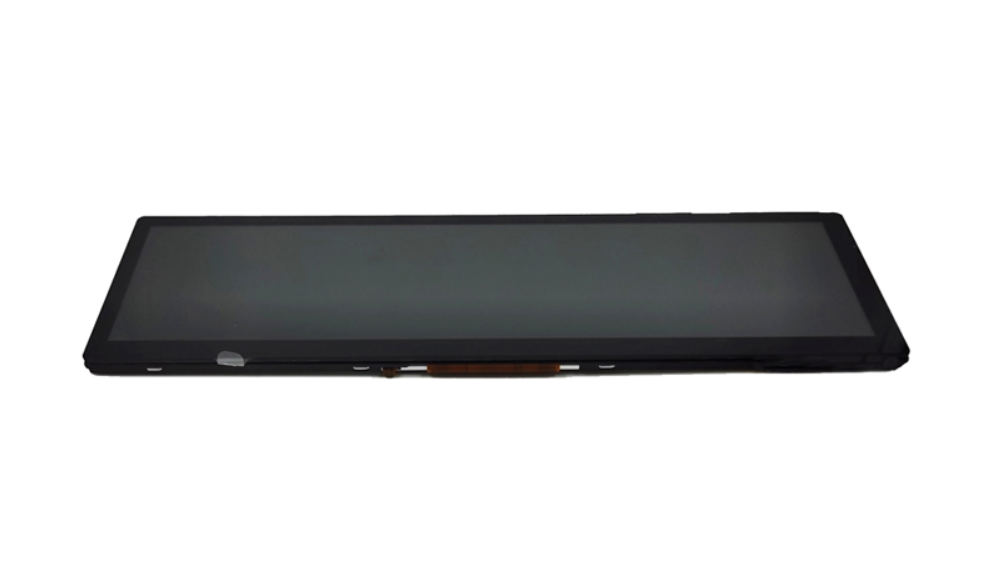
The bonding debate is usually conducted with adjectives until someone measures both configurations in the same conditions. At that point the answer is rarely uniform: bonding delivers a large improvement in some installations and almost nothing in others, and the difference is predictable from two numbers – the ambient light level and the required viewing angle. This is the measurement procedure that produces those numbers.
How an air gap changes what you see
Two extra interfaces, each reflecting.
In an unbonded assembly there are two glass-to-air interfaces between the display and the viewer: the inner face of the cover glass and the front face of the display. Each reflects a fraction of the light reaching it, and light reflected from the display then bounces between the surfaces, adding a diffuse background to the image. The visible consequences are reduced contrast in bright conditions, a slight haze over dark content, and a widening of the apparent image at oblique angles.
Bonding replaces the air layer with a material whose refractive index is close to glass, which removes both interfaces. The optical result is a predictable gain in contrast and transmission, and the amount of gain depends on the reflectance of the interfaces that were removed rather than on anything about the panel.
Measuring contrast in the same conditions
Same panel, same content, same light, two stacks.
The only valid comparison measures both configurations under identical illumination, with the same content, the same brightness setting and the same instrument geometry. The practical procedure is to place both assemblies side by side in the installation plane, display identical test fields, and measure luminance for white and black fields with a meter aimed from the intended viewing position. The ratio of the two gives the contrast in that specific lighting condition.
The result will differ substantially between a dark room and a window-lit position, which is the point: quoting a single contrast figure without the lighting condition says nothing about the installation. CDTech’s notes on measuring readability in real ambient light and on measuring brightness, contrast and uniformity describe the method.
Ambient light dependence: indoors versus outdoors
The benefit scales with the light you are fighting.
Typical bonding benefit by environment
| Environment | Reflected light | Bonding benefit |
|---|---|---|
| Control room, dim | Low | Small; the black level improves slightly |
| Office or shop interior | Moderate | Noticeable in dark content and at oblique angles |
| Bright retail or industrial hall | High | Significant; often the difference between readable and not |
| Outdoors in sun | Very high | Decisive; bonding plus anti-glare treatment is usually required |
| Behind additional glazing | Very high, with extra reflections | Decisive, because the glazing adds interfaces |
This table is the reason two engineers can argue honestly about bonding: one is specifying an indoor panel and the other an outdoor one, and both are right for their application.
Thermal benefits: spreading heat from the panel
Bonding adds a conduction path, and in a sealed enclosure conduction is what counts.
An air gap insulates the display from the cover glass, so the panel’s heat has to leave through the rear. Bonding creates a thermal path to the front glass, which increases the effective radiating and conducting area and reduces the internal air temperature. In a sealed outdoor enclosure at high brightness this can be worth several degrees, which directly extends backlight life. The trade is that the front glass becomes hotter to the touch, which matters for equipment accessible to the public.
Measure the internal air temperature with a thermocouple in both configurations at full brightness to quantify it, rather than assuming a benefit.
Mechanical benefits: rigidity and impact resistance
Bonding turns two components into one structural assembly.
A bonded stack is stiffer than an unbonded one, which reduces the movement of the cover glass under load, improves the perceived quality of the front, and spreads impact energy over a larger area. It also removes the internal surface where condensation forms. The trade is serviceability: a bonded front is replaced as a complete assembly, while an unbonded front can sometimes be separated and rebuilt.
For an installation exposed to impacts or cleaning, the mechanical and condensation benefits often justify bonding even where the optical gain is modest.
Cost, yield and repair implications
Bonding moves cost from the field to the factory.
Bonding adds process cost, inspection and a yield risk, and it converts the front into a single service part. An air-gap design is cheaper to assemble and easier to repair partially, but may need a brighter backlight to achieve the same readability, which adds cost, power and heat. The comparison should therefore include backlight power, thermal design and service strategy, not only the bonding process.
Where a programme needs sunlight readability, the question is usually not whether bonding is justified but whether the alternative – a much brighter backlight with a larger power supply and thermal solution – is cheaper once all its consequences are counted.
Applications where air gap is still correct
Four cases where bonding is the wrong answer.
- Indoor displays in controlled lighting, where the optical gain is small and cost is decisive.
- Products where the front glass must be replaced independently of the display.
- Very large formats where bonding yield or equipment size make the process uneconomic.
- Applications with a separate, replaceable protective window in front of the display, where the display itself is not exposed.
The last case is common in public equipment: the display sits unbonded inside a housing and a thick, replaceable outer window takes the wear. The internal reflections remain, but the outer window is a service item rather than part of the display.
Design mistakes that erase bonding benefits
Bonding can be undone by the rest of the front design.
A glossy outer surface reintroduces the specular reflection that bonding removed internally; a coated window with high haze can soften the image so much that the contrast gain is not usable; a bezel that shades the display unevenly can create visible non-uniformity that was previously masked; and a print step that causes an adhesive thickness variation can introduce distortion that is more noticeable than the reflection it replaced.
Each of these is a drawing decision, and each should be checked before bonding is adopted as the answer to a readability problem.
A repeatable measurement procedure
Six steps, both configurations, one report.
- Mount both assemblies in the installation plane, side by side, at the intended angle.
- Set both to the same brightness and display the same test fields.
- Measure ambient illuminance at the plane and record the time and conditions.
- Measure white-field luminance and black-field luminance from the viewing position.
- Record surface temperature of both front assemblies at equilibrium.
- Photograph both from the viewing position at a fixed exposure, and file with the measurements.
The output is a contrast figure for each configuration in that condition, plus a temperature comparison. Repeating the procedure at the brightest expected hour and in the normal operating condition gives the range the decision needs.
Decision guideline by brightness and environment
Use the measured contrast, not the specification.
| Situation | Guidance |
|---|---|
| Indoor, controlled light, cost-sensitive | Air gap acceptable; verify contrast in the installation lighting |
| Indoor, bright lighting or oblique viewing | Bonding usually justified |
| Outdoor or behind glazing | Bonding expected, with anti-glare treatment |
| Sealed enclosure with high brightness | Bonding helps thermally as well as optically |
| Replaceable front glass required | Air gap with a separate protective window |
The process differences behind the optical result are covered in CDTech’s bonded versus air-gap overview and in the OCA versus OCR comparison. Adhesive properties are published by suppliers such as Henkel and DELO, glass by AGC, and haze measurement by ASTM D1003.
FAQ
How much does optical bonding improve contrast?
It depends entirely on the ambient light. Indoors the gain is small; in direct sunlight or behind glazing it can be the difference between readable and unreadable, because the improvement comes from removing internal interfaces that reflect ambient light. The only meaningful figure is measured in the installation condition.
Is optical bonding worth the cost?
Where high ambient light, oblique viewing, condensation or impact resistance matter, yes, and the alternative is usually a brighter backlight with its own cost in power, heat and lifetime. In controlled indoor lighting with cost as the driver, an air gap with a good front surface treatment is often sufficient.
Does bonding help with heat as well as optics?
Yes. Bonding creates a thermal path from the panel to the front glass, which increases the effective area for heat transfer and lowers the internal air temperature in a sealed enclosure. In high-brightness outdoor applications this can extend backlight life noticeably, though the front glass becomes hotter to the touch.
What is the correct way to compare bonded and unbonded displays?
Mount both in the installation plane under identical illumination, with the same content and brightness setting, and measure white and black field luminance from the intended viewing position, recording ambient illuminance and surface temperature. Photographs at fixed exposure complete the record.
Next step
Send the installation lighting, viewing angle, enclosure conditions and front-glass requirement to CDTech; the reply will state the expected optical gain from bonding in that condition and the thermal and service consequences.
Contact sales@cdtech-lcd.com or use the contact page.
Related articles
 ESD Protection for Display Modules: Design, Test and Field RealityInfo
 Hydrogen, Gas and Chemical Process Displays: Where Certification Drives the DesignInfoResistive Touch Screens: Where They Still Beat Capacitive in 2026Info
 Haptic Feedback and Display UX in Industrial Equipment: When Touch Is Not EnoughInfo