How Can You Secure a Long-Term Industrial LCD Supply Chain?
Industrial and medical OEMs protect production continuity by treating the LCD module as a managed lifecycle asset—not a spot-purchased part. A 5–10-year strategy combines early BOM risk screening, qualified replacement paths, dual-source validation, controlled…

Industrial and medical OEMs protect production continuity by treating the LCD module as a managed lifecycle asset—not a spot-purchased part. A 5–10-year strategy combines early BOM risk screening, qualified replacement paths, dual-source validation, controlled last-time buys, and contractual change-notice processes. CDTech helps turn those controls into a practical display supply plan.
What Makes Industrial LCD Supply Chains Vulnerable?
Industrial LCD supply chains are vulnerable because an “LCD module” contains several independently changing components: TFT glass, driver IC, backlight LEDs, polarizers, touch sensor, optical bonding materials, FPC, and controller board. A module may look unchanged while one upstream component has already entered allocation, revision, or EOL.
For consumer electronics, panel replacement is often expected. For industrial control, diagnostic equipment, laboratory analyzers, and transportation terminals, it can trigger mechanical redesign, firmware work, validation, documentation updates, and field-service risk.
In our production runs, the most expensive interruption is rarely a panel going EOL overnight. The bigger problem is an unannounced or poorly assessed material substitution. A revised LED bin, different driver IC timing behavior, or changed polarizer lot can alter luminance, color point, EMI behavior, or the startup sequence—even though the screen keeps the same outline dimensions.
A practical risk review should separate the display into these layers:
- Panel risk: TFT glass availability, resolution family maturity, active-area continuity, and panel maker roadmap
- Electronic risk: timing controller, source/gate driver IC, LED driver, EEPROM, touch controller, and interface bridge IC
- Optical risk: brightness decay, LED bin changes, polarizer orientation, optical film stack, anti-glare treatment, and bonding adhesive
- Mechanical risk: FPC position, mounting-hole tolerance, bezel depth, connector type, and touch-stack thickness
- Compliance risk: medical documentation, EMC revalidation, environmental test requirements, traceability, and change-control obligations
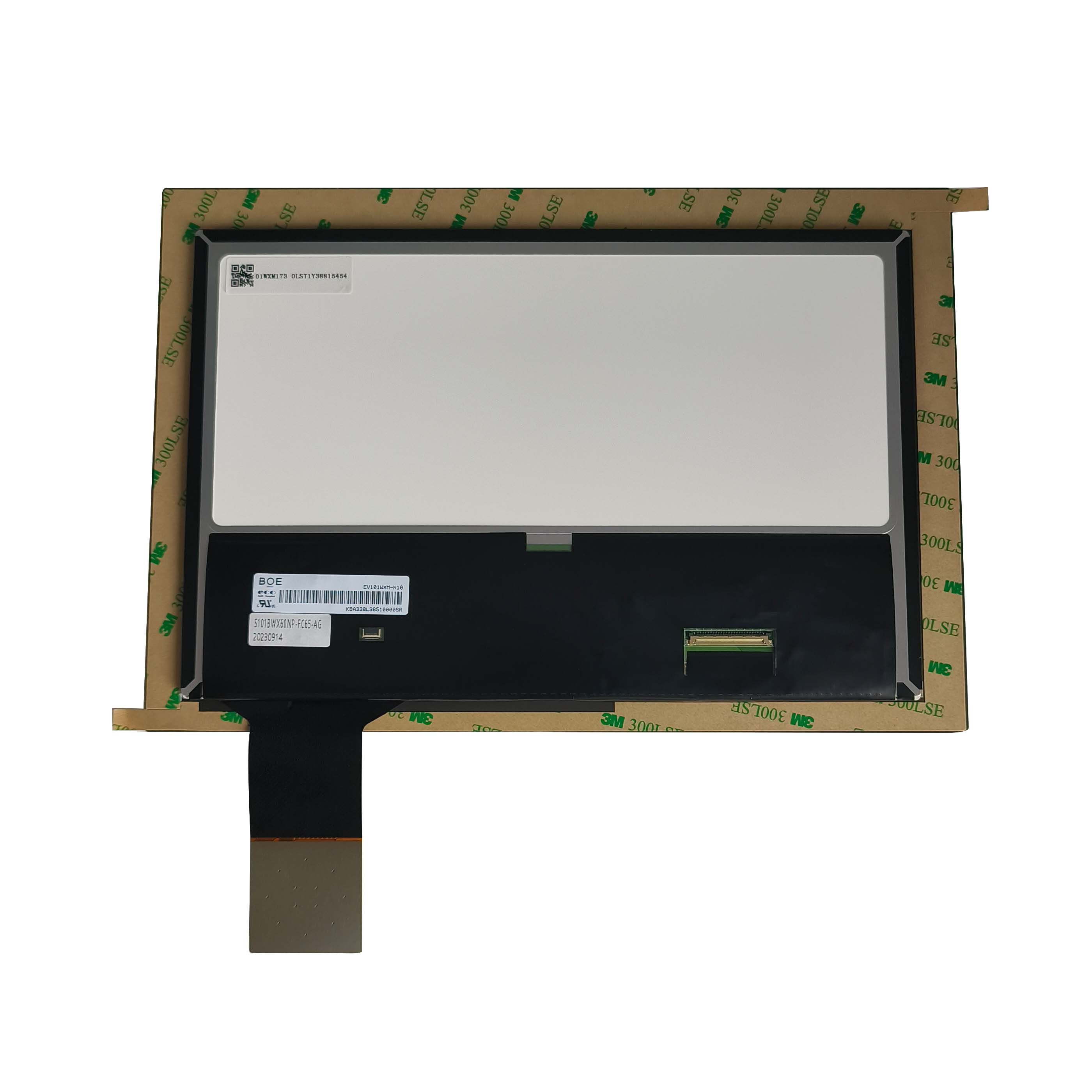
A 10.1-inch 1280 × 800 module may be mechanically interchangeable with a successor but still require firmware work if the new timing controller changes LVDS mapping, power-up order, or PWM dimming response. Treating it as a “same-size screen” is how a low-cost substitute becomes a high-cost production stoppage.
How Does Component Lifecycle Management Reduce TCO?
Component lifecycle management reduces total cost of ownership by finding supply and obsolescence risk while substitution remains inexpensive. It converts reactive emergency buying and rushed redesigns into planned technical decisions, supported by approved alternatives, forecasted demand, controlled inventory, and documented product changes.
The purchase price of a display is usually a small part of the actual exposure. For a regulated or installed-base product, the meaningful cost equation is:
\text{TCO} = \text{Unit Cost} + \text{Qualification Cost} + \text{Inventory Cost} + \text{Downtime Risk} + \text{Field-Service Cost}A $12 reduction in module price can be a poor decision if it creates a single-source driver IC dependency that later requires a $60,000 engineering validation effort. Procurement should therefore evaluate displays by continuity cost, not only by unit quotation.
| Lifecycle control | What it prevents | Practical operating rule |
|---|---|---|
| BOM lifecycle screening | Designing in a near-EOL panel or IC | Review lifecycle status before design freeze |
| Product change notice process | Uncontrolled material or process changes | Require written PCN review before implementation |
| Approved replacement matrix | Slow technical response after an EOL notice | Pre-qualify form-fit-function alternatives |
| Demand forecasting | Underbuying or overbuying end-of-life inventory | Refresh rolling demand every quarter |
| Controlled last-time buy | Panic buying from unauthorized channels | Buy only after yield, storage, and demand analysis |
| Dual-source qualification | Single-vendor disruption | Validate a second path before production ramp |
CDTech’s lifecycle management approach begins with a risk register, not a sales quotation. Each critical display assembly should have a lifecycle status, known single-source elements, anticipated technical migration path, PCN requirement, and inventory strategy.
For example, a medical OEM planning annual demand of 1,200 units for eight years should not automatically buy 9,600 panels after an EOL notice. The correct quantity must include production demand, service spares, expected field failure rate, storage-life limitations, yield loss, and a contingency margin. Backlight aging and adhesive shelf-life may make a seven-year stockpile more dangerous than a planned transition to a successor module.
Which LCD Components Need Dual-Source Planning First?
The highest-priority dual-source candidates are TFT panels, driver ICs, LED backlights, touch controllers, optical bonding materials, and interface boards. These components combine high disruption impact with difficult validation, long lead times, or limited qualified manufacturers.
Not every part deserves the same level of redundancy. A standard connector may be easy to cross-reference, while a custom 7-inch high-brightness TFT with a specific FPC exit direction can take months to replace. The right strategy ranks parts according to technical switching difficulty and business impact.
In factory-side sourcing, we normally divide display components into three operational groups:
- Category A: continuity-critical. TFT glass, display driver, touch sensor/controller, custom FPC, high-brightness backlight, and optical bonding stack. These require an approved replacement plan before mass production.
- Category B: controlled alternatives. Frame, gasket, cover lens ink, cable harness, and mounting hardware. Alternatives may require dimensional and cosmetic approval but usually have shorter technical validation cycles.
- Category C: commodity-controlled. Standard passive parts, packaging materials, and common connectors. These still require traceability, but dual sourcing is generally simpler.
A dual-source plan must not mean “two quotations from two companies.” It means two technically validated supply paths. The second source should be tested at the module level for brightness, chromaticity, viewing angle, startup behavior, touch response, ESD performance, thermal operation, and interface timing.
For industrial outdoor equipment, we have seen a nominal 1,000-nit replacement panel look acceptable indoors but lose readability in direct sun due to a different surface treatment and lower contrast under ambient light. The data-sheet brightness number alone did not reveal the field failure. Dual-source qualification must test the use case, not just compare specifications.
Why Is an EOL Notice Not Enough for Risk Control?
An EOL notice is a warning window, not a continuity plan. It tells you that a component is ending, but it does not calculate service demand, verify replacement compatibility, reserve production capacity, or confirm whether stored modules will remain usable throughout the required support period.
A strong response starts immediately after the notice arrives. The procurement team should not wait for stock to tighten because once authorized inventory becomes scarce, lead times rise, broker activity increases, and traceability becomes harder to preserve.
Use this response sequence:
- Freeze the exposure assessment. Identify every active product, open order, service obligation, and installed-base dependency using the affected display.
- Validate actual consumption. Compare ERP forecasts with historical monthly usage, forecast confidence, repair demand, and expected yield loss.
- Evaluate three paths in parallel. Assess last-time buy, compatible successor, and redesigned display assembly at the same time.
- Confirm technical equivalence. Review mechanics, electrical interface, power sequencing, timing, optical output, touch stack, firmware, and regulatory impact.
- Approve the commercial path. Include carrying cost, warehouse controls, insurance, service commitments, and supplier capacity reservation.
- Lock change records. Update drawings, BOMs, golden samples, inspection standards, and customer change-control documents.
The hidden risk is that a last-time buy can become a warehouse-quality problem. Backlight LEDs age when powered, but storage conditions also matter for FPC moisture control, adhesive materials, polarizer protection, and packaging integrity. For high-value medical or industrial inventory, CDTech recommends sealed ESD-safe packaging, controlled temperature and humidity, lot-level traceability, periodic sample inspection, and a defined requalification schedule.
How Should OEMs Calculate Custom Display MOQ?
Custom display MOQ should be calculated from engineering non-recurring cost, raw-material purchasing commitments, production yield, testing fixture needs, and forecast stability—not from a supplier’s arbitrary minimum. A lower MOQ may reduce initial cash exposure but increase unit cost, material-change risk, or inability to reserve capacity.
The key distinction is between a modified standard product and a fully custom display.
A modified standard display may use an existing TFT panel with changes such as a custom cover lens, logo printing, touch interface, cable, mounting bracket, conformal coating, or brightness adjustment. These projects can often start at lower quantities because the panel, tooling, and optical stack already exist.
A fully custom design may require new FPC tooling, customized backlight construction, bespoke mechanical housing, special touch geometry, optical bonding fixtures, or unique controller firmware. The supplier must buy materials in economically viable lots and absorb yield risk from the first production run.
| Project type | Typical customization | MOQ and TCO implication |
|---|---|---|
| Standard module | Existing panel, interface, outline, and backlight | Lowest NRE and fastest qualification |
| Modified standard module | Cover lens, cable, touch, brightness, bracket, or coating changes | Moderate MOQ; verify material continuity |
| Semi-custom module | Custom FPC, mechanics, backlight, or touch-stack changes | Higher NRE; plan forecast and safety stock |
| Fully custom display | New structure, tooling, glass, firmware, and optical system | Highest MOQ; requires multi-year volume commitment |
A realistic procurement discussion should ask for four numbers separately: development sample MOQ, pilot-run MOQ, mass-production MOQ, and material commitment MOQ. Combining them into one figure hides the commercial risk.
For instance, a 500-piece MOQ might sound manageable, but if it requires a 2,000-piece touch-sensor material purchase with a 12-month shelf-life constraint, the true exposure is not 500 units. CDTech should disclose these upstream commitments early so a buyer can decide whether to standardize the design, fund buffer stock, or redesign around a more durable component family.
When Should a 5–10-Year LCD Strategy Begin?
A 5–10-year LCD continuity strategy should begin before the electrical and mechanical design is frozen. Once enclosure tooling, firmware, regulatory files, and user-interface graphics depend on a specific module, the cost and time of switching rise sharply.
The most effective moment is the display selection phase. At that point, engineering can still choose a panel family with broader industrial adoption, a common resolution, stable interface standards, and mechanical tolerance for successor modules.
A practical 10-year roadmap has four phases:
- Phase 1: Design-in and qualification. Select components with documented roadmap visibility. Create a lifecycle risk score and define acceptable replacements.
- Phase 2: Production stabilization. Validate incoming inspection, golden samples, optical limits, and process capability. Qualify second-source paths before demand becomes urgent.
- Phase 3: Active monitoring. Review forecasts, lead times, PCNs, supplier capacity, and lifecycle warnings at least quarterly.
- Phase 4: Transition or sustainment. Decide whether to migrate to a successor, execute a controlled last-time buy, or support legacy units through repair and service inventory.
The most common timing mistake is starting a redesign only after a last-time-buy deadline. A display transition may involve prototype builds, firmware changes, optical inspection updates, EMC retesting, environmental testing, customer approval, and production validation. In a medical product, documentation and change review can take longer than the panel supplier’s final-order window.
CDTech can support customers with an annual display roadmap review that checks the panel, touch, driver, backlight, and mechanical supply chain as one system. That matters because the panel may remain available while a related touch controller or high-brightness LED package becomes the actual constraint.
Can a Replacement LCD Be Truly Drop-In Compatible?
A replacement LCD can be truly drop-in compatible only when mechanical, electrical, optical, firmware, touch, and environmental behavior all remain within the OEM’s approved limits. Matching diagonal size, resolution, and connector type is not enough for industrial or medical equipment.
A proper compatibility review should check:
- Outline dimensions, active area, thickness, mounting holes, and bezel clearance
- Pinout, voltage rails, inrush current, power-up/down sequence, and backlight current
- LVDS, eDP, RGB, MIPI, or HDMI timing; pixel clock; DE polarity; and lane mapping
- Luminance, contrast, color coordinates, viewing angle, haze, reflectance, and dimming curve
- Touch controller protocol, glove/water operation, ESD behavior, and cover-lens stack
- Operating temperature, vibration, shock, humidity, and sunlight readability
- Software configuration, EDID behavior, gamma tables, and display initialization sequence
Based on years of handling replacement projects, the “nearly compatible” module is often the most dangerous option. It passes bench testing, then fails after environmental exposure or during fast power cycling in the final equipment.
One real-world pattern involves LED backlight changes. Two modules may both be rated at 800 nits, but one may require a different PWM frequency or have a dimming floor of 8% rather than 1%. In a dark clinical environment or machine-control panel, that difference can be unacceptable even if every headline specification appears equivalent.
CDTech Expert Views
“For long-life equipment, the display is not a line item to negotiate once a year; it is a controlled subsystem that must survive design changes, supplier changes, field repairs, and demand volatility. In our experience, customers gain the most protection when they qualify the successor path while the original module is healthy and available. Waiting for an EOL notice turns engineering validation into an emergency. CDTech advises customers to document optical limits, electrical timing, mechanics, touch behavior, and approved alternates from the initial design stage. That makes a future replacement an engineered transition rather than a production crisis.”
What Should a Display Supplier Commit to in Writing?
A dependable display supplier should commit in writing to product-change notification, lifecycle communication, traceability, technical documentation, quality controls, replacement evaluation support, and defined responsibilities for last-time-buy or transition decisions.
For high-value B2B projects, verbal assurances are not adequate. The agreement or quality appendix should define what counts as a change and how much advance notice is required. This includes panel source, driver IC, backlight LED, touch controller, FPC, optical materials, firmware, manufacturing location, and critical production process changes.
Request the following deliverables:
- Product specification with mechanical, electrical, optical, and environmental limits
- Revision-controlled drawings and approved sample records
- PCN and EOL notification procedure
- Lot traceability and incoming/outgoing inspection records
- Lifecycle status and planned successor information
- Replacement comparison report for any proposed change
- Failure-analysis response process and corrective-action timing
- Storage guidance for long-term service inventory
- Clear ownership of tooling, firmware, and custom drawings where applicable
CDTech’s manufacturing background—including TFT LCD displays, touch displays, and HDMI display solutions for industrial, medical, automotive, smart-home, and instrumentation applications—supports a lifecycle conversation that spans design, production, validation, and ongoing supply. Its quality systems and documented process controls should be used as operational tools, not merely qualification checkboxes.
What Are the Most Important Actions to Take Now?
The strongest industrial LCD supply-chain strategy starts with a full display BOM risk review, then establishes approved alternatives, supplier notification controls, quarterly monitoring, and a financially justified EOL response plan. The goal is not to eliminate all change; it is to make every change predictable, validated, and affordable.
Take these actions now:
- Audit every current display module for panel, backlight, touch, and controller single-source exposure.
- Build a replacement matrix before receiving an EOL announcement.
- Include lifecycle status in new-product design reviews and purchasing approvals.
- Calculate last-time-buy quantities using demand, spares, yield, storage constraints, and service obligations.
- Test second-source modules in the actual application, including thermal, EMC, power-cycle, and optical conditions.
- Require documented PCN/EOL processes from suppliers.
- Schedule quarterly lifecycle reviews with CDTech for products expected to remain in market for five years or longer.
A stable display program is built through early technical choices and disciplined commercial controls. When procurement, engineering, quality, and service teams work from the same lifecycle plan, they can protect production continuity without carrying unnecessary inventory or accepting unverified replacements.
What Are the Frequently Asked Questions?
How long should an industrial LCD be supported?
Most industrial and medical OEMs should plan for at least the product’s production life plus service-spare obligations. A practical planning horizon is often five to ten years, but the exact period depends on installed-base commitments, regulatory requirements, and equipment replacement cycles.
Does an EOL notice guarantee a compatible successor display?
No. A supplier may recommend a successor, but the OEM must confirm mechanics, interface timing, optical output, touch function, firmware behavior, and environmental performance. A recommended successor is a starting point for validation, not automatic approval.
Can a lower-MOQ custom LCD reduce project risk?
It can reduce initial inventory exposure, but it may raise unit cost or conceal upstream material commitments. Evaluate sample, pilot, production, and material MOQs separately before deciding whether the program is genuinely lower risk.
Why is dual sourcing difficult for LCD modules?
Two modules with the same size and resolution can differ in timing, brightness, touch protocol, connector arrangement, and mechanical stack-up. True dual sourcing requires application-level testing and controlled approval of both supply paths.
Who should own LCD lifecycle management inside an OEM?
Engineering, procurement, quality, operations, and service teams should share responsibility. Procurement tracks commercial exposure, engineering validates replacements, quality governs change control, and service forecasts long-term spare-part demand.