Anti-Glare and Anti-Reflective Coatings: Durability Under Real Cleaning and Abrasion
AG and AR coating durability: what cleaning and abrasion actually damage, how to test it, and how to specify a coating that survives the product's life.
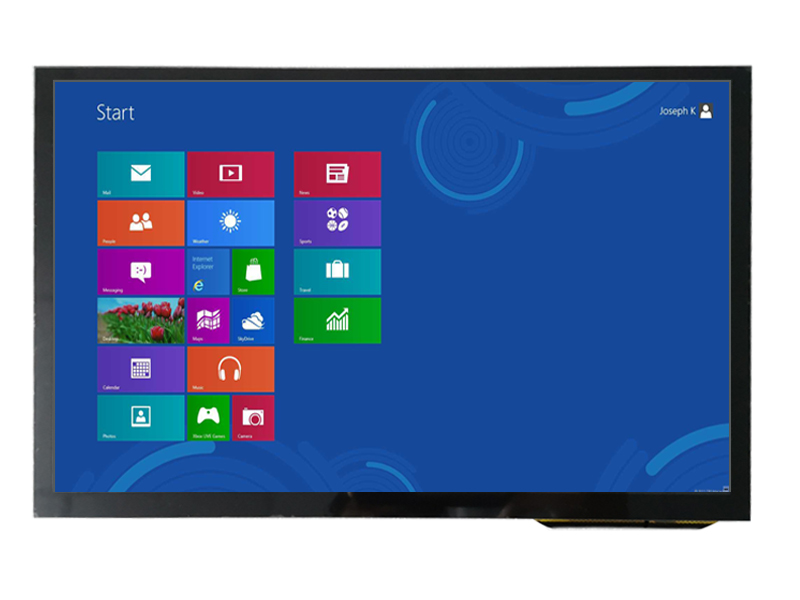
A coating that performs beautifully in the showroom and wears through in eighteen months is worse than no coating, because the worn area looks like damage rather than a design choice. The durability question is rarely asked at specification stage and almost always asked afterwards. It is answerable with two measurements – haze and gloss – and a cleaning routine taken from the actual site.
Part of the Optical, Backlight & Panel Technology guide — 30 articles on bonding, cover glass, brightness and panel choice.
What cleaning and abrasion actually remove
Three layers fail in three different ways.
An anti-glare surface is usually created by etching or by a deposited layer that scatters light; cleaning removes it gradually by abrasion rather than in one event, which shows as a shiny, polished patch in the most-touched area. An anti-reflective coating is a thin-film stack; aggressive chemicals or mechanical action can degrade its optical properties or its adhesion, producing a hazy or patchy appearance. An anti-fingerprint treatment is a surface layer that wears away fastest of all, which is why its durability should be specified rather than assumed.
The practical consequence is that the failure is usually cosmetic first and optical second: the user sees a patch that reflects differently, and only later does the display become harder to read in bright light.
Cleaning agents and the chemistry they bring
The cleaning product is part of the specification.
Alcohol-based wipes, quaternary ammonium disinfectants, ammonia-containing glass cleaners and abrasive creams each attack the coating differently. Alcohols are generally tolerated; ammonia and some solvents attack certain coating chemistries; abrasive creams and pads remove the surface structure physically. The reverse is also true: coatings can be specified to suit a known cleaning regime, which is the cheaper route than changing the cleaning regime on a deployed fleet.
Request coating compatibility for the agents actually used, at the concentration and contact time applied, and validate with repeated cycles rather than a single wipe. Table 1 in CDTech’s medical display cleaning guidance follows the same logic for clinical environments.
Wipe versus spray and the role of the cloth
Half the wear comes from the cloth.
The same cleaning agent applied with a soft microfibre cloth and applied with an abrasive pad produce very different wear rates, and the pressure applied matters as much as the material. In practice, the areas that wear first are those wiped hardest and most often: the centre of a touch screen, the lower edge where a hand rests, and any area used as a handhold. Testing with a gentle method and deploying a rough one invalidates the test, so the durability specification should name the cloth type and the wiping method.
Where the site’s practice is unknown, testing with a deliberately harsher method gives a margin that covers the difference.
Measurable acceptance criteria
Haze and gloss turn wear into a number.
| Property | Measurement | What it captures |
|---|---|---|
| Haze | Diffuse transmission, per ASTM D1003 | Light scattering from the surface structure |
| Gloss | Specular reflectance at a defined angle | How mirror-like the surface remains after wear |
| Transmission | Total transmitted light | Losses from coating and stack |
| Adhesion | Tape or abrasion test on the coating | Whether the coating remains attached |
| Hardness | Pencil hardness, per ASTM D3363 | Resistance to scratching |
Specifying a maximum change in haze and gloss after a defined number of cleaning or abrasion cycles is what converts “durable coating” into a contract term. Two measurements before and after are usually enough, provided the geometry and instrument are recorded. The haze method is defined in ASTM D1003 and film hardness in ASTM D3363.
Test methods that reproduce field wear
Accelerated wear should match the real motion.
A linear abrasion test with a defined load and a defined cloth reproduces the common case of wiping; a rotary or taber-style test produces more severe wear that may overstate the effect for a screen that is only wiped. Chemical exposure should be applied as it is in service – sprayed and left, or applied on a saturated cloth – because the contact time drives the attack. Combining chemical exposure with abrasion in the same cycle is closest to reality, since cleaning both wipes and exposes at once.
CDTech’s notes on haze, gloss and surface treatment measurement describe the measurement discipline that makes these results comparable. Where a longer or more demanding cycle is required, third-party laboratory scopes from bodies such as Intertek can carry the test under an accredited method.

Where the coating matters most
Some applications should pay for durability, others should not.
Coatings earn their cost where reflections are the dominant readability problem – outdoor kiosks, storefronts, transit displays, machines under directional lighting. In those applications a worn coating becomes a functional problem because the polished patch reflects much more than the surrounding area. In controlled indoor environments with moderate lighting, the optical benefit is smaller and the durability requirement can be relaxed in favour of cost.
This distinction is worth making explicitly, because it prevents a low-cost indoor product from carrying the specification of an outdoor one, and it prevents an outdoor product from being specified with a coating that will not survive its cleaning regime.
Specification clauses that prevent disputes
Four clauses cover most of the risk.
- Named coating type with measured haze, gloss and reflectance values, and tolerances.
- Cleaning agents approved by name, with concentration and contact time.
- Approved cloth types and method, with abrasives excluded.
- A durability criterion: maximum haze and gloss change after a defined cycle count.
These clauses also define what a warranty claim looks like, which is often the point at which coating durability becomes a commercial rather than technical discussion.
Repair and replacement options
A worn coating is usually not repairable.
Because the coating is integrated into the glass surface, wear cannot be polished out without changing the optical properties across the whole surface, and re-coating a bonded assembly in the field is not practical. The service answer is to design the front as a replaceable assembly and to hold it as a spare, which is the same recommendation that applies to scratched or damaged fronts generally. Surface protection films from suppliers such as tesa offer a replaceable outer layer where the coating itself cannot be renewed.
Where the wear is unacceptable and the cleaning regime cannot change, the alternatives are a harder coating system, a replaceable outer film over the coated glass, or accepting a lower optical performance with a bare glass front. Each has a cost, and each is best evaluated before the product ships rather than after a fleet is in service.
A practical durability requirement
A worked example of how to write the requirement.
| Item | Requirement |
|---|---|
| Coating | AG treatment, haze 4-8 per cent, gloss defined at 60 degrees |
| Hardness | Pencil hardness 9H or better on the coating surface |
| Cleaning | Approved agents listed; 500 wipe cycles with a defined cloth and load |
| Haze change | Not more than 2 percentage points from the initial value |
| Gloss change | Not more than 20 per cent relative to the initial value |
| Adhesion | No visible coating removal after the abrasion cycle |
| Record | Instrument, geometry and cycle method stated with the result |
A requirement written this way is verifiable by both parties and is straightforward to repeat after a change in coating supplier.
FAQ
How long do anti-glare coatings last?
It depends on the cleaning regime rather than on time. A coating wiped hundreds of times a year with an abrasive cloth will show a polished patch within a year or two, while the same coating in a controlled environment can last the product’s life. Specifying a maximum haze and gloss change after a defined number of cycles makes the answer verifiable.
Can a worn anti-glare coating be repaired?
Usually not in the field. The treatment is part of the glass surface, so local polishing changes the optical properties, and re-coating a bonded assembly is impractical. The practical approach is to treat the front assembly as a replaceable part and to hold it as a spare.
Which cleaning agents damage display coatings?
Ammonia-containing glass cleaners and some solvent blends attack particular coating chemistries, and abrasive creams and pads remove the surface structure physically. Alcohol-based products are generally tolerated. Request compatibility data for the agents used on site, including concentration and contact time.
How is coating durability tested?
By reproducing the cleaning motion: linear abrasion with a defined cloth and load, chemical exposure at the service concentration, and combined cycles where both occur together, with haze, gloss and transmission measured before and after. ASTM D1003 defines the haze measurement and ASTM D3363 the film hardness test.
Next step
Send the cleaning agents, cloth type, expected cleaning frequency and the optical targets to CDTech; the reply will recommend a coating system and state the durability criteria that can be verified.
Contact sales@cdtech-lcd.com or use the contact page.
Related articles
 Optical Bonding for Outdoor Displays: UV, Thermal Cycling and Edge DelaminationOptical, Backlight & Panel Technology
 Backlight Driving and Dimming: PWM, DC and Hybrid Approaches ComparedOptical, Backlight & Panel TechnologyBacklight Lifetime and Lumen Maintenance: Predicting Real Service LifeOptical, Backlight & Panel TechnologyMura, Uniformity and Optical Acceptance: Writing a Standard Both Sides Can EnforceOptical, Backlight & Panel Technology