Electronic Shelf Labels vs LCD Shelf Strips: Choosing by Store Format
Electronic shelf labels versus LCD shelf strips: content capability, battery life, update latency, installed cost per metre and refrigerated-aisle behaviour.
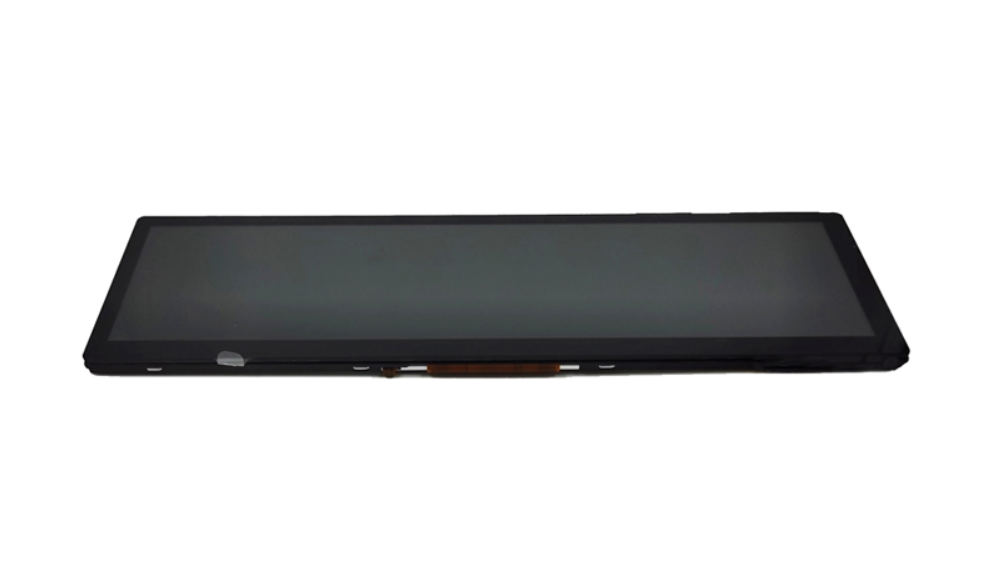
The choice between electronic shelf labels and LCD shelf strips is usually presented as a technology question and decided, in practice, by power, content and the store’s category mix. Both solve price accuracy; they differ in what they can show, what they consume, and how much of the shelf face they occupy. Deciding by store format rather than by preference produces a cheaper and more maintainable system.
What each technology can and cannot display
Prices and text, or prices and media.
Electronic shelf labels typically use a bistable display that holds an image without power, showing figures, simple icons and short text. LCD shelf strips use a bar-format TFT or a segment display and can show colour, animation, promotions and, at larger sizes, product imagery. The distinction matters where the category relies on promotion: a shelf strip that can display a promotional banner performs a different function from a price tag that shows a number.
Where the requirement is price accuracy only, an electronic label is usually sufficient and cheaper to run. Where the requirement includes shopper-facing media, the LCD strip is the option that can carry it.
Battery life vs wired power
No wiring is the main advantage of a label.
Bistable labels run for years on a coin cell because they draw power only when the image changes, which is what allows deployment on shelves without any electrical infrastructure. LCD strips need continuous power and therefore a low-voltage rail along the fixture. The trade is straightforward: labels avoid installation cost and disruption, while LCD strips require cabling but need no battery replacement programme.
Battery replacement is an operational cost that is often underestimated: a store with tens of thousands of labels needs a systematic replacement process, and battery failures appear as stale prices if they are not monitored. CDTech’s notes on e-paper and reflective displays for battery-powered devices describe the same trade in industrial equipment.
Update latency and network infrastructure
Both technologies need a network, but different kinds.
| Characteristic | Electronic shelf label | LCD shelf strip |
|---|---|---|
| Power | Battery, years of life | Low-voltage rail along the fixture |
| Data path | Wireless to each label | Wired bus or wireless to each unit |
| Update latency | Seconds to minutes depending on density | Near real time where the bus is dedicated |
| Confirmation | Requires an acknowledgement from the label | Unit can report its displayed state |
| Infrastructure risk | Wireless coverage and interference | Cabling and power supply capacity |
In both cases the operational requirement is the same: the store must be able to confirm that the price shown matches the price in the system. That confirmation should be an explicit specification item rather than an assumption, because a system that updates without acknowledging leaves staff checking shelves manually.
Content richness: price only vs promotion and media
Content decides the value of the extra capability.
For packaged goods where the price is the message, richer content adds little. For categories where promotions, unit pricing, loyalty messaging or product information drive behaviour, a colour strip can increase sales and reduce staff time spent on signage. The question is not whether colour is better but whether the store has content to display and a process to create it, since a colour display running a static price is an expensive price tag.
Where the content is managed by a marketing team rather than by the price system, the integration work moves from IT to marketing, which changes both the timeline and the ownership.
Installed cost per shelf metre
Compare installed cost, not unit price.
| Element | Electronic shelf label | LCD shelf strip |
|---|---|---|
| Unit cost | Lower per label, more units per metre | Higher per unit, covers a longer shelf run |
| Infrastructure | Wireless coverage, gateways | Power rail, supply capacity, cabling labour |
| Installation labour | Mounting only | Fixture modification and wiring |
| Ongoing | Battery replacement programme | Replacement of failed units, power consumption |
| Content | Price and short text | Price plus promotional content |
Retail technology investment decisions and store-format economics are tracked through organisations such as the EHI Retail Institute, and panel technology availability and cost trends are reported by research firms such as TrendForce.
Maintenance and shrinkage
Small devices disappear.
Both labels and strips are removable, and both are targets for theft and damage. Labels are small enough to pocket; strips are more visible and more likely to be damaged than stolen. Practical measures are mechanical retention that resists casual removal, an installed-unit inventory that can be reconciled against the network, and a store process for reporting missing units. A cable-attached strip is also harder to remove, at the cost of flexibility.
Where a fleet is large, the ability to detect a missing or unresponsive unit remotely is more valuable than any physical retention scheme.
Dynamic pricing and compliance requirements
Price accuracy is a regulatory issue in many markets.
Where prices are displayed digitally, the displayed price must match the price charged, and the audit trail must show when a change was made and where it was applied. Both technologies can satisfy this if the system confirms the displayed state; neither satisfies it automatically. The design requirement is a closed loop: the price system issues a change, the display acknowledges it, and the loop is recorded with a timestamp.
Where a display cannot acknowledge, the store needs a manual verification process, which is the cost that digital shelf systems are supposed to eliminate.
Temperature and refrigerated aisles
Cold aisles and freezer doors are the hardest environment for shelf electronics.
Bistable labels work well in cold conditions because they draw no power while static and their chemistry tolerates low temperatures within its specified range. LCD strips face the classic low-temperature problem: liquid crystal response slows and, at the extreme, contrast falls. Where freezer doors are involved, condensation and frost add another failure path, and the display must be sealed and bonded to avoid internal fogging.
Both technologies must be verified in the aisle rather than in a laboratory, with the door closed and the cabinet at operating temperature, because conditions inside a freezer door frame differ from the air temperature of the aisle.
Hybrid deployments and migration paths
Most large estates end up using both.
A practical rollout puts electronic labels on the majority of the shelf face where price accuracy is the requirement, and LCD strips in the categories where promotion and media pay for themselves – seasonal aisles, impulse categories, brand-owned fixtures. The infrastructure cost is then concentrated where the value is, and the migration path allows a store to start with labels and add strips later, or the reverse.
Design the integration so that both device types consume the same price feed and report their state to the same system. That single decision avoids a second integration project later.
Decision table by store format and category
Match the technology to the format, then verify with a pilot.
| Format or category | Typical choice | Reason |
|---|---|---|
| Large grocery, centre aisles | Electronic shelf labels | High unit count, price-only content, no wiring desirable |
| Large grocery, promotional ends | LCD shelf strips | Promotional content and media justify power and cost |
| Refrigerated aisles | Electronic shelf labels | Low-power operation suits cold and condensation risk |
| Convenience formats | Mixed, strips at the counter | Limited shelf face, high promotional value near checkout |
| Electronics and beauty | LCD shelf strips | Product information and brand content on the shelf |
Where an LCD strip is selected, specify the sealing and front-surface treatment for the aisle, and confirm readability in the store’s lighting with a physical sample. Coating and haze behaviour under cleaning are measured with methods such as ASTM D1003, and bar-format panel availability comes from manufacturers such as Innolux and AUO.
FAQ
Which is better, ESL or LCD shelf strips?
ESLs are better where price accuracy is the requirement and wiring is undesirable, because they need no infrastructure and run for years on a battery. LCD strips are better where promotional or branded content justifies the power, cost and fixture work. Most large estates use both, by category.
How long do electronic shelf labels last on a battery?
Bistable labels draw power only when the image changes, so life depends on the update frequency and the number of price changes. Typical deployments last several years per battery, but the operational cost is the replacement programme itself, which needs to be planned rather than discovered.
Do LCD shelf strips work in freezer aisles?
They can, but low temperature slows liquid crystal response and reduces contrast, and condensation inside the assembly is a real risk. A bonded, sealed strip specified for the temperature range works; a general-purpose module does not. Verify in the aisle with the door closed rather than in a laboratory.
How do I confirm that a shelf price is correct after an update?
Require a closed loop: the price system issues a change, the display acknowledges the displayed state, and the transaction is logged with a timestamp. Neither technology does this automatically, and without acknowledgement the store still needs manual price checks, which defeats much of the investment.
Next step
Send the store format, categories, aisle conditions and update requirements to CDTech; the reply will indicate where a bar-format LCD strip is worthwhile, what format and sealing level suit the aisle, and how it would integrate with an existing label system.
Ask CDTech to review the category mix and aisle conditions for the stores in scope; the response will identify which runs justify a powered strip and which are better served by battery labels. Write to sales@cdtech-lcd.com or start from the contact page.
Related articles
 ESD Protection for Display Modules: Design, Test and Field RealityInfo
 Hydrogen, Gas and Chemical Process Displays: Where Certification Drives the DesignInfoResistive Touch Screens: Where They Still Beat Capacitive in 2026Info
 Haptic Feedback and Display UX in Industrial Equipment: When Touch Is Not EnoughInfo